 Jessica Schreifels
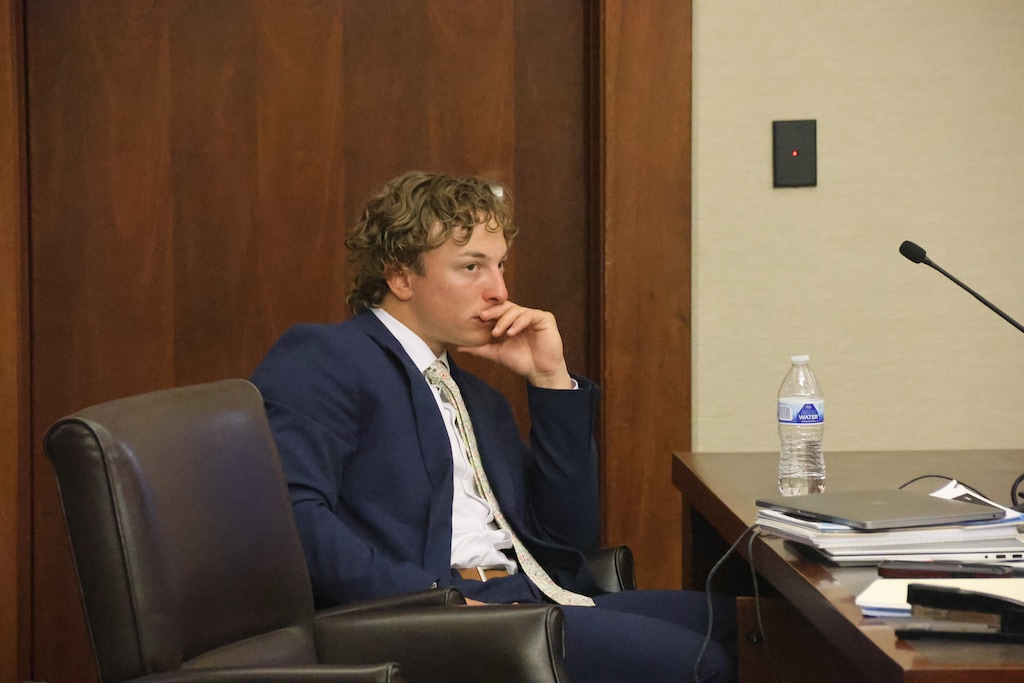
Hours after prosecutors refiled a rape charge against former Brigham Young University football standout Parker Kingston, his defense attorneys asked a judge to remove Washington County Attorney Jerry Jaeger and his office from the case.
They argue that Jaeger has a personal stake in defending his office’s handling of the prosecution that conflicts with his duty to pursue justice fairly.
“Mr. Kingston is entitled to a prosecutor whose only interest is that justice be done,” they wrote.
Attorneys Cara Tangaro and Scott Williams point, in part, to a disciplinary complaint Jaeger filed against two St. George attorneys who don’t represent Kingston, but who discussed the case in TikTok videos.
In the complaint to the Utah Office of Professional Conduct, Jaeger accused the attorneys of making false “factual assertions” about the investigation and questioning the alleged victim’s credibility. He asked the office to investigate whether they violated professional conduct rules regarding truthfulness and pretrial publicity.
“I am particularly troubled by public statements attacking the victim’s credibility and character through social media platforms when those statements appear unsupported by the evidence,” Jaeger wrote in the complaint, which was attached as an exhibit in the defense’s court filing.
“Such statements have the potential to undermine public confidence in the legal process, expose victims to unnecessary harassment, and create a misleading public narrative concerning a pending criminal matter,” Jaeger wrote.
One of those attorneys, William Palmer, later responded through counsel that his online comments were based on testimony and exhibits from Kingston’s preliminary hearing, which he attended as an observer. His response also was included as an exhibit in Kingston’s latest filing.
Kingston’s attorneys say prosecutors initially charged him nearly a year after the alleged assault without reviewing key evidence, including body camera footage of the woman’s first report or obtaining her sexual assault examination report. In his disciplinary complaint, Jaeger maintained that prosecutors had reviewed the relevant footage and that the case underwent extensive review before charges were filed.
The defense attorneys now argue that Jaeger wrote statements in that complaint and in other court filings that conflict with what the evidence and records show. They assert that his decision-making as a prosecutor — such as what evidence to disclose, whether to offer a plea deal or whether to continue with the case at all — could be influenced by his interest in defending his previous statements.
“His personal interest lies in a record that confirms that account,” they wrote.
A spokesperson for the Washington County Attorney’s Office said Friday that the office will oppose Kingston’s motion, and plans to address specific issues in an upcoming court filing.
A judge had dismissed the felony rape charge against Kingston over the summer, deciding he would not delay a trial after prosecutors had indicated that the alleged victim might not be ready emotionally to testify.
But the judge tossed the case without prejudice, meaning that prosecutors could refile — which Jaeger did on Thursday. He said in a statement that he refiled the charge with the support of the alleged victim, whose attorney said Friday that she was grateful the case would be moving forward.
“Their decision to refile these charges has renewed my client’s faith in the justice system and her belief that her voice will be heard,” attorney Andrew Deesing said in a statement. “She has shown extraordinary courage and resolve throughout this process.”
The Salt Lake Tribune generally does not name alleged victims of sexual assault, and the judge in Kingston’s case has made efforts to ensure her identity is not made public.
Tangaro and Williams called the decision to refile the charge “disappointing,” and said Kingston maintains his innocence.
Prosecutors allege that Kingston had been exchanging messages with a St. George woman and, in February 2025, made plans to meet her. She told him “that if the only reason he was coming was to have sex with her that he should not come,” charging documents allege.
But Kingston later texted a friend and said he planned to have sex with her, according to charging documents, but was hesitating because he was upset with her about plans changing. In a reply, he acknowledged that he desired sex.
When Kingston got to the woman’s home, prosecutors say they talked and “engaged in some consensual sexual activity,” but did not have intercourse. When Kingston started to fall asleep, the woman said she left her room to get ready for bed.
When she returned, she alleges Kingston initiated sexual activity. The woman told Kingston “no” four times, she alleged, but he forced her to have sex.
Kingston is expected to have his initial court appearance on Dec. 17.