 Robert Gehrke
Scott Carrier had spent the afternoon of July 10, 2025, with his partner Kris Jones, tossing a stick in nearby Medicine Lake for his dog Augi to fetch, about a half hour from their home near Old La Sal.
The leisurely day soon became a nightmare, when another person at the San Juan County lake showed him a photo of a plume of smoke rising above a few houses in the nearby valley — one of them his home.
By the time he got back there, the Deer Creek fire was raging out of control. In body camera footage of Carrier when he arrived back at his home, a deputy tells him people had been killed by the rapidly spreading blaze and adds, “it’s pretty obvious the fire started here.”
Nobody actually died in the fire, but prosecutors in San Juan County accused Carrier, a veteran radio journalist whose work has appeared on national programs such as This American Life, of causing it.
News outlets reported his name across stories as the culprit. An area blogger referred to him as an “environmental activist” and a “left-wing media personality” who had criticized members of The Church of Jesus Christ of Latter-day Saints.
Scott Carrier, shown here in body camera footage taken by a San Juan County sheriffs deputy, is being told that a fire in which people likely died started on his property. Nobody died in the fire. Charges against Carrier were dropped. (Courtesy Carrier's defense team)
For the past year, Carrier was facing the threat of jail time and potential civil liability for at least a portion of the $28 million in damages.
That changed Monday when prosecutors abruptly dropped the charges amid scrutiny of the state’s investigation, which Carrier’s lawyer said was rife with errors and speculation
“It’s been like pure hell in a lot of ways,” Carrier said in an interview, “the worst thing I’ve ever come across in my life.”
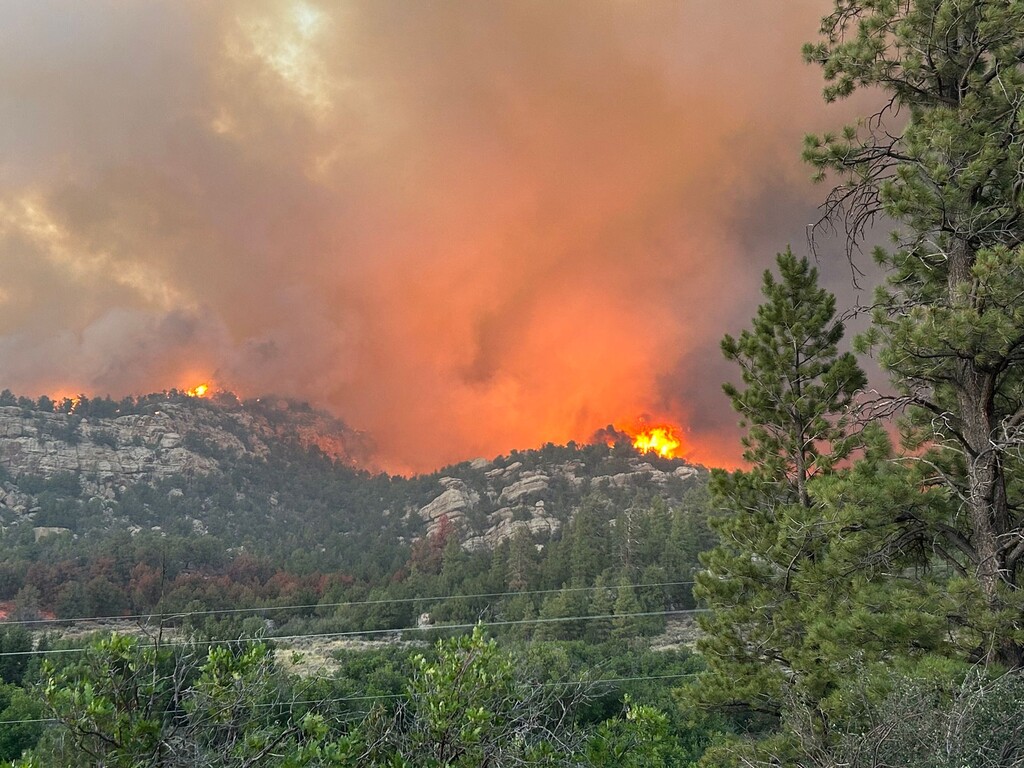
The Deer Creek fire eventually charred nearly 18,000 acres, fanned by roaring winds that at one point created a fire tornado as it tore across the Colorado border before crews were able to contain it. Eleven homes were destroyed, as well as a government building and a communication site.
‘The fire was just so dramatic’
The first signs of trouble came at 1:28 p.m. A video taken by a neighbor shows a thin ribbon of smoke between Carrier’s home and his neighbor’s house.
The fire spread quickly in the bone-dry brush between the buildings and barely 10 minutes later, tall flames were ripping toward another house. The video shows those neighbors tearing away from their home in their vehicle.
“When I got there,” Carrier said, “the fire was just so dramatic. The ground wasn’t burning, it was exploding. The trees, these ponderosa trees, were exploding, whole groves into this very dark smoke that rose like a mushroom cloud.”
On July 12, the state fire investigator, Ryan Riddle, concluded that Carrier had burned debris or had some other fire in his yard, and an ember had drifted 30 feet into nearby brush and smoldered for up to two days before building into the flame and starting the blaze.
Carrier was charged with four counts — reckless burning, abandoning a fire, causing a catastrophe and violating fire restrictions — with the first three carrying up to a year in jail, the last one up to six months, plus fines.
But the expert witness on Carrier’s defense, Vytenis Babrauskas, criticized Riddle’s methodology and his conclusions. The inquiry did not meet the accepted standards for wildfire investigations, he said.
Riddle had not interviewed any of the witnesses, had not reviewed many of the photos and videos of the blaze starting and had no empirical evidence to support his theory, said Babrauskas, an Arizona researcher and consultant in fire safety science.
Moreover, Babrauskas wrote in a report filed in court, an ember would not have smoldered as long as Riddle hypothesized it had in the brisk wind conditions present before the fire started.
“The flaws [in Riddle’s report] are deep, systematic, and pervasive,” Babrauskas wrote. “It appears that Mr. Riddle early on decided to try to prove Mr. Scott Carrier to be a guilty party, and pursued his investigation on the basis of this bias.”
Another expert witness did a separate assessment of the fire’s origin and identified potential ignition points that were not on Carrier’s property, his attorney, Jim Bradshaw, said.
On Monday, a hearing was scheduled where Bradshaw planned to ask the judge to disqualify Riddle’s report. Instead, the charges were dismissed.
The prosecutors handling the case did not respond to emails asking why the charges were dropped. Bradshaw said they clearly made the correct call.
State ‘rejects’ criticism of investigation
Since being charged, Carrier sold his home in Old La Sal. He said he needed money to pay his legal expenses and no longer wanted to live in the town.
Neither Bradshaw nor Carrier would comment on why they believe the charges were filed.
The Utah Division of Forestry, Fire and State Lands “rejects the defense’s characterization of our investigative process and our wildland fire investigation personnel,” a spokesperson for the division said in a statement.
Riddle, the statement said, “has decades of investigative experience and is one of the state’s most experienced wildland fire investigators.”
The division did not have an opportunity to rebut the defense witnesses’ reports, the statement said, but it “does not agree with or concede to any conclusions reached in those reports.”
The division added it is “committed to holding individuals accountable for human-caused wildfires” and could still seek civil recovery of damages for the state and others impacted by the blaze.