 Brock Marchant
A careless camper abandoning dangerously glowing embers. A smoker playing fast and loose with cigarette butts. A lightning strike on dry vegetation.
When a wildfire sparks, the usual culprits may come to mind. In some cases, though, fires can begin seemingly out of thin air through a rarer, lesser-known cause — spontaneous combustion.
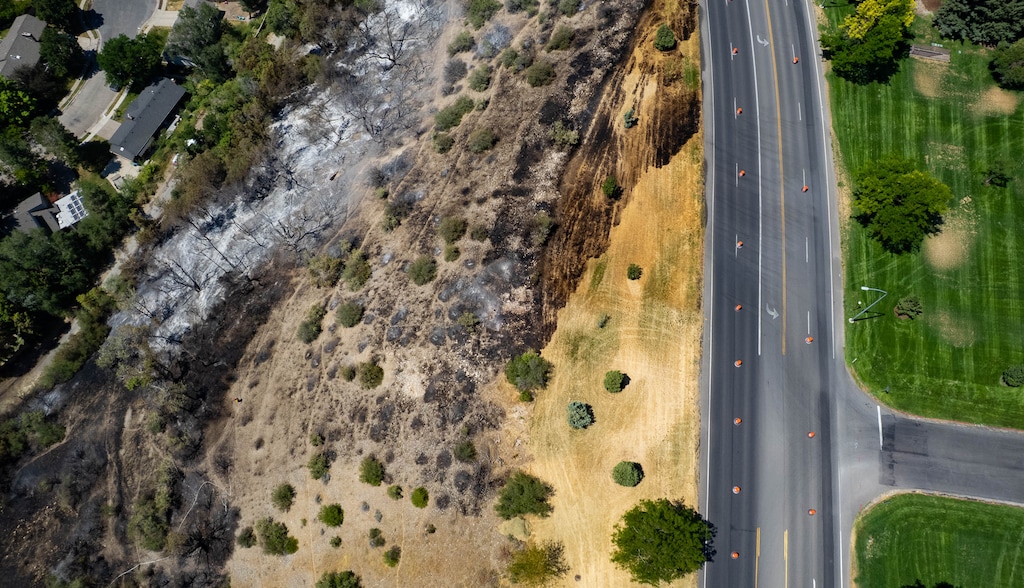
According to state fire officials, such was the case with Logan’s Canyon Road Fire. The July 31 blaze prompted evacuations, destroyed vehicles and damaged a home.
Brandon Stirland, Utah State University’s fire marshal, said investigators determined the fire started through the spontaneous combustion of a USU compost pile.
Kelly Wickens, a spokesperson for the Utah Division of Forestry, Fire and State Lands, explained how that can happen.
“Organic material can create heat,” she said not long after the fire. “In the conditions we’re in right now, which is lots of super high heats and very dry conditions, it’ll start creating a chemical reaction in the matter and then can spontaneously combust.”
And, Wickens added, compost piles are just one kind of material that is liable to spontaneously combust given certain conditions.
If a farmer bales wet hay, Wickens said it could end up in flames. If oily rags are bunched up, they could light. And piles of charcoal or coal could similarly ignite.
“Very few people know about spontaneous combustion,” Wickens said. “It’s kind of fascinating.”
To play it safe, Wickens said people should lay oily rags flat and dry them completely, bale dry hay and monitor haystacks for excessive heat, turn compost piles regularly and let charcoal cool completely before throwing it out.
For its part, USU spokesperson Amanda DeRito said the university would look at how it handles compost piles.
“We are conducting a comprehensive review of our wood chip and composting operations across campus,” she said in an email. “We want to ensure we are following best management practices to minimize the risk of similar incidents in the future.”
Note to readers • This reporting position is a partnership with Utah Public Radio, a division of Utah State University.
 I’m Brock Marchant, The Salt Lake Tribune’s Cache Valley reporter in partnership with Utah Public Radio. As a valley native, I’ve seen firsthand the issues that people face everywhere from Richmond to Avon — unaffordable housing, dwindling open space and a rapidly increasing population that has cities struggling to keep up. I want to explore local problems by reporting on the ground, not just quote elected officials and news releases. As residents work diligently to overcome challenges, I want to tell their stories and share their solutions. Smart, hard-working people have built the valley’s history, and I’m certain they will frame its future.
As a nonprofit newsroom we rely on donations from readers like you to make this work possible. Donate today to support this reporting.