facebook-pixel

Great Salt Lake not expected to hit new low in 2026; but what if it does in the future?

The lake currently sits at 4,190.40 feet above sea level — inches above its 2021 low of 4,190.20 feet.
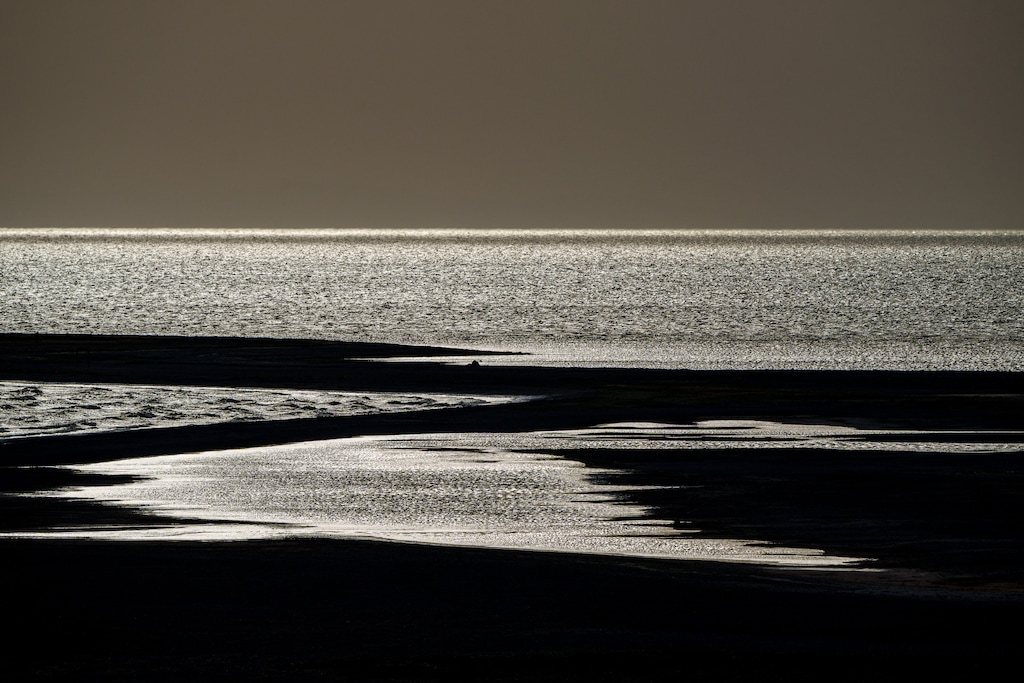
(Trent Nelson  |  The Salt Lake Tribune) Dust blows over the Great Salt Lake and Antelope Island on Monday, May 12, 2025.

(Trent Nelson | The Salt Lake Tribune) Dust blows over the Great Salt Lake and Antelope Island on Monday, May 12, 2025.

Note to readers • This article is published through the Great Salt Lake Collaborative with funding from Love the Lake, an initiative of the non-profit Great Salt Lake Alliance. Editorial decisions are made independently by the Collaborative and partner newsrooms.

Utah’s Great Salt Lake is quickly approaching its second-lowest level ever recorded.

The lake currently sits at 4,190.40 feet above sea level — inches above its 2021 low of 4,190.20 feet. In 2022, the lake then hit an all-time record low of 4,188.5 feet in November — almost two feet lower than the lake’s current elevation.

Utah Department of Natural Resources Commissioner Joel Ferry told KSL NewsRadio he believes the lake would’ve hit a record low this year had Utahns not worked so hard in recent years to conserve water.

“We’ve invested so much and the people of Utah stepped up so much to conserve that we are seeing ... results,” Ferry said. “We are seeing the savings make a difference.”

Ferry said he does not expect the Great Salt Lake to hit a new record low this year, but if Utah gets another winter like the record-dry 2025-2026 season, he said the lake hitting a new record low in 2027 would be “unavoidable.”

What’s the state’s plan if that happens?

Ferry said his department has been preparing for that scenario for years.

If that ever happens, he said they would aggressively ramp up their efforts to lease new water in the Great Salt Lake Basin. Meaning they would purchase water from other water rights holders and deliver that water to the lake.

Ferry said an example of that could be paying a farmer for the water they would’ve used to grow crops, based on the cost of the crop and how much of it they would’ve grown.

Ferry said the Utah Legislature has made it much easier for the Department of Natural Resources to streamline this process, making it easier to get more water to the lake.

“We’re ready to hit the ground running and hit it hard so that we can actually make a big difference towards the amount of water getting to the lake this year,” he said.

We’d likely also see local water districts and other water distributors cut how much irrigation and secondary water people could use, according to Ferry. That could include delivering that water later in the Spring, like they did this year, and turning it off earlier in the Fall.

“We all just need to be prepared to have some of these years where we’re going to have to just get by with less,” Ferry said. “We’re going to have to all do our part.”

And well before the lake ever hits a new record low, Ferry said the department will close the berm on the railroad causeway in the middle of the lake when it hits 4,190 feet. This would trap as much water as possible from the next spring runoff in the lake’s southern arm, which runs parallel to the bulk of the population in the northern part of Wasatch Front.

Ferry said that’ll also preserve more water for areas of the lake with the most wildlife and help them better manage salinity levels, which he said will help them avoid the near ecological collapse that happened in 2022.

(Trent Nelson | The Salt Lake Tribune) The Great Salt Lake at Farmington Bay on Saturday, May 23, 2026.

Ferry said even if the lake hit a new record low, we would not see that near 19% salinity level again because of how they’ve managed salinity since then. Today the lake’s salinity level sits at almost 13%.

Along with closing the berm at 4,190 feet, Ferry said mineral companies would be required not to take any new water from the lake until it rises back above that mark the following spring.

Is it enough to save the lake?

Ben Abbott is an ecology professor at BYU and executive director of the nonprofit Grow the Flow. He told KSL he believes state lawmakers, water managers, farmers and everyday Utahns have done great work to help the lake, but he said it’s still not nearly enough to restore it in time for the 2034 Winter Olympics, a goal set by the state.

“Thankfully there has been amazing progress ... but we still are in the range of 50,000 to 80,000 acre-feet of new water to the lake each year (from our conservation efforts),” Abbott said. “That’s not enough to affect (the) lake level in a meaningful way.”

Abbott said we need to deliver 1 million acre-feet of water to the lake each year to get it back to its minimum healthy level of 4,198 feet by 2034. He said that means we’re less than 10% of the way there based on that 50,000 to 80,000 acre-foot estimate from the Great Salt Lake Watershed Enhancement Trust.

“This would be the largest transfer of water for environmental purposes anywhere in the world ... this really is a pioneering effort,” Abbott said.

Abbott believes a few things need to happen in order to accomplish this feat. For one, he said we need to budget the water Great Salt Lake needs every year first before allocating water for other purposes, calling it a “lake-first” approach.

He also said he feels everyone else in the basin, not just mineral companies, needs to follow the same water rules when the lake level gets too low.

“This is the perfect framework,” Abbott said. “When the lake level is low, we all need to tighten our belts and use less water.”

Abbott also said providing more financial incentives could go a long way.

“When cities invest in conservation, that allows them to extend the life of their water infrastructure and reduce expenditures and taxes,” he said. He also noted some local farmers have switched their crops and/or irrigation methods, and are now making more money than before.

“It’s a win-win-win,” Abbott said.

Can we actually save Great Salt Lake?

The Great Salt Lake’s water levels haven’t reached the minimum healthy mark of 4,198 feet since 2012. At least one major dust hotspot, the lakebed of Farmington Bay, has been largely exposed since the early 2000’s.

Getting the lake back to its healthy range by 2034 would be a first-of-its-kind accomplishment, but Abbott and Ferry both agreed it is possible. And they believe Utah is up to the task.

“The Great Salt Lake is actually the crisis that we need in this moment of division,” Abbott said. “This is bigger than left and right ... this is about survival and it’s about who we are as a people.”

“(Our) continued efforts will make a difference to where we can recover and see the Great Salt Lake back to a healthy level,” Ferry said.

Support free news for Utah

sltrib.com is now free to access — no subscription required. We made this decision because we believe access to trustworthy, independent news shouldn’t depend on what you can afford — especially as misinformation and AI-generated content continue to rise.

Free to read doesn’t mean free to produce. Our reporters show up every day to ask hard questions and hold powerful institutions to account. That work takes resources. As a nonprofit newsroom, we rely on support from people who believe it matters. Make a donation today to fund local news that serves Utah communities.

You can help us bring more local news to more communities today.