 Courtney Tanner
Salt Lake City’s foothills are prime rattlesnake country, and it’s got firefighters there on high alert as they continue to battle the Bonneville Fire.
Crews have reported a handful of serpentine sightings, said Sierra Hellstrom, the spokesperson for the wildfire response, but no one has been bitten.
“Rattlesnakes are a big issue up in there,” Hellstrom said hillside early Monday during a morning news conference.
She later added: “There have been some close calls.”
The Salt Lake City wildfire started Saturday afternoon and is currently eating away at the grassy benches above the University of Utah. There, trail hikers and bikers frequently report coming across rattlesnakes.
The U.’s hospital, which also sits on the edge of the fire, confirmed one patient visited late Saturday for a snake bite. But it’s not possible to know whether the fire fueled that, and it’s not necessarily an increase, given the surrounding habitat.
“No other cases have shown up in the emergency department since then,” said Kathy Wilets, a spokesperson for University of Utah Health. “… As a precaution, we are going to message employees that they may see increased wildlife activity since the fire and to be aware, but no confirmed reports other than the one.”
A spokesperson for Intermountain Health said there had been “no increase in rattlesnake bites so far” at locations within that system, either.
The Natural History Museum of Utah, which sits in the foothills of the U.’s campus, hasn’t reported any rattlesnake sightings since the fire broke out. But museum spokesperson Ashley Thess said an “expert snake wrangler” is on call who can show up to relocate critters, if needed.
The museum is not currently affected by the blaze and remains open to guests.
Foothills usually a comfortable place for rattlesnakes
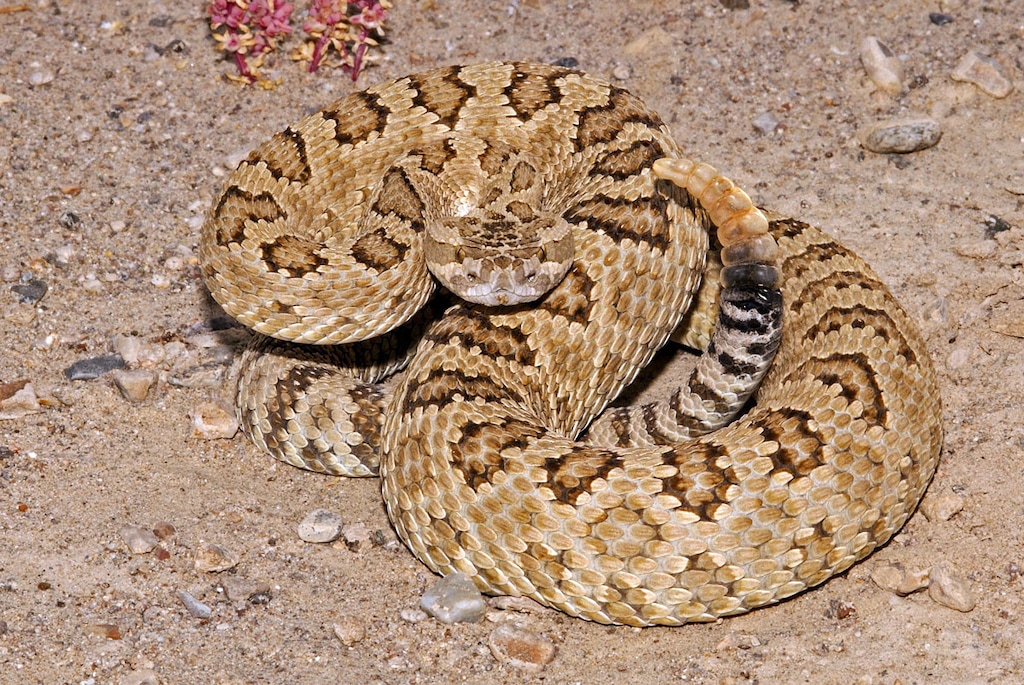
Great Basin rattlesnakes — the species found in Salt Lake City’s foothills — typically grow to about 3 to 4 feet and are the only venomous snake species along the Wasatch Front.
They love the foothills area for its dry and rocky slopes and higher elevation, said Alyssa Hoekstra, state herpetology coordinator for the Utah Division of Wildlife Resources.
“They like that kind of habitat for hibernation, for basking, for mating,” she said.
(Chris Samuels | The Salt Lake Tribune) The hillside above the University of Utah is seen after the Bonneville Fire in Salt Lake City, Monday, June 22, 2026.
(Utah Division of Wildlife Resources) Pictured is a Great Basin rattlesnake in Washington County, Utah on May 31, 2018.
Because they’re not a species in need of conservation efforts, the state doesn’t do much to track their numbers, Hoekstra said. But she noted iNaturalist, a social network where people share information about animal sightings, offers a good idea.
In the rough area of the fire, iNaturalist shows 97 rattlesnake sightings dating back to 2011, with five reported in May of this year.
Rattlesnakes, generally, are pretty shy, Hoekstra added. So there’s certainly more that aren’t seen. But that rough tally gives scientists an idea to then extrapolate for general population counts. The population there is considered healthy, she noted.
How do snakes react to wildfires?
During a fire, a rattlesnake’s first instinct will be to go underground if they can — finding shelter under rocks or in hiding holes, she said.
That’s because, Hoekstra added, fires tend to move faster than snakes can slither.
With that, there’s often a high mortality rate for snakes with wildfires. “They can’t escape it,” Hoekstra said.
(Utah Division of Wildlife Resources) Pictured is a Great Basin rattlesnake at Camp Williams in Utah on October 10, 2025.
(Francisco Kjolseth | The Salt Lake Tribune) Crews battle the Bonneville Fire in the foothills above the University of Utah on Saturday, June 20, 2026.
But if a rattlesnake sees open and safe areas to flee, it may do that. And if the natural range snakes live within includes some houses, they might pop up more in yards.
“A wildfire might increase opportunities to see them,” she said.
Hoekstra urged homeowners who see rattlesnakes to let them be, if they can.
As a precaution, worried homeowners could “snake-proof” their yards by removing places a snake could hide, such as rocks, logs or stacked firewood, she said. They can also call a service to safely remove and relocate snakes; several such companies are listed on the Division of Wildlife Resources website.
One, Kolob Snake Wranglers, is led by Riley Irvine. He said he hasn’t had any calls related to the Salt Lake City fire as of Monday, but he’s responded in the past to snakes displaced by wildfires.
Sometimes individuals think there’s more of an effect than there is, he said.
“Last year, with the fire that burned up against Cedar Hills, there were calls in that community of snakes coming down into the neighborhoods,” Irvine said. “Mostly just snakes found outside around the home, but a few that made it into a garage or storage area.”
It’s important, he said, for residents to remember to be patient.
“All wildlife in general is being displaced,” he said.
More sightings likely after fire
Once the fire is out, the remaining rattlesnakes will likely return higher up into the foothills where they’re more comfortable, Hoekstra said. Even if the earth is scorched, they prefer their traditional range; only slight adjustments are made to capture prey.
“They typically will stay where they know,” she said.
Hoekstra is more concerned for when the fire is out and the trails in the area reopen.
Trail hikers and bikers will likely to see more rattlesnakes, because their normal hiding places in grass and brush will be gone, leaving them more exposed, she said.
If you see a rattlesnake while hiking, back up and give it a 10-foot radius, the Division of Wildlife Resources urges. Hoekstra added it’s good to also alert other hikers you come across.
“That helps the snakes and helps people, too,” she said.
If you hear a rattlesnake before you see it, the advice is slightly different: You should immediately stop and try to figure out where it is, Hoekstra said.
That’s so you don’t accidentally get closer to it while backing away. The snake’s rattle is meant as a warning.
While in rattlesnake country, she advises that people watch where they step or sit, including where they put their hands. Rattlesnakes don’t want to be found, but will bite if they feel threatened, Hoekstra said.
David E. Jensen, former owner of Wasatch Snake Removal in Salt Lake City, said the same in a recent op-ed for The Salt Lake Tribune.
“Great Basin rattlesnakes, like most snakes, are docile and reclusive creatures that want nothing to do with humans,” he wrote, “and are usually just passing through.”
(Chris Samuels | The Salt Lake Tribune) A person walks along a hillside above the University of Utah scorched by the Bonneville Fire in Salt Lake City, Monday, June 22, 2026.