 Dylan Eubank
Researchers at Brigham Young University have developed a promising new weapon in the battle against cancer.
A new immunotechnology, called MOTO-CAR, genetically engineers macrophages — immune cells that can enter solid tumors — to recognize cancer markers, attack the cells of the tumor and activate other cells to fight the cancer.
According to a university news release, this technology could lead to new treatments for “difficult-to-cure cancers,” including glioblastoma, triple-negative breast cancer and pancreatic cancer.
If ultimately successful, this treatment would not only be efficient, according to lead researcher and BYU professor of microbiology and molecular biology Kim O’Neill, but also far more cost-effective.
In one in vitro study, O’Neill said, researchers observed a 90% reduction in aggressive lung cancer cells within 24 hours. In another, a single treatment regimen in mice reduced tumor sizes by up to 46%.
This work is not just professional for O’Neill. It’s also personal. Both of his parents died of cancer. These preclinical trials, he told The Salt Lake Tribune, give him hope for others with the disease.
“A lot of my friends have cancer,” O’Neill said. “I know there’s a lot of people out there with cancer, and we’re doing all we can to get this into the hands of the right people that will get this on the market.”
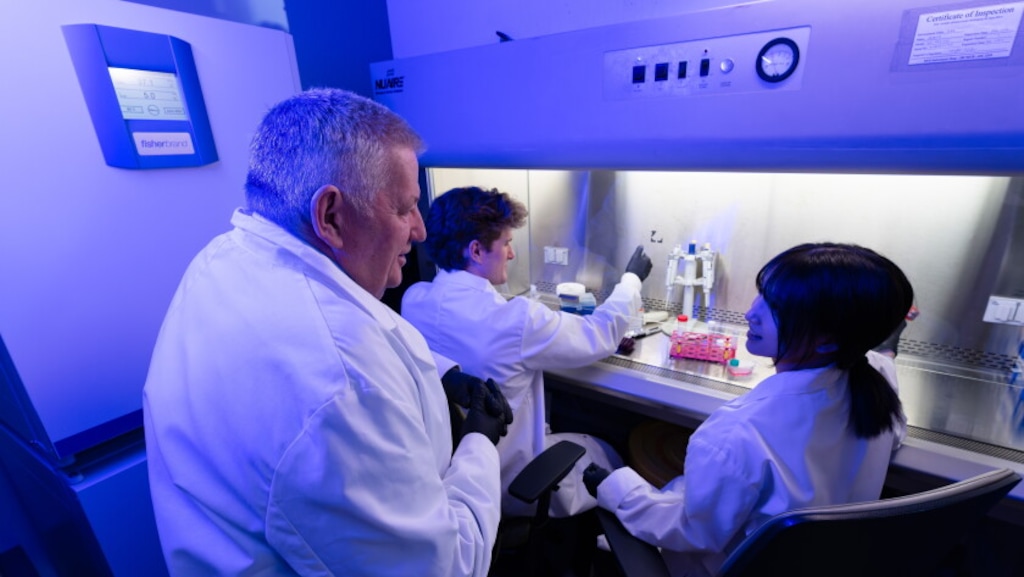
(BYU Photo) BYU professor of microbiology and molecular biology Kim O'Neill, working with a student, explains that the MOTO-CAR technology is designed to convert the patient’s own immune system to recognize and fight cancer.
Although the research remains preclinical, researchers anticipate what the treatment would look like.
The process would first require a biopsy of the tumor to identify the cancer type and biomarkers. A treatment team would then select a “pre-engineered MOTO-CAR therapeutic.” After approval, a clinician would administer the therapeutic, most likely through a simple infusion.
The expected effects of the infusion would include flu-like symptoms around the third and fourth day. By days 14 to 28 the immune system would ideally be in full force fighting the tumor.
According to the release, further work and funding are needed before human clinical trials could begin, and the results have not yet been formally published to protect the patent process.
BYU patents have been issued and transferred through a licensing agreement to Thunder Biotech, a research partner company founded by O’Neill in 2016.
According to O’Neill, if all goes to plan and the Food and Drug Administration signs off, MOTO-CAR therapy could become a cancer-treatment option in fewer than five years.
“We’ve had many roadblocks and got over them, and I feel confident that we’re on the right trail,” O’Neill said. “Whether it’s us [who discovers a cure] or somebody else, I believe that immunotherapy is in the future for cancer patients.”
Note to readers • Dylan Eubank is a Report for America corps member covering faith for The Salt Lake Tribune. Your donation to match our RFA grant helps keep him writing stories.