 Jose Davila IV
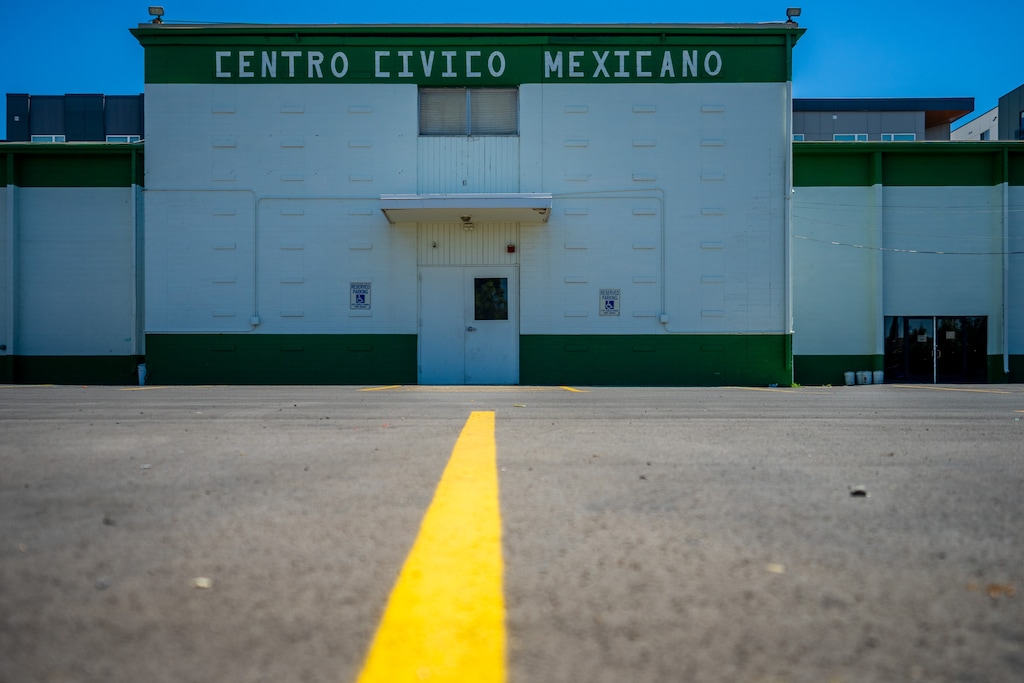
A simple, green-and-white building stands in an unassuming spot near downtown Salt Lake City. Newly built apartment complexes surround it, looming above.
Rather spartan, you’d be forgiven for thinking it was some sort of factory.
Except for the painted lettering on its top band of green: “Centro Civico Mexicano,” or, in English, the Mexican Civic Center. The oldest Latino organization in Utah, founded in 1935, has hosted dances, celebrations and sporting events at the building since 1980.
Robert Rendon, a former Zions Bank executive and longtime high school baseball coach, got his start playing for a youth team affiliated with the center.
“It was about youth getting together, and it was all about baseball. It was about our culture, too,” Rendon, who still lives nearby, said. “It also gave you that sense of inclusion.”
This historic center of Latino life in Utah’s capital, however, is no longer meeting the needs of the people it serves. The building is in need of significant repairs, including for damage from the 2020 earthquake, and is filled to the gills with programming.
(Trent Nelson | The Salt Lake Tribune) Centro Civico Mexicano in Salt Lake City on Tuesday, June 2, 2026.
“We need a newer building, something that will stand up to an earthquake ... that has more bathrooms, that will have more classrooms,” Centro Civico Mexicano President and CEO Brandy Farmer said.
Centro Civico Mexicano has linked up with Centro de la Familia, a childcare and education nonprofit, to build what the organizations are calling El Centro. The planned $25 million structure would be larger and set up to host basketball practices, childcare and even cooking classes. It would sit on the site of the current building at 155 S. 600 West.
A group that met through Centro Civico Mexicano started Centro de la Familia in 1975.
“The people that founded Centro de la Familia … decided that they wanted to do something in addition to just meeting [at Centro Civico Mexicano] in a civic way and celebrating their culture,” Centro de la Familia CEO Gonzalo Palza said. “They actually wanted to be active participants in improving the lives of their community.”
Palza said the partnership with Centro Civico Mexicano was like “going back home” for Centro de la Familia, which runs 28 childcare centers across four states.
For his organization, the new building will hold Centro de la Familia’s offices and give it a space to host its family education and after-school programs. Palza said the nonprofit will also open another Head Start center on-site. Head Start is a federally funded early childhood education program for kids 5 and younger.
(Centro Civico Mexicano and Sparano + Mooney Architecture) A rendering of the planned El Centro community facility set to be built at 155 S. 600 West in Salt Lake City
Plans for El Centro also include an art gallery, a playground and a black box theater, plus underground parking. Renderings show a striking modern red building with multicolored murals and a partially covered outdoor space underneath an overhanging portion of the structure.
El Centro is the second phase of a yearslong project that started with the construction of Casa Milagros, roughly “Miracles House” in English, next door to the north. The apartment complex, developed by Centro Civico Mexicano with the help of a grant from the U.S. Environmental Protection Agency, is earmarked for older and lower-income Utahns.
Project leaders hope to start construction on the new community hub in January 2028. Fundraising efforts have started, but the development still needs some outside financial support, said developer and former Salt Lake County Mayor Peter Corroon, who is helping with the project.
(Trent Nelson | The Salt Lake Tribune) Casa Milagros and Centro Civico Mexicano in Salt Lake City on Tuesday, June 2, 2026.