 Jose Davila IV
Most municipalities across the country have formal names like the City of Phoenix, City of Seattle and the City of Milwaukee, so why are many Utah places named differently?
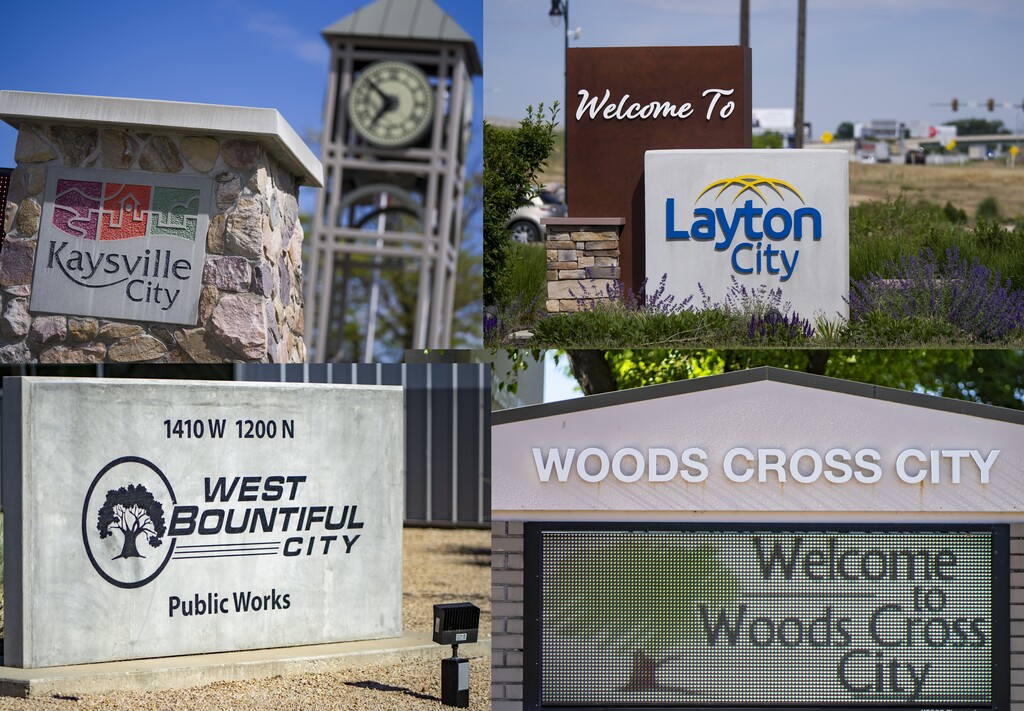
Ogden City. Sandy City. Hurricane City.
In fact, about 70% of Beehive State municipalities are named this way, according to the Utah League of Cities and Towns, an advisory organization that works on behalf of local governments.
It’s a Utah oddity that historians haven’t studied, but clues to its origins might be found in a familiar religious figure and some of the state’s earliest documents.
“I move that we call this place ‘The Great Salt Lake City, of the Great Basin of North America,’” Brigham Young said during a special conference of The Church of Jesus Christ of Latter-day Saints on Aug. 22, 1847, according to the faith’s journal history. Young and other members had just ridden into town a month earlier, and those in attendance immediately embraced the prophet-president’s pitch.
Although not unheard of, it was uncommon putting “city” after the place’s name.
Early on, Utah State University Eastern history professor Nichelle Frank said, even Young himself mixed up the name. In 1848, one letter written by Young and another by John Smith referenced the “City of Great Salt Lake City.”
Despite that early deviation, Young’s original naming convention stuck.
(Tribune file photo) Brigham Young, second president of The Church of Jesus Christ of Latter-day Saints.
An early case of copy and paste?
When it was settled by Mormon pioneers, what is now Utah’s capital was part of Mexico, and until the early spring of 1849, those in The Great Salt Lake City lived under laws dictated by the church.
In March of that year, residents formed the provisional State of Deseret as they looked to gain U.S. statehood after Mexico ceded the land to Washington, D.C. The new government, with now-Gov. Brigham Young in charge, had a legislature known as the General Assembly that was, in part, tasked with granting charters, or foundational legal documents, to cities.
Lawmakers, using a direct copy of the charter of the City of Nauvoo, in Illinois, passed a law incorporating the Salt Lake Valley settlement wedged between water and mountains on Jan. 9, 1851, putting it the among oldest incorporated communities west of the Mississippi River.
They called it “Great Salt Lake City,” similar to Young’s original idea but dropping “the” from the name.
Less than a month later, on Feb. 6, 1851, the General Assembly extended local government powers to four other settlements, largely copying Great Salt Lake City’s charter in all instances and the naming convention for three of them: Ogden City, Provo City and Parowan City. Oddly, lawmakers named the fourth the City of Manti.
The first Ogden City Council minutes offer a clue emphasizing Utah’s uncommon naming form and the early growing pains of setting up local government.
“It seems to suggest, out of habit, they wrote ‘City of Ogden,’” said Heidi Steed, a program manager at the Utah Division of Archives and Records Service. “It probably felt more formal to them, but then it looks like in these minutes they scratched that out and intentionally wrote ‘Ogden City,’ suggesting that they were either corrected, told to write it that way, or someone reminded them that actually was the name of the city.”
About 20% of Utah’s municipalities were incorporated before statehood rolled around in 1896, Utah League of Cities and Towns Executive Director Cameron Diehl said.
Many of the communities chartered by the territorial Legislature, which formed after the original Assembly, carried the dominant naming convention: Alpine City, Nephi City and Spanish Fork City, for example. Though, few others, like the City of Springville, used the other style.
Since statehood, the tradition has continued. Even some of Utah’s newest municipalities have adopted the convention, like Herriman City and Eagle Mountain City.
Brigham Young the trendsetter
Utah historian David Amott said the idea that other settlements would follow Young’s lead makes sense.
“When he starts a tradition of any sort, I think people pick up on that,” Amott said. “... It’s very, very probable that Brigham Young started a trend without him even being aware of it.”
Brian Cannon, a western U.S. historian at Brigham Young University, agreed.
“It’s an interesting riddle that you pose,” Cannon said. “And it seems that, given what you’ve laid out, that Brigham Young established a pattern here that seems to have been followed more often than not in Utah.”
There remain at least a couple of unanswered questions not captured by contemporary documents:
• Why did Young place “city” at the end of Salt Lake City’s name, inverting the City of Nauvoo construction?
• And why did the General Assembly adopt the format for only four of the five municipalities it chartered?
Whatever the answers to those questions, not all Utah municipalities have followed Young’s lead. Notable holdouts include the City of Moab and the City of St. George.
Diehl said when it comes down to it, the position of “city” is meaningless.
“Legally, it doesn’t matter. There’s no rhyme, there’s no legal reason to have it before or after,” Diehl said. “And some of them don’t have that word at all.”
Legal technicalities aside, Steed, the archive manager, is invested in solving the mystery.
“Now, I may forever be on the hunt for it, whenever I’m interacting with territorial records in Utah,” she said. “Because that’s the thing, the right historical question can really reframe records. You’ll see those primary sources in an entirely new way.”