 Samantha Moilanen
Measles cases have been rising across the Beehive State since June, but a southern Utah nurse practitioner says many people still underestimate how serious the disease can be.
Amanda Jocelyn, who works in pediatric care in Hurricane, told reporters Thursday she has long educated patients about measles but had never treated a case until a few months ago. Since then, she said she has cared for more than a dozen patients with the highly contagious illness.
Her experience, she said, has shown her how severe the illness can become.
“Many people think that measles is just a virus that most children recover from if they’re otherwise healthy,” Jocelyn said. “ ... The children I am seeing in the clinic with measles are very, very ill. And in several cases, their parents and their caregivers get ill as well.”
At a news conference to call attention to the current measles statistics, state epidemiologist Dr. Leisha Nolen said she had a similar experience while recently visiting a southern Utah community hit hard by the illness.
“Over and over again, what I heard from these people who had measles, as well as the providers, was that measles is so much worse than what they expected,” Nolen said. “It is not a mild infection, it is not a mild virus, it is severe illness.”
While most of the cases remain in southwestern Utah, a recent spike in Salt Lake County sent county health officials asking residents to stay home if they’re feeling sick.
Since the outbreak began, 358 Utahns have been diagnosed with measles, Nolen said. Of those, more than 120 sought care in an emergency room, 31 were admitted overnight and three required treatment in an intensive care unit.
So far, Nolen said no one in Utah has died from the disease.
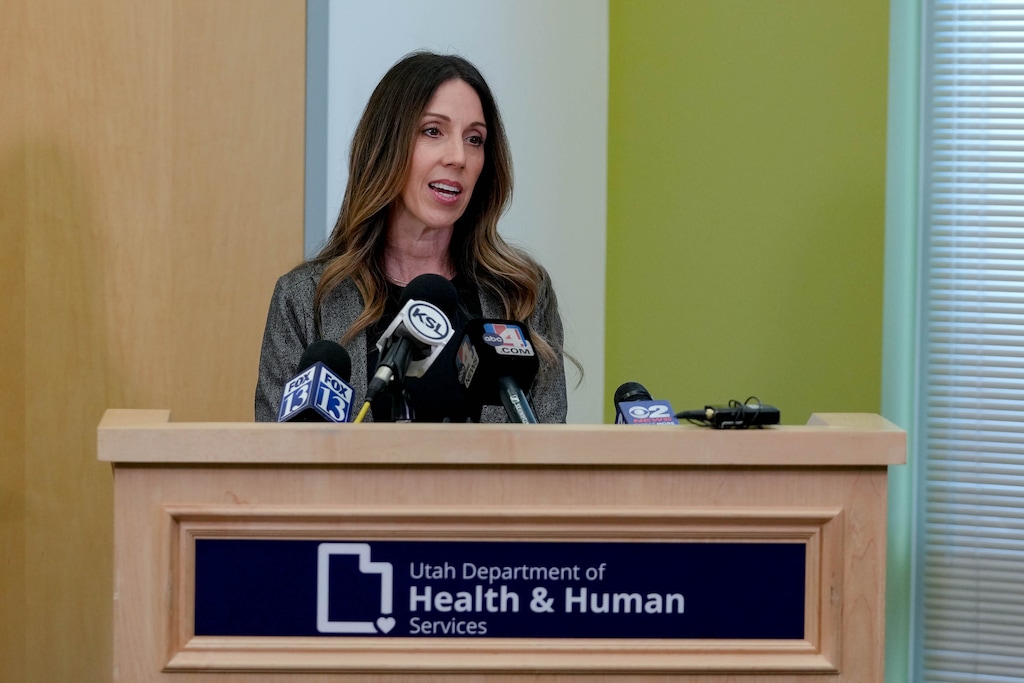
(Francisco Kjolseth | The Salt Lake Tribune) Public health officials warn of the rise of measles in Utah as Dr. Leisha Nolen, state epidemiologist, shares an update on Thursday, March 5, 2026.
Symptoms typically appear seven to 14 days after exposure and often resemble a common cold at first, Nolen said — including fever, cough, a runny nose and red, watery eyes.
“Those first few days, it’s hard to know you have measles, and that’s where we know people are most likely to spread it to other people,” Nolen said. “After those first four-ish days of general symptoms, then they get a rash, and that’s when most people will realize they have measles, but by that point, they have possibly infected a lot of other people.”
Most of the reported cases, 203, are in counties in southwestern Utah, followed by 50 in Utah County and 44 in Salt Lake County, according to a Utah Department of Health and Human Services online database tracking cases.
Nolen said most of those who have contracted the disease are unvaccinated, but about 8% to 10% had received at least one dose of the vaccine for measles, mumps and rubella.
“It’s unfortunate that we do have some people who are vaccinated get measles,” Nolen said, “but we know there is no such thing as a perfect vaccine.”
Pregnant women, children younger than age 5 and people with weakened immune systems face the greatest risk of serious illness if they contract measles, she said.
Health officials are also seeing many outbreaks tied to school activities where large groups gather, such as wrestling matches, dance teams and basketball games.
The best protection is the MMR vaccine, Nolen said.
“It’s quite a prolonged outbreak, and we are trying our best to protect people,” Nolen said, “but it is one of those things where we all need to work together as Utahns to get this under control.”