 Shreyas Laddha
For a moment, Keyonte George looked like a hero.
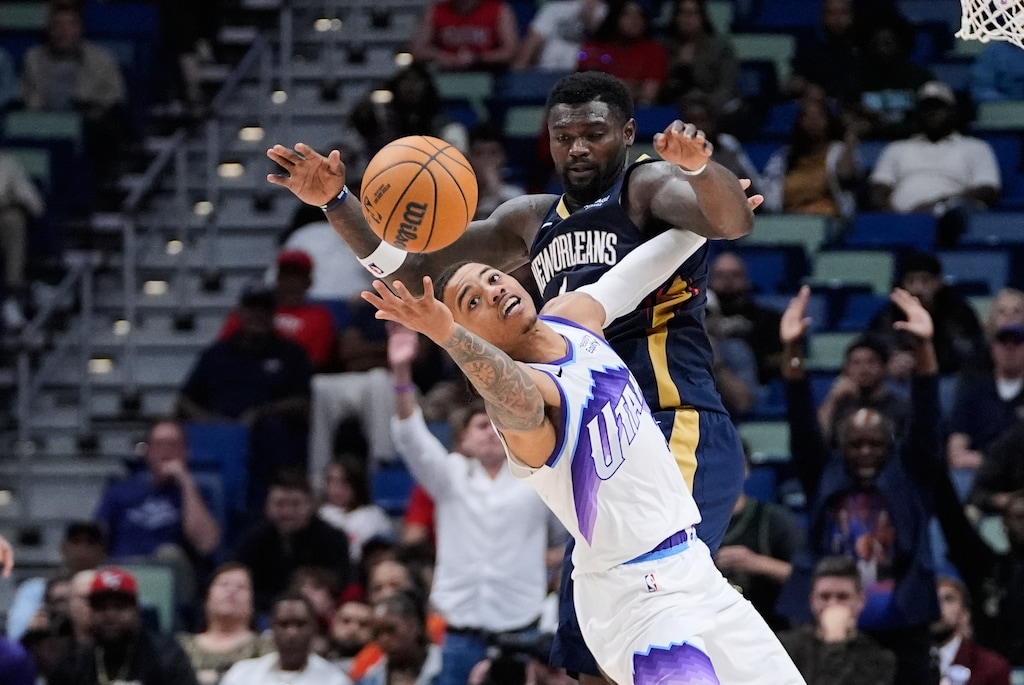
With the game tied at 104, the Jazz guard hit a tough mid-range jumper over the outstretched arms of New Orleans Pelicans forward Zion Williamson as the horn sounded.
It gave the Jazz a gritty, much-needed victory over New Orleans. Or at least it appeared that way.
An eagle-eyed official, though, quickly waved the shot off. After a quick review, it was clear: the ball left George’s hand just a hair late. The game stayed tied and went to overtime.
George thought he got the shot off.
“It’s a learning moment,” he said. “You got to go get the ball. Can’t get stuck on the right wing.”
The game-winner would have capped off a special night for George. Instead, it was a missed opportunity in another difficult overtime loss for the Jazz.
Even in the extra session, it looked like George would be the hero.
Utah started the overtime period with a 6-0 run, fueled by back-to-back 3-pointers from George.
Then the wheels fell off.
Utah gave up a 14-0 run to the Pelicans, putting the game out of reach. As you might have guessed, Utah’s offensive process wasn’t the greatest during that stretch.
The Jazz didn’t move the ball much, and their shot selection wasn’t ideal. Utah didn’t attempt a single shot inside the arc. Meanwhile, New Orleans didn’t shoot a single 3-pointer.
Utah’s insistence on shooting 3-pointers was a little baffling, considering the Jazz shot 23% on 47 attempts by the end of the game.
It continued the Jazz’s ice-cold start from behind the line this season, as Utah ranks No. 27 (31.5%) in 3-point percentage.
That doesn’t mean the Jazz haven’t had plenty of open looks. They just haven’t gone down.
That was mostly the case in regulation, with Utah missing several open 3-pointers.
In overtime? After George’s two makes, the 3-pointers Utah attempted weren’t very open … or easy to make.
“I think we’ve generated some good looks,” Jazz coach Will Hardy said. “The only way to get out of it is to keep shooting good ones. I think the worst thing we can do is start pressing. We need to trust each other. We need to trust our teammates. Continue moving the ball to our teammates when they’re open, and trust that they’ll make the right play.”
Hardy pointed out that the Jazz’s 11-for-47 performance from deep doesn’t reflect the team’s shooting talent.
“It’s a long year. Every team faces adversity and every team faces a shooting slump,” he said. “Ours just happens to be here at the beginning, and so it makes it feel a lot worse than maybe it will feel in two months. So we have to endure these moments.”
Meanwhile, George said he didn’t think the Jazz struggled to get into sets late in overtime.
“For the most part, I felt like we got the shots that we wanted,” George said. “There were some times where I was fumbling the ball, not playing in space. … When I go back and look at it, obviously I am going to beat myself up. I think in those last two minutes and 30 seconds, maybe we could have gotten a better shot, who knows?
“I think for me, for the most part, it felt like our group was engaged all five and we were basically getting the shots we wanted.”
Offense aside, Utah’s defense struggled to keep the physical Pelicans players from causing havoc in the paint. The offensive rebounds were also killer, with two boards leading to buckets by Pelicans guard Jeremiah Fears.
Both Hardy and George pointed out the rebounding as a major issue in the period.
“I thought our initial defense was good,” Hardy said. “They had a couple of second-chance baskets. Fears had one to kind of start off that. We need the secondary players to get those boards. It’s hard. Guys like [Derik] Queen and Zion put so much pressure on the rim.
“The guys at the rim are sort of locked up physically to contest those balls and we need secondary rebounders.”
Instead of celebrating George’s high-scoring night, Jazz fans got another painful overtime loss as Utah fell to 1-7 for the season.
It’s just been that kind of season so far for the Jazz.