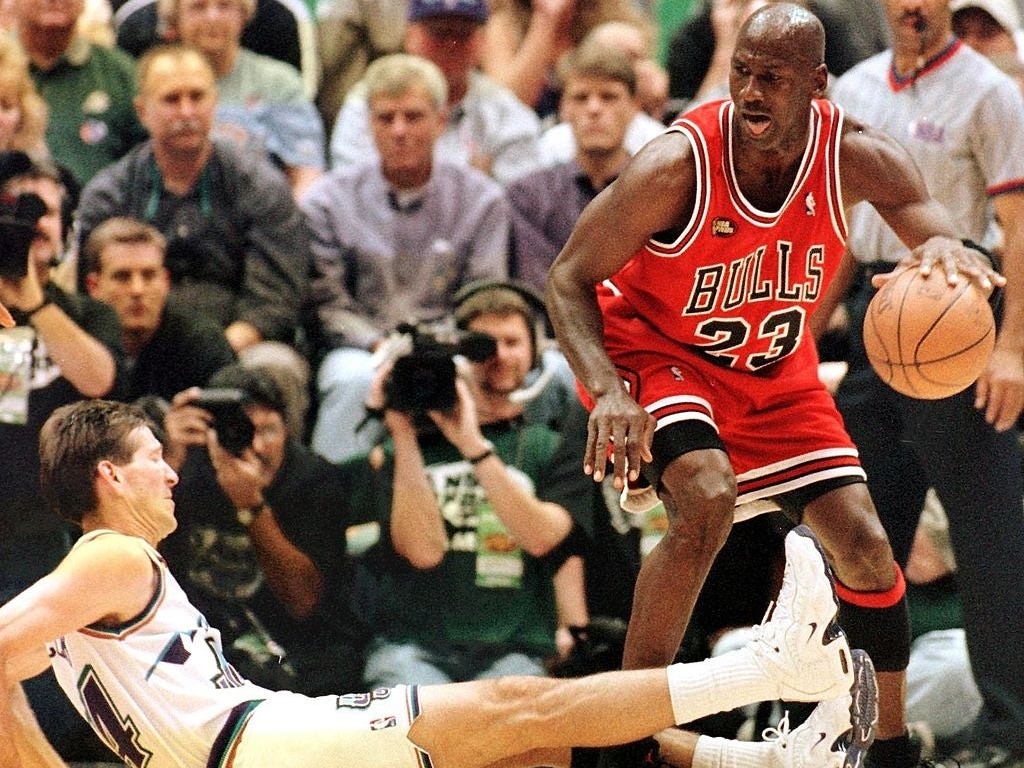
A Chicago Bulls jersey worn by Michael Jordan in Game 2 of the 1998 NBA Finals sold through a private sale for $14 million, according to Hunt Auctions, setting a record for the highest known price paid for a piece of basketball memorabilia. It is also the second most expensive game-used jersey ever sold, behind the $24.12 million paid in 2024 for Babe Ruth’s “called shot” jersey from the 1932 World Series.
This sale comes less than two weeks after the jersey worn by Jordan in Game 3 of the ’98 Finals sold for $12.26 million at auction. That broke a record previously held by Jordan’s jersey from Game 1 of the ’98 Finals, which sold for nearly $10.1 million at auction in 2022. Unlike the Game 1 and Game 3 jerseys, the Game 2 jersey is autographed by Jordan, adding to its value. The Bulls beat the Utah Jazz 93-88 in Game 2, and Jordan led all scorers with 37 points.
“In our opinion, and 36 years of market experience, Babe Ruth and Michael Jordan stand above all others in the history of American sports,” said David Hunt, president of Hunt Auctions, in a press release about the sale. “The record-setting price achieved for the related Michael Jordan jersey is yet another corroborative result as to the significance of Jordan within the (sports memorabilia) industry and popular culture. … While Michael Jordan’s importance within the sports memorabilia marketplace has long been established, it has now escalated to an elite asset class more typically reserved for iconic works of art.”
According to Hunt, the Game 2 jersey was purchased by sports memorabilia collector Ron Firman, who also recently purchased a 1951 Mickey Mantle photograph used for the image on Mantle’s iconic 1952 Topps card for $3 million, a record for a Type 1 photo, through a private sale brokered by Hunt.
The Game 2 jersey was originally purchased by a collector directly from the Bulls, Hunt said, and came with documents confirming its authenticity, including a 2003 letter from former Bulls director of community relations Jeff Schultz, in which he wrote, “It is my opinion that this jersey is one of the finest examples of any game-worn jersey I have ever seen in my 15+ years of managing the Chicago Bulls memorabilia.” The jersey has since been photomatched to the game by MeiGray Authentication and SIA Authentication.
The record sales of Jordan’s games 1, 2 and 3 jerseys from the ’98 Finals show how coveted Jordan memorabilia from that “Last Dance” season, in which he won his sixth and final NBA Championship with the Bulls, has become among high-end collectors. The jerseys worn by Jordan in games 4, 5 and 6 of the series have not yet sold publicly, but the black-and-red Air Jordan 13 sneakers he wore in Game 2 sold for $2.2 million in 2023. They remain the most expensive sneakers ever sold publicly.
Most expensive game-worn jerseys ever sold (all sports)
Babe Ruth 1932 World Series New York Yankees jersey — $24.12 million
Michael Jordan 1998 NBA Finals Game 2 Chicago Bulls jersey — $14.00 million
Michael Jordan 1998 NBA Finals Game 3 Chicago Bulls jersey — $12.26 million
Michael Jordan 1998 NBA Finals Game 1 Chicago Bulls jersey — $10.09 million
Diego Maradona 1986 World Cup quarterfinals Argentina jersey — $9.28 million