 Peggy Fletcher Stack
 David Noyce
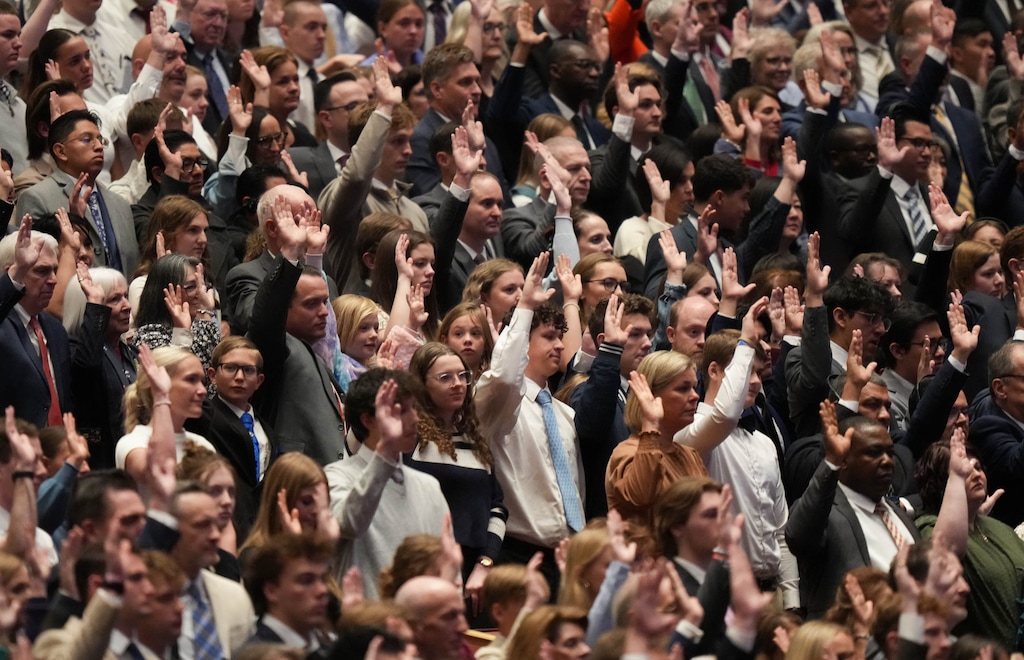
On April 4, millions of Latter-day Saints worldwide raised their hands to show symbolic support for their new prophet-president, Dallin H. Oaks.
It was a rare ritual, called a solemn assembly, done primarily at the time of a new leader for The Church of Jesus Christ of Latter-day Saints. But this act of “sustaining” is also commonly used in congregations as a way to express goodwill and welcoming to new members and to members who have completed their volunteer assignments or are accepting new ones.
“With those raised hands and encouraging smiles, we [are] participating in common consent, where we can choose to sustain, by the raising of the right hand, those called to serve,” apostle Patrick Kearon explained right after Oaks’ solemn assembly. “Common consent is not a mere formality but a beautiful mix of our agency, unity and faith. It is a voluntary, personal commitment to support, uphold and help the Lord’s called servants in their responsibility.”
And it is almost always unanimous.
But does that act imply members are or should be in complete agreement with those who are sustained? Or that the leaders are infallible? Or that the thinking among members is done?
On this week’s show, Taylor Kerby, author of “Scrupulous: My Obsessive Compulsion for God,” and Heather Sundahl, a historian at Exponent II and a marriage and family therapist in Provo, discuss the church’s teachings about “sustaining.”
Listen to the podcast: