 Gordon Monson
In the past, I’ve chided and maybe even ridiculed some of the peculiar cultural aspects of my religion, a religion in which I mostly find rock-solid faith and good comfort in spiritual matters. The Church of Jesus Christ of Latter-day Saints, indeed, has its standards and its weird adorning quirks, even a few that have leaned with harder edges toward doctrine.
Either way, there are bits and pieces the church has pretty much nailed, in some cases long before a majority of folks on the outside got around to figuring them out. What follows here, absent of too much smart-alecky sarcasm, are eight examples of sound practices, principles and notions, some of which only nudge up against doctrine or worship or strict spirituality.
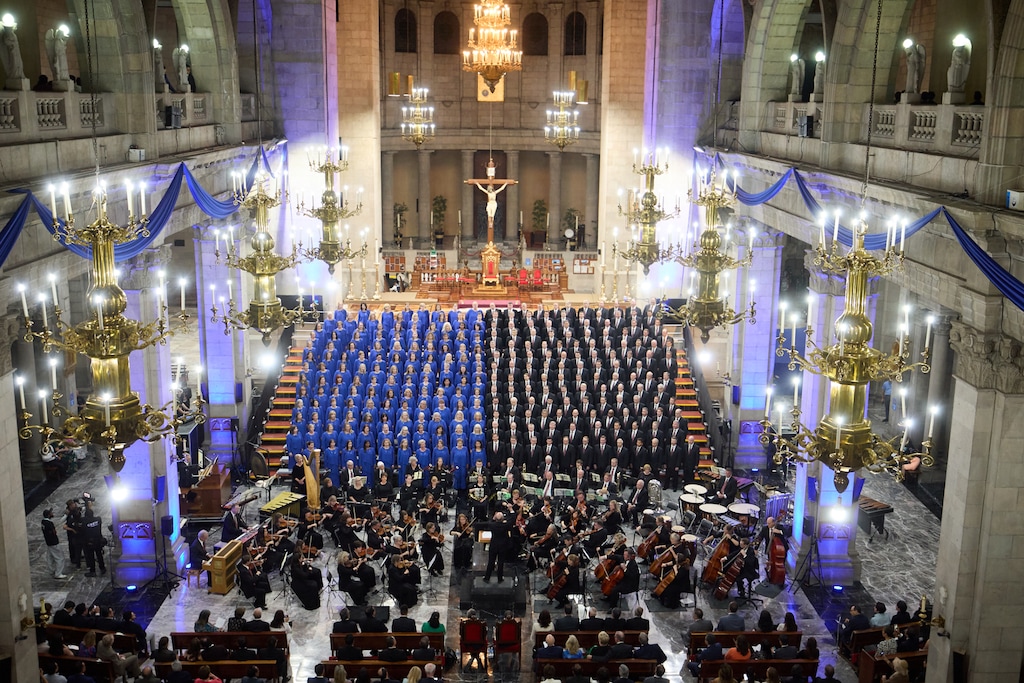
1. The Tabernacle Choir at Temple Square was and is an enlightened idea.
It is said Brigham Young started up a small choral group within a month of the pioneers entering the Salt Lake Valley in 1847, and The Tabernacle Choir at Temple Square represents the continuation of that emphasis on music. The choir — and its companion orchestra — has performed around the globe at major events. You’ve probably heard that it started a show called “Music and the Spoken Word” in 1929 and that it now is the longest continuous network radio broadcast, carried by more than 2,000 stations.
One of my more memorable sports moments came when, shortly after 9/11, the choir, dressed in jeans and T-shirts, the kind of knock-around attire fans would wear to a Utah Jazz game, took the floor during halftime at the Delta Center and sang a song about America that, well, let’s just say it stirred up a whole lot of dust in the arena.
Music does that, its effect on people conjuring emotion and giving hope and solace. I talked a few days ago to a choir member, a dude with a fantastic voice, and asked him what the best thing is about being a part of it. His response: “You go to perform in front of all kinds of people who might be happy, who might be sad. Some are going through hard times, going through hell for whatever reason, and to give them just a bit of peace is a remarkable feeling.”
The choir sings religious, patriotic and popular songs. I just wish it would occasionally belt out a Beatles or Led Zeppelin tune. I’d pay good money to hear the choir’s rendition of “Let It Be” or “Stairway to Heaven.”
2. Smoking is bad for you.
(Mark Lennihan | AP) Latter-day Saints have long been taught not to smoke — even before medical science warned of the health dangers.
Joe Camel and the Marlboro Man never approved, but as a part of its Word of Wisdom, the church dissuaded — and later forbade — its followers from using tobacco initially back in 1833. Believe what you want about WoW’s origin, whether it came from divine revelation to church founder Joseph Smith or simply a strong suggestion from his wife, Emma, who reportedly grew tired of cleaning up the mess created by tobacco-chewing and -smoking church leaders during their School of the Prophets meetings. Whatever prompted it, and whatever other parts of the Word of Wisdom now seem erroneous or incomplete or inconsistent, the anti-tobacco element was not just revelatory, it also was way before its time.
The church was among the first corners of society to side against smoking. Back in the day, John Wayne, Ronald Reagan, physicians, dentists, the Flintstones, even Santa Claus appeared in cigarette commercials. Then medical research came along. An activity/habit once seen as a signature of cool — think Marlene Dietrich standing in silhouette, blowing smoke in a dark doorway — is now denounced by health officials. Chalk one up for Joseph and Emma.
3. Alcoholic drinks are unhealthy.
(Bethany Baker | The Salt Lake Tribune) A patron picks up a bottle of alcohol at a liquor store in downtown Salt Lake City. The World Health Organization has warned the no amount of alcohol can be deemed "safe."
Throw another bone to J.S. As a part of the Word of Wisdom, the founding Latter-day Saint prophet indicated that alcoholic beverages should be shunned. That was not completely religiously revolutionary — even biblical verses warn against “strong drink.” But Smith further canonized that warning to the point that modern church leaders have made abstinence a calling card for devout Latter-day Saints. It’s an identifier for church members. If they don’t drink wine at dinner or a beer at a game, they’re often asked, “Are you Mormon?” Yeah, often they are.
As a matter of law, Prohibition was a lousy idea. The 18th Amendment succeeded in fertilizing ground for the rise of organized crime, failing miserably as a bastion of prim-and-proper righteousness. Many people enjoy an adult beverage or two or three in moderation. No big surprise there. Still, as far as what recent research has shown, alcohol is straight poison for the human body.
You can look it up. According to the World Health Organization, there is no “safe” level of drinking. And the U.S. surgeon general’s office has called for labels — like those on cigarette packs — warning consumers of alcohol’s proven ties to cancer.
I’m no expert on this, and I appreciate Jimmy Buffett having wanted, as he sang it, “that frozen concoction that helps me hang on,” but it appears that doctors and researchers in the 21st century are discovering what Smith was onto nearly 200 years earlier.
4. The church’s welfare system provides positive opportunity.
(The Church of Jesus Christ of Latter-day Saints) The World Food Program runs the homegrown school meals program in Haiti, where half the population struggles to find enough food to eat. The Church of Jesus Christ of Latter-day Saints gave $8 million to assist in the efforts in 2024.
The church historically has looked for ways to aid its own people, and, in 1936, with the nation in the grips of the Great Depression, it formed a welfare system that enabled unemployed people to gain assistance for labor they provided, work that included building churches, cultivating farms, and growing and processing food.
The welfare plan has evolved over time, but it still helps millions of individuals and families in nearly 200 countries, according to the church, with food and water, health care and housing, education and employment. That aid assists followers of the faith and those outside of it.
Not bad.
5. The Relief Society creates sisterhood.
(The Church of Jesus Christ of Latter-day Saints) President Camille N. Johnson, head of the global women's Relief Society, speaks with a woman after a devotional in Milan, Italy, in 2024. More than 8 million Latter-day Saint women belong to the Relief Society.
A women’s organization inside this patriarchal church that has existed since 1842, the Relief Society, with more than 8 million members, was and is set up to help individuals and families with temporal and spiritual support. The group’s aim is to provide charitable association and assistance when and where those needs emerge.
The women of the church make up a remarkable force. In fact, it would be an inspired idea at an upcoming General Conference to have the Relief Society leaders run the whole show, pick the speakers, dominate the talks, share their ideas freely, do whatever they want to do to make the sessions better, more memorable, even more meaningful.
6. An emphasis on family helps society.
(The Church of Jesus Christ of Latter-day Saints) A young Latter-day Saint family in Lagos, Nigeria, watches General Conference in 2021.
Folks inside and outside the church may agree or disagree with the manner in which the faith defines family, and there is room for criticism regarding the narrow view Latter-day Saint leadership has taken on that issue. But in a world where the splintering of families — however they are made up — has hurt many people, especially children, the church’s emphasis on the importance of preserving these circles of love is notable. It iterates and reiterates the significance of marital fidelity. If that counsel were followed, it would spare a whole lot of heartbreak. Were the church to expand its definition of marriage and family, making it more inclusive — granted, a big if — its family approach would help heal even more around the world.
7. Genealogy, for some, is fun.
(The Church of Jesus Christ of Latter-day Saints) Jacinda Ardern, then the prime minister of New Zealand, reads from a volume of her family history in 2018.
Not sure if awareness of the church’s genealogical work spread by way of the enormous popularity of the 1970s television epic “Roots,” but however it caught on, pursuing family history has mushroomed as more and more people explore a simple yet profound question: Where did I come from?
The result has brought some families closer, connecting generations spanning hundreds of years. It’s kind of cool to discover who your great-great-great grandfather and great-great-great aunt was, where they lived, what they did and whom they loved.
A family member once informed me that our line went back to a king of England, but that story seemed suspect. I do know that an ancestor on my mother’s side was a horse thief. So there’s that.
8. Called to serve — right away.
(The Church of Jesus Christ of Latter-day Saints) Latter-day Saints and full-time missionaries of the church help clean up fallen trees and debris caused by a tornado in Alabama in 2021.
Partly because of the church’s connected and efficient organizational structure, when community needs come up, Latter-day Saints are able to help — and in a hurry.
An example: When the horrific wildfires broke out in Los Angeles County, destroying so many residents’ homes, Latter-day Saint bishops and other regional leaders almost immediately were in contact with their congregations, seeking detailed information on who was affected and who needed help — a place to stay, clothing to wear, food to eat.
Whenever disaster strikes, those yellow-shirted Latter-day Saint Helping Hands volunteers have become almost as ubiquitous as Red Cross tents. And the faith has stepped up its cash donations to help in humanitarian efforts around the world, spending some $1.3 billion in 2023 and promising to boost that amount in years to come. Ah, the colors of charity — yellow, red and green.
“We will double the humanitarian work again and then again,” W. Christopher Waddell, first counselor in the church’s Presiding Bishopric, pledged in a national TV broadcast.
Like members of other faiths, such service is baked into the Latter-day Saint culture, and the church has the neighborhood framework, collective mindset, scriptural motivation, people power and growing wealth to give more — so much more — when needs arise.
Maybe it would do Latter-day Saints and the church that claims them good to laugh at themselves a little more when cultural peculiarities edge toward the bizarre, to acknowledge and apologize when mistakes are made, and to give credit to themselves when and where due. Nothing wrong with any of that. After all, credit in these eight cases — and in a number of others, too — is due.
(Francisco Kjolseth | The Salt Lake Tribune) Tribune columnist Gordon Monson.
Note to readers • This story is available to Salt Lake Tribune subscribers only. Thank you for supporting local journalism.