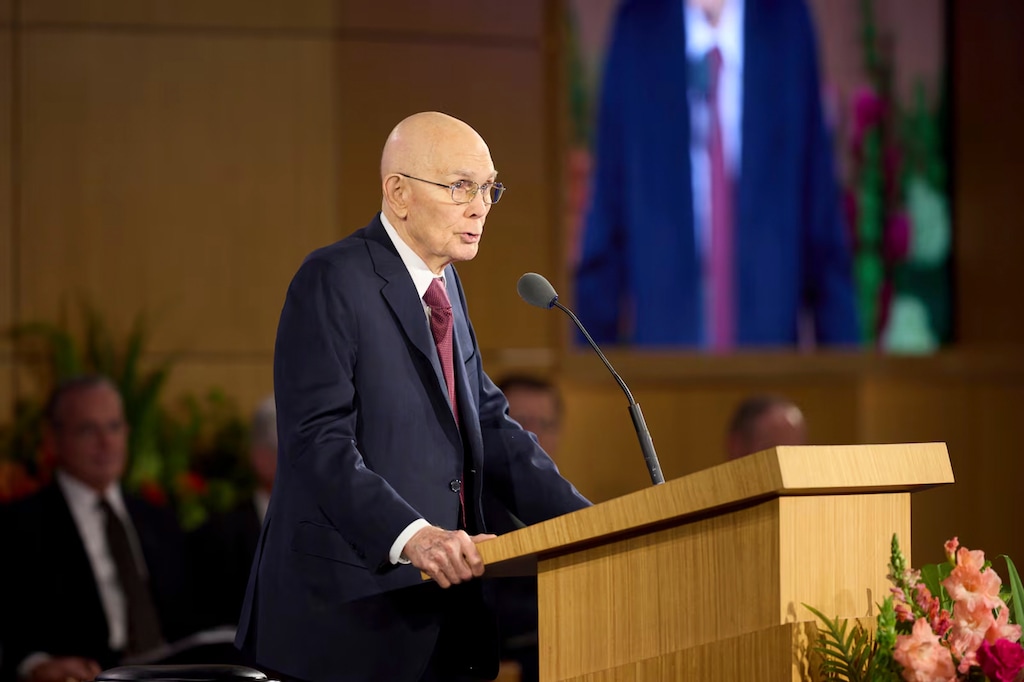
Dallin Oaks, president of the LDS Church, recently told an audience at the Washington National Cathedral that the Constitution “compels” a divided people to form coalitions. It is an elegant line, but it explains a process without addressing substance. Compromise is a method, not a policy: it specifies no terms, parties, or price, and it can advance justice or injustice alike.
Oaks cited the 2015 Utah Compromise as his model. That agreement followed years of conflict and emerged only after the political landscape had shifted. It is easy to praise compromise in hindsight; the harder test is to speak while the stakes remain immediate. On that measure, his continued silence is revealing. He urged loyalty to principles rather than officeholders, yet I can find no public statement from him about the Trump administration’s cruelties toward immigrants, critics, or election officials.
Someone who calls the Constitution divinely inspired has given no indication that he sees it under strain. Loyalty to principles over people rings hollow when he will not name the person testing them.
Retired federal Judge Thomas Griffith, in a recent interview with this newspaper, praised Oaks for acknowledging that his views on religious liberty changed after he learned they harmed others. But what of those hurt before that realization? Wisdom gained only after the damage offers little comfort to those who bore its cost. People are being harmed again now, and a leader who has learned that lesson once should not need to learn it twice.
I wish Oaks well and hope he proves me wrong. If he wants his words to carry weight, he should, at the least, identify one concrete harm being done in this country today. Until then, his speech invites a conversation with no agenda and asks nothing of the speaker. Coalition-building matters, but moral leadership begins by naming the injustice that compromise is meant to confront.
Rick Shapiro, Oakley