Agricultural surface irrigation (aka flood irrigation) could save the Great Salt Lake.
It is a time-tested approach used by Utah farmers dating back to the pioneers who tamed the mountain water flows with dams, reservoirs, canals and ditches. They then systematically released water to their crop fields — an approach that not only supported crop irrigation but also filtered water into the groundwater system which slowly returned to the rivers where it was diverted and reused again and again. This process is termed return flow. Benefits of return flow include improved soil health, better crop yields, thriving tributaries, expanded wetlands, healthier wildlife habitat and delivery of water to the Great Salt Lake via groundwater recharge.
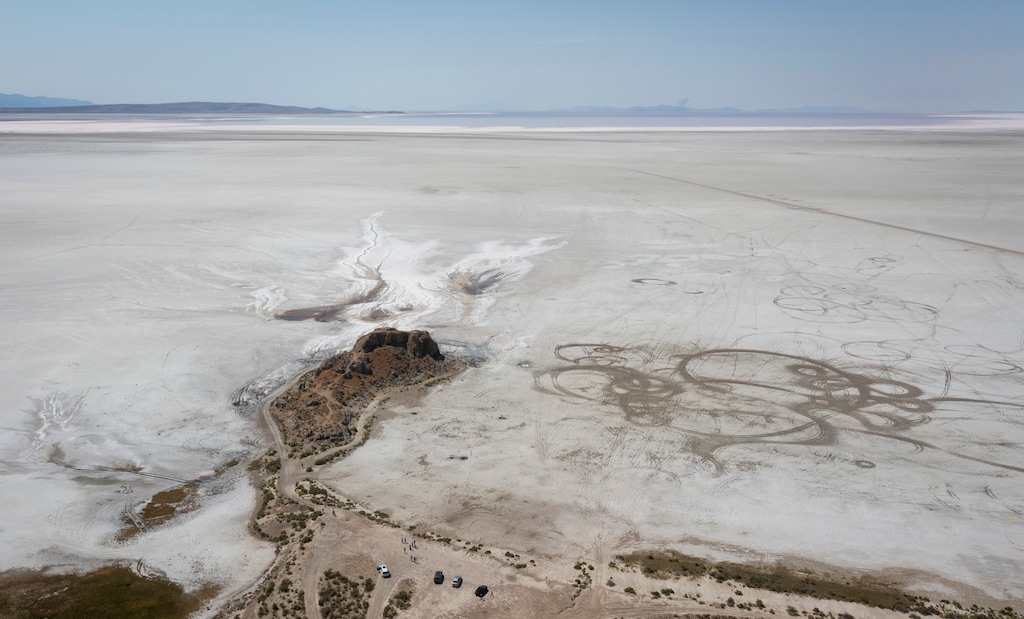
In recent years, farmers have been encouraged to convert to sprinkler irrigation. Utah has also piped miles of canals, ditches and tributaries claiming these approaches would lead to more efficient use of water. What has been the outcome? The more “efficient” water usage led to less water actually reaching the Great Salt Lake. Researchers and scientists have a name for this phenomenon: the efficiency paradox. Agriculture irrigation sprinklers simply moisten the top layer of soil and ends up consuming more water through evaporation and transpiration leaving none to infiltrate the groundwater. As a result, there is no return flow to the rivers or, ultimately, to the Great Salt Lake. We have spent billions of dollars to become more water efficient in Utah and the outcome — a shrinking, decimated Great Salt Lake.
The Great Salt Lake Sentinel Landscape team along with other conservationists may join forces with farmers to initiate surface irrigation which would allow return flow to reach the Great Salt Lake via the Bear River, Weber River and the Jordan River — all key tributaries that feed the Great Salt Lake through surface and groundwater systems.
Deborah Van Noy, Logan