The question is so old, it was once expressed in Latin.
“Quis custodiet ipsos custodes?” asked the Roman poet and playwright Juvenal some 2,000 years ago. It means, “Who watches the watchers?”
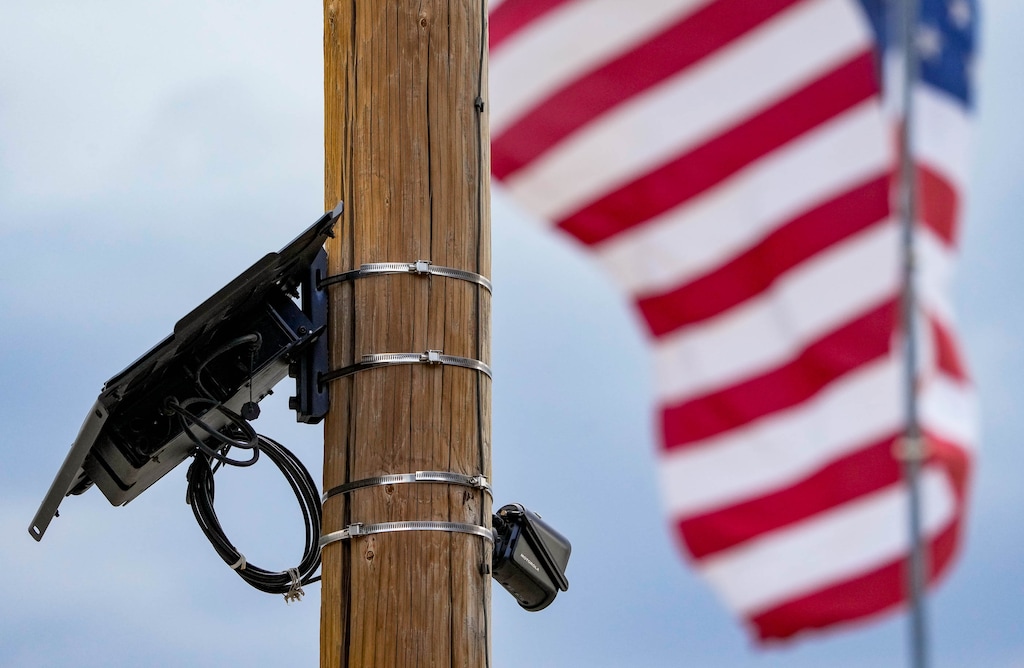
That will be the question before the Salt Lake City Council at a Sept. 15 public hearing, as council members consider setting rules for the license plate-reading cameras now scattered around the city with, probably, more to come.
The local police, like law enforcement agencies nearly everywhere, like having such devices because they can locate particular vehicles far more quickly than any number of patrolling police officers. SLC Police Chief Brian Redd promises his department uses them for a narrow set of circumstances, such as actively searching for criminal suspects, kidnap victims, missing or endangered persons or stolen cars.
By contract, police say, the data belongs to the city, not vendor Vigilant Solutions, though it lives on Vigilant’s servers.
(Salt Lake City does not use equipment from another widely known company, Flock, whose name has become shorthand for growing surveillance activities and concern about how the data is collected and used. Other jurisdictions around the state do use Flock equipment.)
In Salt Lake City, access to the data gathered by the cameras is to be strictly limited, and password protected, to police officers working on a specific case. A violation of those rules by any law enforcement officer would be serious, up to a firing offense.
Chief Redd, the Salt Lake City Council, and Gov. Spencer Cox, understand the public’s valid concerns that, once collected, such information about comings and goings on public streets can be misused. Bought and sold by who knows who, for nobody knows what purposes.
Among the proposed rules before the council is a ban on license plate readers being used to single out people who were participating in a constitutionally protected activity, such as a public protest or worship service. Or to categorize people by race, color, gender or other characteristic, a rule that would presumably mean the data would be off-limits to anyone conducting immigration sweeps.
Proposed rules would also require that other law enforcement agencies would have to demonstrate that they have similar data security precautions in place before Salt Lake City would share the information with them.
Privacy advocates at the American Civil Liberties Union hope that the rules could be even tighter, such as keeping a detailed log of every viewing of data and having information purged from the system after nine months.
Those are good ideas. The best idea is a constant independent auditing of the system, the information it gathers, who has been allowed to view it, and for what purpose.
There should also be a ban on such surveillance devices erected by anyone other than local law enforcement. We can’t audit the system unless we know — and control — whoever put it there.
The only way we should tolerate being watched like this is if we can watch the watchers. Closely.
Editorials represent the opinions of The Salt Lake Tribune editorial board, which operates independently from the newsroom.