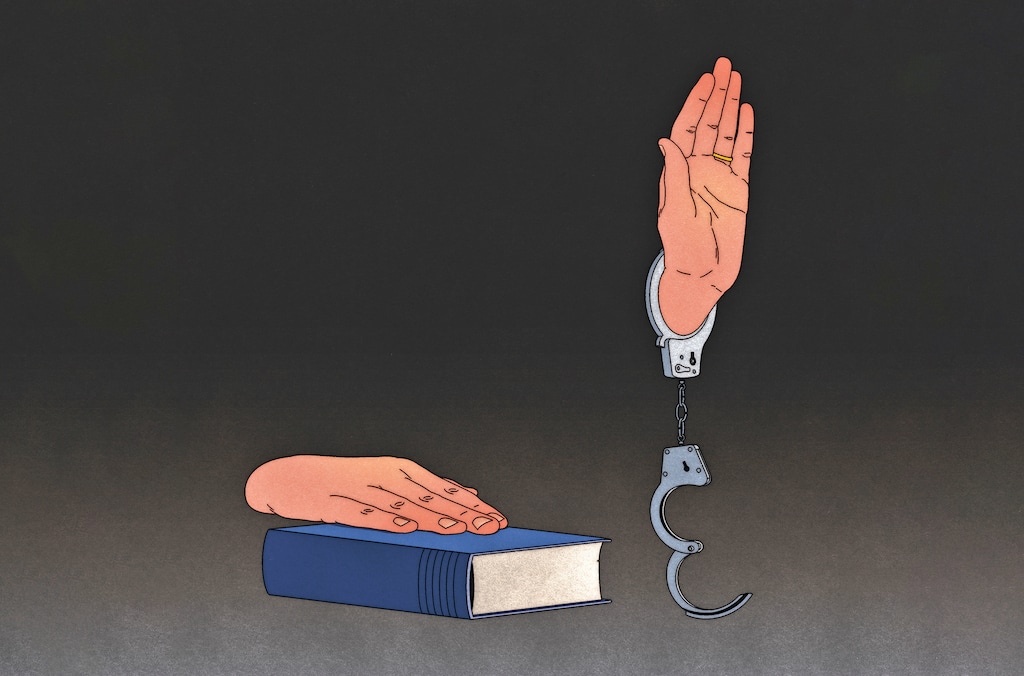
As a federal prosecutor in the Justice Department, I spent over eight years prosecuting corrupt and abusive public officials. I went after police officers and prison officials for rape, fatal beatings and cover-ups. I know how effectively the federal government can root out corruption, even among its own ranks.
Americans are clamoring now for these sorts of prosecutions. Corruption drove more midterm voters to the polls than almost any other issue, including the cost of living, data centers and the war in Iran. Nearly 90 percent of Americans say government corruption is widespread, the highest percentage on record.
Democrats in Congress have promised to use their oversight authority to investigate Trump administration officials. Congressional investigations can uncover critical information, but these efforts probably won’t fully satisfy American voters fed up with corruption in both parties. People are demanding consequences. If congressional efforts reveal criminal misconduct, Congress generally relies on the Justice Department to prosecute it. But federal prosecutors will struggle to prosecute any corrupt official — not only now, but also in 2029, under a new administration.
When I was at the Justice Department, I relied on expert investigators and skilled attorneys to join me in following the facts wherever they led. When we received a credible tip, we spent months or years running down leads, gathering documents, interviewing witnesses and, where the facts merited, filing charges against abusive public officials regardless of partisan politics. Our cases came together thanks to countless support staff members.
But since January 2025, over 21,000 criminal prosecutors, investigators and other staff members have left the Justice Department. The office that led prosecutions of traditional corruption cases went from 36 prosecutors to two last year. The unit that held officials accountable for constitutional violations has also seen its numbers plummet.
The effects of this sudden vacuum are staggering. In the first six months of 2025 alone, the department dropped more than 23,000 federal criminal investigations. This number includes cases involving traditional corruption as well as abuse of authority, which I used to handle. I worry that these abuses could now go unpunished. Justice Department buildings now feel ghostly: empty offices, quiet hallways.
Even if a new president commits to rebuilding the Justice Department and dedicates lots of resources to corruption cases in 2029, the prospects for comprehensive federal enforcement are dim in the short term.
First, there is the question of personnel. Current and former department officials have alleged that partisan politics have infected the hiring process. When similar allegations surfaced in 2006, it took the department two years to investigate them and issue findings.
And the tens of thousands of public servants who recently left are not necessarily coming back. Some entered early retirement. Many have had to move on.
Even if the Justice Department were able to staff up quickly in 2029, corruption investigations are resource-intensive and time-consuming. It can take years to build a case, and attorneys will have to race against the statute of limitations clock, which is typically five years.
The exodus of career workers is not limited to the Justice Department. Over 4,000 tax inspectors and 3,000 I.R.S. agents have left the Treasury Department. More than 20 independent inspectors general who were watchdogs for federal government agencies are now gone. New leaders committed to rooting out corruption have very few tools at their disposal.
But that’s just at the federal level. State law, like federal law, prohibits a wide range of corrupt and abusive behaviors by government officials. Many state and local prosecutors could prosecute corrupt officials, but they don’t have the resources. Many lack investigators who have worked on “paper cases” — investigations that involve spreadsheets, rather than drugs or physical evidence.
This problem is solvable. Congress and state governments can start by allocating the funding needed to conduct investigations and train investigators and prosecutors at the state and local levels. Since most states and counties elect their district attorneys and attorneys general, these prosecutors are more directly accountable to voters than are federal prosecutors. And when they win a case against a corrupt official, the president can’t overturn the conviction with a pardon.
It could take at least another presidential term to build back the Justice Department. By then, the statute of limitations will have passed for the perceived corruption that propelled voters to the polls this month. So especially until we have an agency with the credibility and integrity to attract the best and brightest candidates, we must look locally. The stakes could not be higher. Research shows that people who live in societies they perceive as deeply corrupt eventually resign themselves to corruption. When people believe the system is rigged, they vote less, donate less to political candidates and parties and participate less in political systems. They begin to favor authoritarianism.
Americans haven’t thrown their hands up just yet. But if those now in power fail to punish corruption, this country may well give up on democracy altogether.
Kate Gilbert is a former federal prosecutor and the founder and executive director of Partnership for Public Accountability. This article originally appeared in The New York Times.