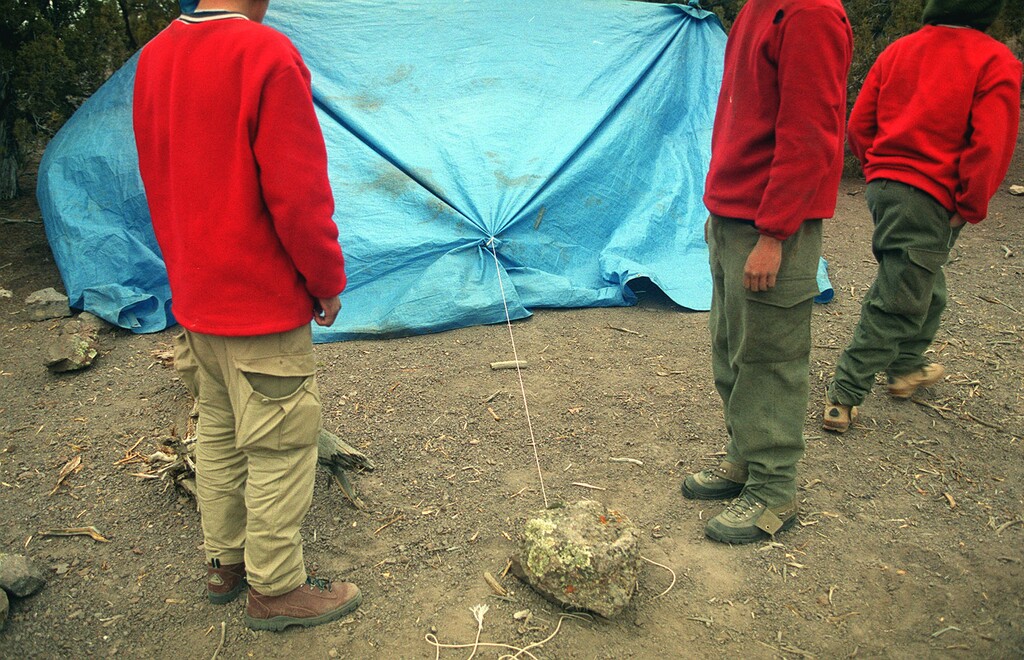
It’s 45 degrees out. I’m 22. It’s 10 p.m., and the stars are out. My focus on the beauty of the night is broken by soft sobs from a few yards away. The sobs are coming from a 14-year-old boy.
“They don’t love me, man. They had me gooned and flown 1,200 miles across the country so they didn’t have to deal with me anymore. Now I’m sitting here with you, no offense, in the middle of God knows where and my life is ruined.”
What would you say to that 14-year-old boy sitting in the heart of the uninhabited western desert under a starry night? Would you tell him that his parents do love him, and that’s why they sent him to a wilderness therapy program? Would you compliment him on the effort he’s put into his program? Or maybe you would launch into a diatribe about the complexities and inequities of youth mental health treatment in America?
I did not have a good answer that night, and it breaks my heart to this day to remember how that young man felt: lost, unwanted and unloved.
In a world dominated by social media and technology, mental health struggles are on the rise and quality mental health treatment will be key for the health of future generations. Something has to change when it comes to how we treat mental health in our youth. As a social work student with more than five years of experience in the fields of substance use disorders, addiction treatment and youth mental health, I believe I have the important responsibility to advocate for young people who are struggling.
In plain and simple terms, we are failing them.
The origins of wilderness therapy for youth can be traced back to German educator Kurt Hahn and his ideas regarding experiential education. While outdoor behavioral healthcare became more popular in the years following, its effectiveness and ethics have come into question over the past few decades. Concerns about the “troubled teen industry” and the abuse and neglect that many young people have suffered over the years have been well documented.
Yet, in my experience working in wilderness therapy in the deserts and mountains of Utah, no meaningful changes have occurred.
In no way do I mean to say that the healing power of nature isn’t the answer. In fact, I think we ought to utilize the healing power of nature more than we do now. The problem isn’t wilderness. We just need to do it differently.
First and foremost, we need more stringent regulation on what qualifies as a wilderness program and who can work as a provider in the field. Our current licensing procedures are not sufficient. In order to earn accreditation and keep that title, programs should be held accountable with mandatory inspections every two months by a wilderness therapy specific governing board.
Second, there are ethical issues that must be resolved. Involuntary transport or “gooning” has to be put to an end. During my time as a field guide for a wilderness therapy company, this was far and away the most talked about trauma experienced by the clients. These types of transports demolish trust between the parents and the child and they need to be banned.
Additionally, staff need to be trained on the trauma-informed approach to therapeutic practice. Trauma-informed practice will provide staff with the needed tools to help vulnerable young people in ways that do not compound their existing trauma.
Lastly, the family needs to be involved in wilderness therapy. It ought to be mandatory for parents and siblings to spend time in nature with the client. We understand very well at this point that mental health does not exist in a vacuum. A teen who returns from wilderness therapy to the same dysfunction at home will not benefit fully from therapeutic interventions. Instead, wilderness therapy programs ought to seek to involve the family to a much greater degree.
At the end of the day, our current wilderness therapy programs do help teens resolve some problems, but they can also create new trauma and struggles. I fully believe that we can change the world of outdoor behavioral treatment so teens don’t leave programs with new problems.
By regulating the industry, resolving ethical issues and providing integrated holistic family treatment, we can harness the healing power of nature to create a better system of care for our youth.
(Chase Williams) Chase Williams is a Master of Social Work student at the University of Utah and has worked in addiction treatment, mental health treatment and wilderness therapy for youth.
Chase Williams is a master of social work student at the University of Utah and has worked in addiction treatment, mental health treatment and wilderness therapy for youth.
The Salt Lake Tribune is committed to creating a space where Utahns can share ideas, perspectives and solutions that move our state forward. We rely on your insight to do this. Find out how to share your opinion here, and email us at voices@sltrib.com.