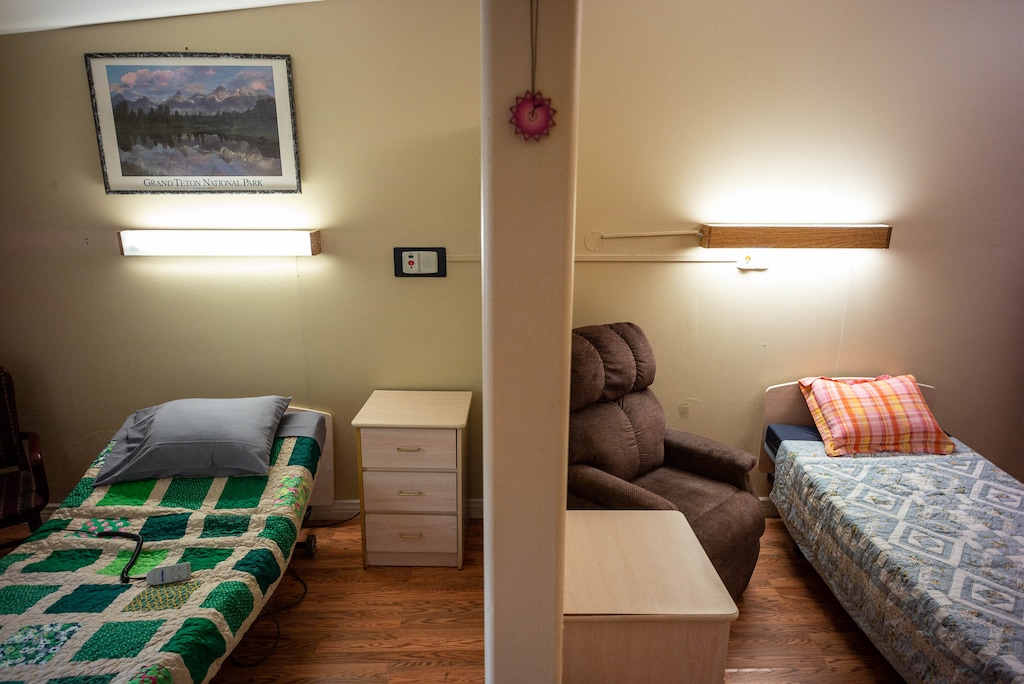
Utah is in the middle of a debate about how to address homelessness. As someone who has spent a decade caring for people at the intersection of medical crisis and housing loss, homelessness is solvable — but only if we build systems that recognize and treat it as the medical and economic crisis it actually is.
That means we need to invest in housing-first policy, fund medical respite capacity and stop relying on criminalization approaches that perpetuate the cycle rather than break it.
How people actually lose housing
In my experience, homelessness is almost always some combination of poverty, illness, disability and systems that fail people at their most vulnerable moment.
Unsurprisingly, homelessness disproportionately impacts people with disabilities. Those living with physical disabilities, serious mental illness or chronic health conditions rely on Supplemental Security Income (SSI). But according to an ongoing data analysis by the Technical Assistance Collaborative, no United States housing market exists where a person living solely on SSI can afford a safe, decent apartment without further rental assistance. And this doesn’t even factor in additional costs for food, transportation and medical expenses.
While there is no single path to homelessness, there are common patterns.
At The INN Between, we regularly care for individuals who were dependent on a family member or partner for mobility, medication management or financial help, only to be left without the support they relied on when their health declined. Others have experienced financial exploitation, where their disability income was stolen while they were left without stable shelter.
For those too sick to work and navigate systems alone, homelessness can happen almost overnight.
How criminalization starts a cycle
Recent nationwide data show that unhoused individuals are overwhelmingly charged with survival-driven incidents, such as trespassing or public urination — offenses that are unavoidable when you don’t have regular access to a bathroom, a bed or a legal place to sleep.
Yet while unhoused individuals make up 20% of trespassing charges, they only account for about 4.5% of jail bookings overall. Without private spaces, nearly every aspect of daily life becomes criminalized. And a criminal record makes it dramatically harder to qualify for housing or pass a background check for future employment, continuing the cycle of homelessness.
Confinement and centralized detention may create the appearance of order, but they do not treat mental illness, increase disability income or repair the trauma that often precedes homelessness.
What working closely with this population has taught me
At The INN Between, we see what becomes possible when someone is given stability, safety and access to comprehensive medical care. I think of one woman who came to us fleeing domestic violence. She spent every waking moment terrified that her abuser would find her. The trauma had debilitated her — she was frozen, unable to think beyond immediate survival.
But when we removed the barriers to food, shelter, medical care and mental health support, something shifted. Her physical health stabilized, and her anxiety began to ease. For the first time in a long time, she was able to shift her focus from survival and plan for her future. That is what stability does, and we’ve seen it over and over again. Pain becomes manageable, mental health improves, families reconnect and people regain a sense of dignity and personhood that homelessness and trauma had stolen from them.
What Utah should do next
Cities like Houston have shown that homelessness is solvable through housing-first policy, robust case management and cross-sector partnerships. Utah can do the same, but it requires choosing approaches we know work over others that push the problem out of sight.
Concretely, that means investing in the long-term sustainability of medical respite so existing beds remain available and effective; increasing rental assistance for people on SSI who cannot afford housing on that income alone; and resisting the urge to criminalize survival behaviors. Utah should also resist efforts to dismantle Targeted Adult Medicaid (TAM), one of the state’s most effective tools for connecting vulnerable residents to behavioral health care, substance use treatment and medical support. Ending or weakening TAM would undermine homelessness mitigation efforts and push more medically fragile people deeper into crisis.
The people we serve at The INN Between are survivors, and the circumstances they find themselves in are often the final stage of accumulated vulnerability. We believe dignity at the end of life and during medical crisis should not be conditional on housing status.
We can do better, and we know how. The only question is whether we’re willing.
(Jillian Olmsted) Jillian Olmsted is the CEO of The INN Between, Utah’s only provider of medical respite and hospice care for people experiencing homelessness.
Jillian Olmsted is the CEO of The INN Between, Utah’s only provider of medical respite and hospice care for people experiencing homelessness. Over the past decade, she has dedicated her career to ensuring that Utah’s most vulnerable residents can receive dignified, compassionate care in their most critical moments. Under her leadership, The INN Between has grown significantly, expanding capacity to meet rising community needs and pioneering a model of care that is now influencing efforts nationwide. In 2026, Jillian was named CEO of the Year by Utah Business, a recognition of her vision, operational excellence and unwavering commitment to serving those without a home.
The Salt Lake Tribune is committed to creating a space where Utahns can share ideas, perspectives and solutions that move our state forward. We rely on your insight to do this. Find out how to share your opinion here, and email us at voices@sltrib.com.