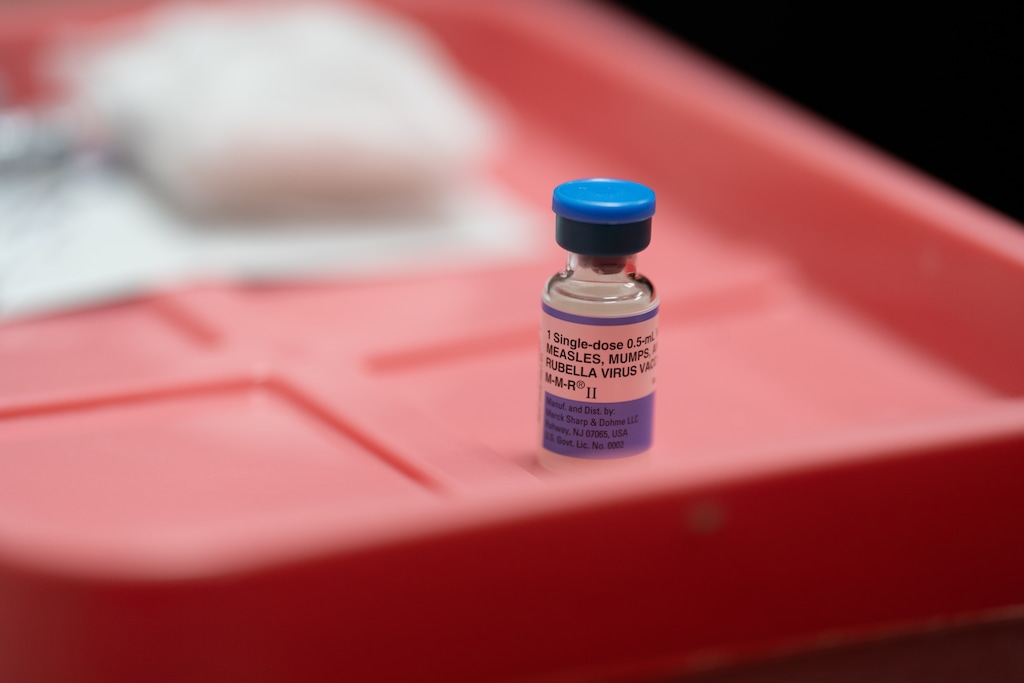
I didn’t expect to be talking about measles again in 2026, and I certainly didn’t think it would make a comeback in my lifetime. I trained in an era of prescription pads and paper charts, and I can say honestly, despite more than two decades practicing medicine, I’ve never seen, let alone diagnosed, a case of measles. It simply wasn’t something we see anymore.
But now, here we are.
Measles is back, including here in Utah, where we are seeing some of the highest case numbers in the nation. It’s forcing a conversation that many people are tired of having, about vaccines, risk, trust, who to believe. It can be exhausting, but it matters, so let’s talk about it. Just the facts, from someone who lives here, works here, and is raising a family here, too.
First: Measles is not subtle.
Measles is one of the most contagious viruses we know of. If one person has it, almost everyone around them who isn’t protected will get it. It spreads through the air and moves quickly through the kinds of groups Utah does best: big families, school events and community gatherings. In other words, measles loves Utah as much as I do.
Moreover, this is not a “stay home and binge a show” kind of illness. It’s not a rite of passage illness, or something to just want to be infected with to “get it over with.” Most people will recover, but not all. Measles can lead to pneumonia, brain inflammation and long-term complications.
And then there’s something most people don’t know: Measles doesn’t always just make you sick for a week or two. It can weaken your immune system for months, even years afterward. We call this “immune amnesia.” The virus can erase part of your immune system’s memory, which is the protection your body has built from past infections and vaccines. It’s as if your immune system forgets what it already learned how to fight. So a child may recover from the rash and fever, but then be more vulnerable to other infections their body might have handled before.
Second: The vaccine works. Really well.
The MMR vaccine has been studied across millions of people and is highly effective. One dose is about 93% protective, and two doses is 97% protective.
But I know for many families, this isn’t just about statistics. Some of you have questions. Some have heard or read things that made you pause. Some are trying to sort through a lot of noise and figure out what’s actually true. And some are worried about their children who are too young to be protected by the vaccine.
At the core, it seems, wherever you fall in this discussion, the instinct is the same: We’re trying to protect our families. And that’s good parenting.
But every decision we make in medicine, and in life, comes down to weighing risk and benefit. We prescribe antibiotics knowing they have side effects because the untreated infection is worse. We recommend surgery despite risks when the alternative is ongoing harm. In everyday life, we do the same. We drive on I-15. We let our kids play sports, and we send them to school.
None of these choices are risk-free, but they’re about choosing the safer path, not a perfect one. With measles, that comparison is straightforward. The risks of the vaccine are very small. The risks of the disease are much bigger and far less predictable.
Here’s the part that matters most to me, both as a doctor and as someone who loves this state: We don’t live in isolation. The choices we make affect newborns, kids with medical conditions, neighbors going through chemotherapy and grandparents who want to show up to a school play without worrying about exposure.
Utah is built on connection. We show up for each other and we gather. That’s one of our greatest strengths. It’s also exactly how measles spreads.
Our message has been simple: Talk to your doctor. So let me offer this, as both a physician and a neighbor: If you have questions, ask them. Bring what you’ve read. Say what you’re unsure about out loud. A good doctor should meet you there and walk through it with you.
We have a safe, effective way to prevent a disease that can hospitalize children, some of whom might have serious complications. That’s not something to take lightly. In a place that looks out for each other the way Utah does, this is one we can stop, together.
(Stacey Bank) Dr. Stacey Bank is the Executive Medical Director at the Utah Department of Health and Human Services.
Dr. Stacey Bank is the Executive Medical Director at the Utah Department of Health and Human Services.
The Salt Lake Tribune is committed to creating a space where Utahns can share ideas, perspectives and solutions that move our state forward. We rely on your insight to do this. Find out how to share your opinion here, and email us at voices@sltrib.com.