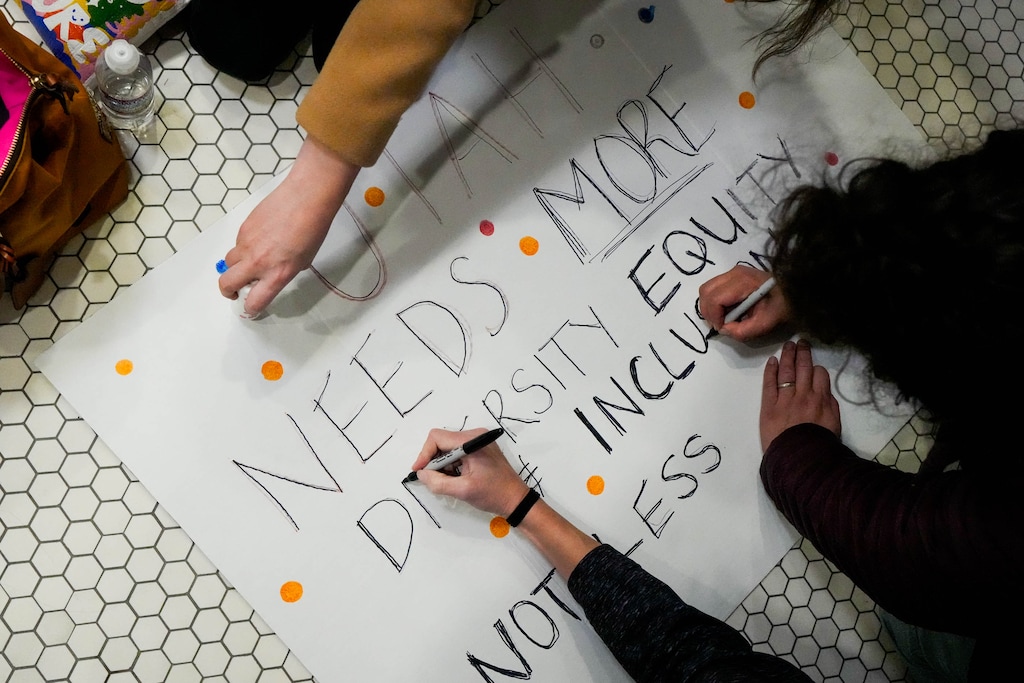
A Weber State University journalism student, Mia Salgado, recently published a thoughtful and important piece on the impact of HB261 nearly two years after it became law. She documented what many students have felt: the loss of identity-based centers and support systems on campus.
But there is another story — less visible and far less told — about what happened to the staff who built those systems.
While the focus has rightly been on students, far less attention has been paid to the professionals behind that work. In Utah and across the country, seasoned staff — many with decades of service — were abruptly displaced or pushed out of the same public institutions they once called home.
In a short period of time, a workforce dedicated to student success was erased or forced into silence. And for the staff that chose to stay — many describe being cautious about what they say, where they say it and to whom. Accounts of a chilling effect following HB261 are often shared quietly, in private conversations rather than public forums.
This past October, Weber State University made national headlines after canceling its own “censorship conference.” The decision raised difficult questions. Higher education is meant to be a marketplace of ideas — yet increasingly, some perspectives appear more constrained than others.
Utah’s public colleges do not operate in a vacuum. They are shaped by political structures, from board appointments and dismissals to presidential selection processes. This reality makes it all the more important to ask: What happens to institutional integrity when political pressure determines which ideas are permissible? Which guest speakers are regularly welcomed onto Utah campuses? And which voices are being monitored when invited to speak or excluded altogether?
If institutions are truly committed to student success, studies to understand the full impact of these changes would be a priority. Legislators, board and trustee members alike would be calling for an examination of how the removal of DEI programs affects retention, completion rates and campus climate — especially for students who relied on those spaces for support and belonging.
Instead, much of that work has simply disappeared.
For years, DEI professionals across Utah carried the often-invisible work of addressing institutional gaps — helping colleges confront disparities in access, persistence and completion by examining and reviewing the policies and practices that created them, all while also designing intentional programming to intervene. This work was grounded in a broader belief that access to education strengthens not only individual opportunity, but entire communities.
That connection still holds. Educational attainment is closely tied to employment, economic mobility, access to healthcare and housing, civic participation and overall community stability.
By any meaningful measure, student success outcomes matter — not just for institutions, but for Utah’s workforce and long-term prosperity. A 52% average statewide timely completion rate should raise concern, especially since that figure drops even further when broken down by socioeconomic status, race, ethnicity and resident status.
In most sectors, those outcomes would prompt serious questions about strategy and effectiveness.
But in Utah, many institutions remain entrenched — committed to a narrow interpretation of “viewpoint diversity” that excludes professionals with lived expertise in addressing disparities to access and outcomes.
So, here is an invitation.
If Utah’s colleges and universities want to have meaningful conversations about free speech, censorship and academic freedom, those conversations should include the perspectives of those who have experienced censorship.
Former Chief Diversity Officers. Multicultural affairs leaders. LGBTQ+ and Women’s Center Directors. Student support professionals whose work once helped institutions better serve their students.
These are not abstract roles or political talking points, but practitioners with years of experience navigating the very challenges now being debated.
Bringing those voices back into the conversation — whether as speakers, consultants and contributors — would not only deepen understanding but strengthen the path forward.
At the very least, our experiences might illuminate what has been lost.
At best, they can help shape a more informed and honest future for higher education in Utah.
(Laís Martinez) Laís Martinez
Laís Martinez is a former Utah Chief [Insert Banned Words] Officer.
The Salt Lake Tribune is committed to creating a space where Utahns can share ideas, perspectives and solutions that move our state forward. We rely on your insight to do this. Find out how to share your opinion here, and email us at voices@sltrib.com.