Gov. Spencer Cox just signed one of the most important education bills in Utah’s recent history. SB69 sets a default ban on cellphones in K-12 schools from bell to bell. This means no phones during class, lunch, recess or passing periods for all public schools in the state.
As a parent of five, a former educator and a CEO of an outdoor-focused children’s apparel company, I thank the governor and the Legislature for making this decision. To many of us, it was long overdue, but as the adage goes, better late than never.
The research is clear: Phones in classrooms destroy focus, damage social development and harm academic achievement. Removing them from the classroom makes sense, but now we need to do more than play defense. We need to plan what comes next.
Removing digital distractions is a necessary but not sufficient condition to improve student achievement and protect their mental health. For the first time in generations, today’s students are underperforming their parents academically and experiencing mental health crises at unprecedented rates. The problem is deeper than just phones, and the solution does not end with simply removing technology. We must replace it with something better — and that something is right outside our front doors.
Strong, peer-reviewed research shows that outdoor learning improves academic performance, increases teacher satisfaction, reduces behavioral problems and significantly improves student mental health. Kids who spend regular time learning outdoors have better attention spans, stronger problem-solving skills and lower rates of anxiety and depression.
Oregon, Washington and Maine have put this data into practice. Since 2016, Oregon has guaranteed every fifth or sixth grader a week of residential outdoor school. Washington served over 42,000 students for the 2023-2024 period. Maine launched its Outdoor School for All program in 2025. These policy priorities, backed by governors and Legislatures, support the case that childhood development requires more than keeping kids off screens.
Utah has nothing comparable. American children spend an average of seven hours a day on screens and less than one hour outside. This is a frightening statistic and even more so for a state that defines itself by the outdoors.
We are home to the Mighty Five National Parks, the “greatest snow on Earth,” the Great Salt Lake and unparalleled access to trails, hiking, streams and lakes. And yet, while families move here for access to nature, we have no coherent statewide program to connect Utah students with the landscape that surrounds them.
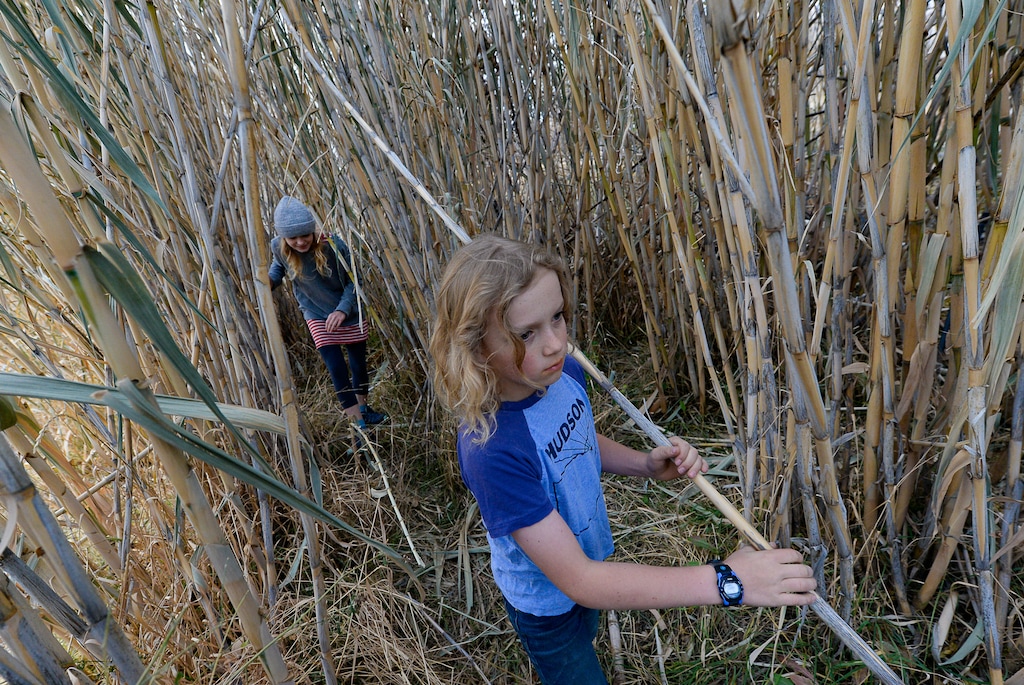
Phone-free classes, lunch and recess can lead to something better. Utah schools should have the support to connect our children with the magnificence of nature through natural observation, team challenges, place-based science and other age-appropriate engagements with the outdoors.
A program like this doesn’t need to be expensive. Access to the outdoors doesn’t require new tech or new buildings. Oregon’s Outdoor School costs the state roughly $24 million annually to serve 40,000 students — about $600 per student for a week of instruction, meals, lodging and transportation. The return on investment is improved test scores, reduced absenteeism, better behavior and a stronger connection to nature and environmental stewardship.
Utah has an opportunity to lead now. We have the landscape, a thriving outdoor industry and a culture that values self-reliance, exploration and stewardship. We simply lack the policy infrastructure to make outdoor learning a right instead of a privilege.
Gov. Cox has shown he’s willing to lead on protecting kids from harmful technology. I hope he’ll also lead on giving them something better. A statewide outdoor learning initiative would turn phone-free school days into nature-connected learning days. It would position Utah as a national model, not just for what we’re taking out of classrooms, but for what we’re putting back in.
SB69 takes effect July 1. That gives Utah’s schools a few months to prepare for a school day without phones. Let’s take a cell phone ban and turn it into a gift of something better.
(Richard Taylor) Richard Taylor, Ph.D., is CEO of Oaki, an outdoor apparel brand for children, and a former educator.
Richard Taylor, Ph.D., is CEO of Oaki, an outdoor apparel brand for children, and a former educator. He lives in Salt Lake City with his wife and five children.
The Salt Lake Tribune is committed to creating a space where Utahns can share ideas, perspectives and solutions that move our state forward. We rely on your insight to do this. Find out how to share your opinion here, and email us at voices@sltrib.com.