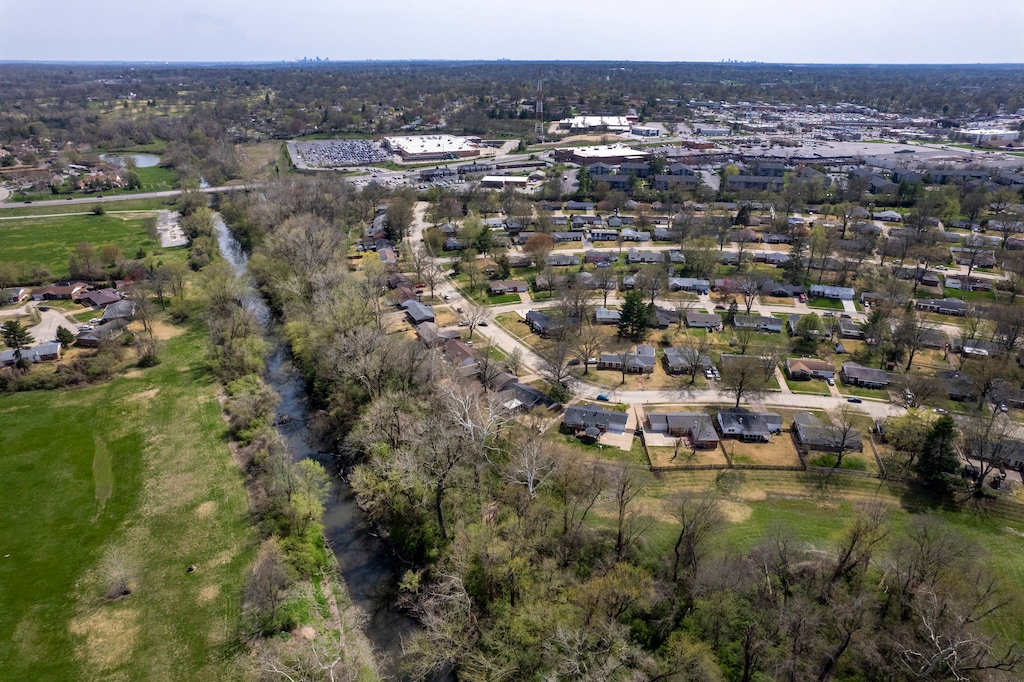
I grew up in Florissant, a quiet suburb outside St. Louis, Missouri. Like many kids born in the 1980s, if I could not ride my bike, I walked. My sister and I stayed out until the streetlights came on, meeting friends, getting sno cones or heading to St. Ferdinand Park.
That park raised us. We fished with our dad at the pond. Our mom took us there when we were stir crazy and needed fresh air. We did not have much money, but picnics at the park were simple and fun.
We often crossed a pedestrian bridge over Coldwater Creek to get there. We saw ducks, fish and kids splashing in the water. Homes lined the creek for miles before it emptied into the Missouri River. Kids were always in that creek.
We did not know it was contaminated with radioactive waste from the Manhattan Project, later documented by the U.S. Army Corps of Engineers under the FUSRAP program.
You might reasonably ask what a creek in Missouri has to do with Utah.
The answer is that Utah is now making decisions about radioactive waste that will shape communities for generations. Utah has agreed to accept Canadian nuclear waste for burial in this state.
Those decisions are being made before the full consequences are known. Missouri’s experience shows what can happen when radioactive waste is described as contained, temporary or manageable while political oversight, public transparency and independent review lag behind.
Decisions made today can become long term public health concerns.
Today, the places where I played display radioactive contamination warnings. Jana Elementary School, less than a mile from the park, closed due to contamination concerns. Homes near the creek, close to the cemetery where my father is buried, are being bought and demolished because they are no longer considered safe.
Settlement payments from the Radiation Exposure Compensation Act (RECA) are now being paid to qualifying residents. My mother, who had cancer, is awaiting for the approval of her packet to be accepted, as are friends of mine. We never played in the creek itself, but it frequently flooded the park, carrying radioactive waste to playgrounds, ball fields and at times straight into the pond.
For decades, an entire generation lived in Florissant before meaningful cleanup began. Federal health assessments acknowledge increased cancer risk for those who lived near Coldwater Creek during key years. A 2024 peer reviewed study in JAMA Network found higher cancer rates among people who lived closer to the creek as children. Community groups such as Just Moms STL continue to fight for accountability.
Utah already has lived part of this story. Thousands of residents known as Utah Downwinders were exposed to radioactive fallout from nuclear testing at the Nevada Test Site. Many suffered serious health consequences before the government acknowledged the harm and eventually created compensation programs. This history should make us more careful in decisions about nuclear materials, not less.
As Utah’s population grows, areas such as Tooele and western Utah are expanding rapidly. New families are moving there because housing is more affordable. They are planting gardens, enrolling children in schools and buying homes with trust that the land beneath them is safe.
They deserve honesty and protection, not promises that rely on technical language and shifting responsibility.
Supporters of burying radioactive waste in Utah argue that containment systems are safe, that monitoring will prevent harm, and that modern engineering solves historical problems. These claims are familiar to anyone who has studied Coldwater Creek history. Containers fail, monitoring stops, records change, companies dissolve and land remains. These are not speculations, but documented patterns.
There is also a moral question that cannot be engineered away. Why should Utah bear the burden of waste generated elsewhere, especially waste tied to federal actions that harmed other communities without consent? Responsibility should follow origin, not convenience.
Environmental justice is not an abstract idea. It is about who gets listened to, who gets credible information and who gets protected. It is about whether we repeat mistakes that history has already judged harshly — mistakes so recent that its consequences haven’t even fully unfolded yet.
I am not writing this as an activist by trade. I am writing as a parent and as someone who grew up on contaminated land without knowing it. I share this story to urge responsibility.
The lesson from Missouri is clear: Waiting until contamination is undeniable means waiting until exposure has already happened. I know that from lived experience. Many people I grew up with are now dealing with rare cancers and unexplained illnesses. And it’s not just them, it’s their entire family.
Utah does not have to learn this lesson the same way.
(Megan Allen) Megan Allen lives in Utah. She grew up in North St. Louis County near internationally recognized radioactive contamination sites.
Megan Allen is a Utah resident, homeschool educator and parent who grew up in North St. Louis County near internationally recognized radioactive contamination sites. Her writing draws on lived experience, publicly documented health assessments and community advocacy around environmental health and policy.
The Salt Lake Tribune is committed to creating a space where Utahns can share ideas, perspectives and solutions that move our state forward. We rely on your insight to do this. Find out how to share your opinion here, and email us at voices@sltrib.com.