 Robert Gehrke
Note to readers • Click here to find an interactive map where you can enter your address to see all the races on your ballot that have a voter guide from The Salt Lake Tribune.
Utah Senate District 21, which spans parts of Alpine, Cedar Hills, Pleasant Grove, Highland, Lehi, American Fork and Lindon, is among the fastest-growing districts in the state and has felt the strain of growth.
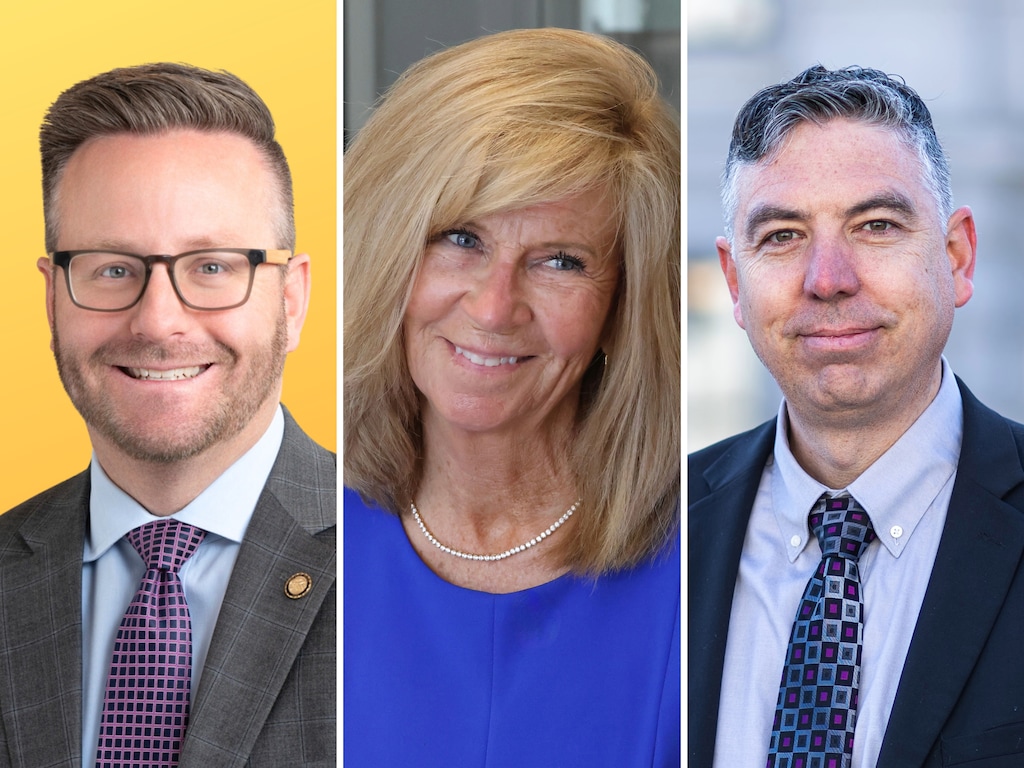
Since 2025, the district has been represented by Sen. Brady Brammer, an attorney who was chosen to fill the vacant seat after spending six years in the House. Now, the Republican is looking to win his first full term in the Senate against two contenders — Democrat Kandee Myers and the Forward Utah Party’s Wayne Woodfield — in the November general election.
Myers is a real estate professional, according to her website, and has helped build several businesses. Woodfield is a software developer.
The Salt Lake Tribune posed the following questions, based on a reader survey about the issues Utahns felt were most important this election season, to each of the candidates. Their answers may have been edited slightly for length, style or grammar and are listed in alphabetical order based on the candidates’ last names.
Election Day is Nov. 3. Ballots must be dropped off at a ballot dropbox by 8 p.m. on Election Day or, if returned by mail, must be received by the county clerk by 8 p.m. on Election Day.
Utah voters told us government corruption is their top concern in this year’s election. Why do you think voters feel this way? And why should Utahns trust you to represent them?
Brammer: Utahns are concerned because trust is earned and too often government feels distant, opaque and more responsive to insiders than citizens. The answer is not cynicism; it is accountability. I will keep strengthening audits, protecting public comment and making sure taxpayer dollars are controlled by elected officials who answer to the people. Public service should be stewardship, not entitlement. Government works best when it remembers who it serves.
Myers: Voters are tired of decisions made behind closed doors, political power and special interests being put ahead of Utah’s common good, and leaders saying one thing while doing another. Trust has to be earned. I believe character is practical: Tell the truth, keep your word, stay curious and treat people with respect. I’ve spent 30+ years negotiating, solving problems and serving clients. I’ll explain my votes, listen before I decide and remember public office belongs to the public.
Woodfield: Fighting corruption and restoring the public trust is a top priority of my campaign. I decided to run for office, namely because of the acts of corruption I witnessed from my elected officials — gerrymandering, attempting to trick their own constituents into revoking their ability to check the Legislature’s power through ballot initiatives, and attacking judicial independence. I am committed to fair, ethical and transparent government.
Utahns told us affordability is their second-highest priority in this election. How would you help Utahns afford housing, groceries, gas and other day-to-day expenses?
Brammer: Affordability begins with government discipline. I will keep pushing to restrain spending, limit unnecessary regulation and return money to families whenever possible. The tax cuts over the last six years save the average family in my district $700 dollars per year. On housing, Utah needs more supply, faster permitting and local solutions that respect communities while allowing our children to stay here.
Myers: I know there is no quick fix for high home prices, rents or interest rates. We should expand attainable housing and starter-home options, while also lowering the other costs families cannot avoid — healthcare, child care and groceries. I’ll fight for bold healthcare reform lowering what Utahns actually pay, support early childhood education, examine taxes on essentials and scrutinize tax breaks so public dollars benefit Utah families, not just large corporations and investors.
Woodfield: I am committed to free-market solutions that increase supply and fluidity in the housing market, so the dream of homeownership is within reach again for young families. I support municipal policies that allow accessory dwelling units in existing homes and do not stand in the way of multigenerational households choosing to remain together. I support the creation of lower-cost housing options for new buyers, while preserving the character and stability of existing neighborhoods.
Water resources were also a top concern for voters. What policies would you support as Utah looks to balance growth with preservation of the Great Salt Lake and the Colorado River?
Brammer: Water is not a partisan issue; it is a stewardship obligation. Utah must plan for growth with honest data, invest in storage and delivery infrastructure and increase our reservoir inventory. We should work with agriculture, cities, and water districts rather than pit them against each other. The goal is simple: Protect Utah’s families, farms and future by making disciplined, long-term decisions now instead of waiting for a crisis to force our hand.
Myers: Utah can learn from other arid communities like Tucson by expanding water-wise landscaping, reuse and conservation. I want our best scientists, farmers, cities, tribes and water experts at the table. We need the best available data before jumping to conclusions about the Great Salt Lake or Colorado River. I welcome federal partnership when it helps Utah, but with complete transparency, accountability and no backroom deals. Every gallon matters and every solution deserves serious study.
Woodfield: We must work with agriculture to incentivize efficient water use and encourage crops that require less water while keeping farms viable. The Great Salt Lake must receive a guaranteed inflow, not just the water nobody wants. I support incentives for smarter irrigation practices without heavy-handed mandates. Utahns don’t want to fight over water. They want leadership that keeps us from having to [fight], by promoting fairness, shared responsibility and stewardship of our limited resources
What is another topic you care about and want to address if elected to public office?
Brammer: Utah Lake is one of our state’s great natural treasures and restoring it remains a priority for me. I sponsored the legislation that created the Utah Lake Authority, bringing state resources together with accountable local leadership and a clear mission to improve the lake. That approach is working: Utah Lake is now the cleanest it has been in 100 years. We still have work ahead and I will continue advancing practical, science-based efforts to protect the lake for future generations.
Myers: Positive psychology has trained me to look beyond economic growth and ask: Are people flourishing? Do they know they matter, have purpose and have strong relationships? Too many people feel disconnected. Aristotle called flourishing eudaimonia — living well. I want Utah to measure success, not only by economic growth, but also by whether our children, families and communities experience a sense of belonging. Resilience and character strengthen people and strong people strengthen communities.
Woodfield: Politics has grown too divisive in Utah. I have chosen to run with the Forward Party in order to bring unity, civility, integrity and transparency back to our Senate district, with a focus on fair governance and fair representation.
How will you vote on Constitutional Amendment A? If passed, the amendment will stop the practice of publishing the full text of amendments and ballot questions by lawmakers in a newspaper for 60 days ahead of an election and instead require that text to be published on two state websites.
Brammer: For
Myers: Against
Woodfield: For
How will you vote on Constitutional Amendment B? If passed, citizen-proposed laws that increase taxes would need to be approved by 60% of voters, instead of a simple majority.
Brammer: For
Myers: Against
Woodfield: Against
What’s your favorite book and why?
Brammer: Hard question! And my answer changes daily! Today, my favorite book is “To Kill a Mockingbird.” Its lessons about courage, justice, empathy and standing for what is right, even when it is unpopular, remain timeless.
Myers: “Bonds That Make Us Free,” by C. Terry Warner taught me what a heart at peace feels like. His words and examples caused a mighty change within me, shaping how I see and relate to others. That change will guide how I serve Utah. Best. Book. Ever.
Woodfield: I’m more of a podcast listener than a book reader. My favorites right now are “Planet Money,” “Science Vs,” and “Hidden Brain.” I enjoy long-form conversations about complicated issues and good, fact-based, scientific reasoning.