 Addy Baird
 Emily Anderson Stern
The process for approving the controversial Stratos data center in Box Elder County was ”not good” and the state board that approved the hyperscale center should be reformed, Gov. Spencer Cox said at a PBS Utah news conference Thursday.
The board, Utah’s Military Installation Development Authority, was established to approve military efforts in the state, but has expanded in recent years, approving major developments at Utah’s ski resorts and clearing the way for the Kevin O’Leary-backed data center.
Asked about data centers Thursday morning, Cox said, “Stratos is the one that obviously got a tremendous amount of attention, and it should have. The process was not good, and the MIDA process especially.”
In recent years, Cox said, the board has had “mission creep,” and taken on projects and approvals beyond what the board was initially created for.
Cox has previously proposed changes to how MIDA functions, he noted, but those changes were not approved by the Legislature. His comments come as lawmakers discussed data center policy reforms in interim meetings this week.
“I think we need major reform when it comes to MIDA, and I will be pushing for that reform moving forward,” he told reporters.
In particular, Cox said he, or anyone serving as governor, should “play a bigger role” in weighing development projects. He also wants the Governor’s Office of Economic Development to be more involved.
A spokesperson for the governor did not immediately return a request for clarification on previous policy changes pushed by Cox.
During the 2025 legislative session, one of his top priorities was to create a “Beehive Development Agency” that would have given his office significant new powers over large development projects in Utah, such as Stratos. The bill from Senate Majority Leader Kirk Cullimore, R-Sandy, never received a floor vote.
And this earleir this year, Rep. Neil Walter, R-Santa Clara, proposed a bill requiring all public entities weighing using tax increment financing — MIDA’s key funding mechanism — to seek project approval from the governor’s office. House leaders did not advance the bill to a standing committee for debate.
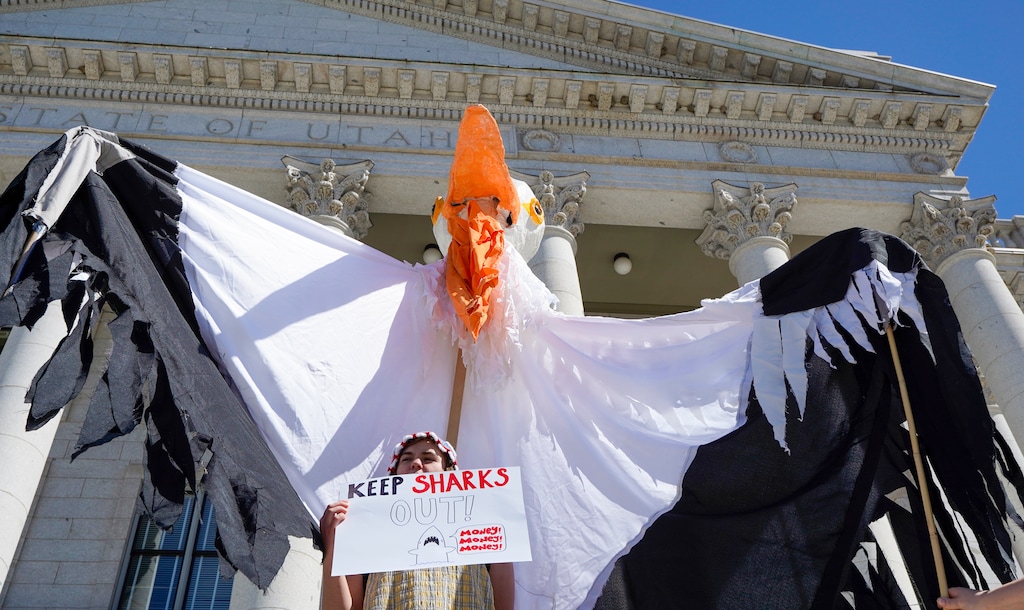
As both MIDA and Box Elder County are embroiled in lawsuits over the project and a rejected citizen referendum, the authority said it has paused taking any action related to Stratos. But O’Leary, a celebrity investor whose company is behind the proposed data center, wrote in an email that it is “full steam ahead” in advancing through permitting processes.
The governor pointed to two other independent entities — the State Fair Park Authority and the Point of the Mountain State Land Authority — as areas his office should have more oversight.
“We have a lot of independent entities in this state, and they’re great,” he said. “They play a very important role, but we’ve also delegated a lot of authority there.”
“The people are going to hold us accountable for what those entities do,” the governor added, “and we need to make sure that we have insight into what it is they’re doing, what projects they’re taking on, and are they the right projects for our state.”
Asked for comment about the governor’s call for the board’s reform, MIDA spokesperson Kristin Kenney Williams said Thursday afternoon, “As a State-created entity formed in 2007 to further military initiatives and economic development, MIDA is not a policymaker, and MIDA is of course subject to state statutes,” she wrote.
“We’re always happy to engage with the Governor and his team,” she added in the statement.
There are eight members of the MIDA board — five are appointed by the governor, while the Senate president and House speaker each appoint one member. Board members are unpaid, serve four-year terms and can be reappointed.
The chair of MIDA is Utah Senate President J. Stuart Adams, who has served on the board since 2008. He was elected to the Legislature in 2010, and has ascended to the highest levels of leadership in the years since.
But after backlash over the data center became a central issue during Adams’ recent primary reelection campaign, the Senate president lost to GOP challenger Stephanie Hollist in June.
Note to readers, 3:40 p.m. • This story has been updated to include a statement from Utah’s Military Installation Development Authority.
Emily is a statewatch reporter at The Salt Lake Tribune, where she has worked since 2022. She received her master's degree in journalism from Northwestern University. There, she worked on investigative projects for The Washington Post and ProPublica. While writing, she's probably spinning something from her ever-expanding shelf of punk records.