 Megan Banta
The primary defeat of Utah’s top lawmaker doesn’t necessarily mean he can no longer influence the state’s development projects.
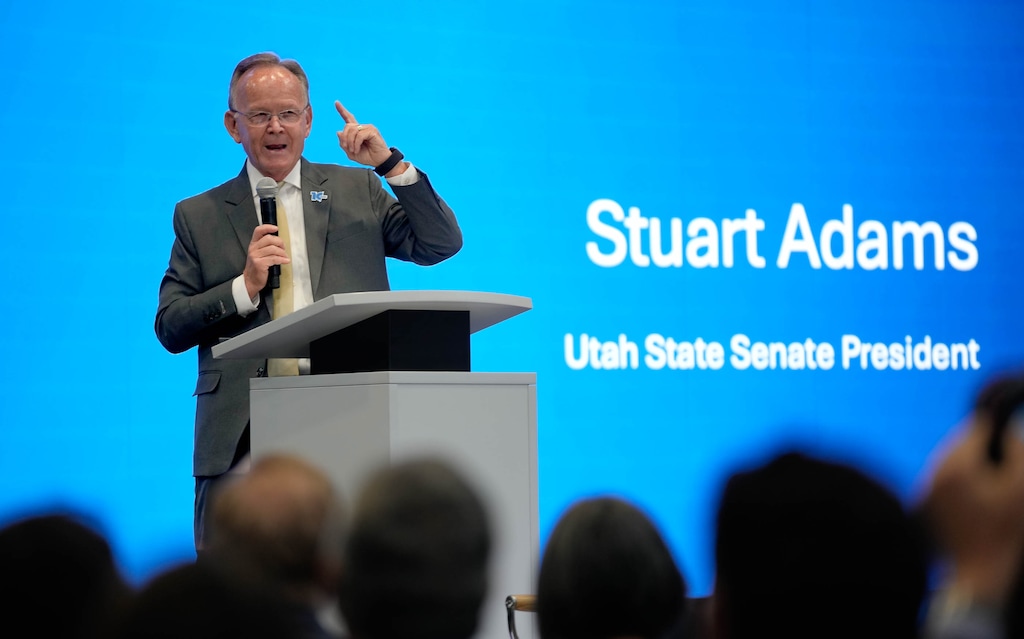
Senate President J. Stuart Adams lost his reelection bid last month amid mounting criticism for his role in approving the development of a controversial data center in Box Elder County, conceding defeat to fellow Republican Stephanie Hollist.
But the Layton Republican might not have to give up his position on Utah’s Military Installation Development Authority, which played a central role in advancing celebrity investor Kevin O’Leary’s data center proposal.
Adams has served on the MIDA board since 2008, before he was elected to the Utah House of Representatives and then the state Senate, and he currently chairs the authority’s board.
In his time on the board, MIDA has evolved into a powerful state entity. It oversees eight project areas, including Deer Valley Ski Resort’s massive east village expansion, the new inn at Sundance and the Falcon Hill Aerospace Research Park.
The development authority’s board consists of seven voting members and one non-voting member. Under state code, the governor appoints five of the voting members, while Utah’s House speaker and Senate president each can pick a member.
Adams’ most recent 4-year appointment began on March 1, 2023, and state records show he was appointed by himself.
His term of service expires next March, MIDA spokesperson Kristin Kenney Williams confirmed.
He’ll serve on the board until “a successor is duly appointed and qualified,” unless he’s removed by the next Senate president, Williams said, quoting state code.
For some of the governor’s picks, state law specifies a MIDA board appointment role the person must be a mayor or member of a city or county council in the highest-value project area, or part of the state’s executive branch or part of a state agency involved with military issues.
But one of the governor’s appointments must simply be “interested in supporting military efforts in the state.” There are no statutory limits to who the heads of the Senate and House can appoint.
A Senate spokesperson for Adams did not respond to questions about the future of his role with MIDA.
Megan is a data and policy nerd with a passion for holding officials accountable and finding solutions. She’s originally from the Midwest and comes to Salt Lake City from the Willamette Valley.