 Robert Gehrke
Carly Laminack wished she wasn’t in a hurry to get to work Friday afternoon and had time to go to Sam’s Club and save a few bucks filling up her car. Instead, like many Utahns, she was paying $4.39 per gallon near downtown Salt Lake City.
It could have been worse. For more than a month now, Utahns have been getting a break on their gas tax — a little over six cents a gallon, a move that was intended to try to make the cost of living a little more tolerable. Even if most aren’t actually feeling it.
The most recent figures from AAA show that a gallon of gas in Utah averages $4.34, the ninth highest price in the country. In the past year, gas prices have increased by nearly a dollar, driven in large part by a supply crunch resulting from the U.S. war with Iran and the closure of the Strait of Hormuz, a vital shipping lane.
“It’s not great,” said Sally Bolic, who said she didn’t notice the six-cent reprieve when it kicked in July 1, about the same time that prices were surging by nearly 50 cents a gallon to their current level.
Bolic, who is retired and lives in Ivins, said when she needs to fuel up, she’ll usually drive to the nearby Shivwits Paiute reservation, where the tribe doesn’t charge the state sales tax.
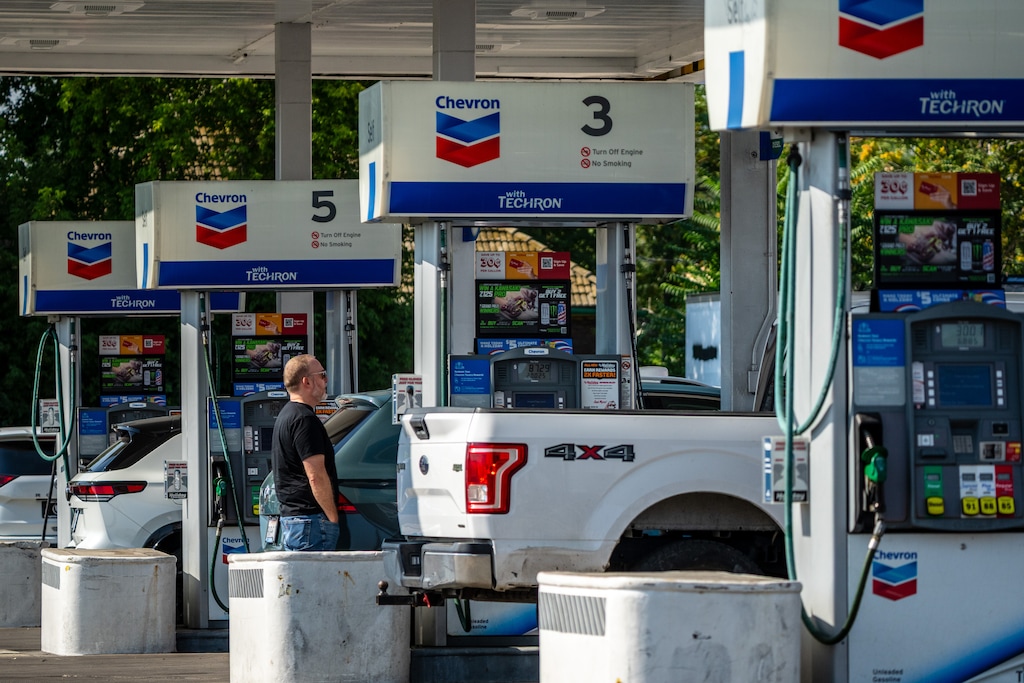
(Trent Nelson | The Salt Lake Tribune) Gas prices in West Valley City on Monday, Aug. 3, 2026.
Rep. Cal Roberts, R-Draper, who sponsored the bill to cut the gas tax, said even if people aren’t feeling the relief, it was still the right thing to do.
“Obviously we couldn’t foresee the global, macro events that have happened in the Strait of Hormuz, but I have heard that because gas prices are so high now, somehow this gas tax [cut] means less,” he said.
“I would argue that this gas tax cut is needed now more than ever because gas prices are so high and families are feeling the pinch,” said Roberts. “Will Utahns notice it? Will they feel it, see it maybe, as much as they would have five months ago, prior to the Iran war starting? Probably not. But ultimately, relief for Utahns at the pump is needed now more than ever.”
The six-plus cents per gallon tax cut does add up. By the time the tax break expires at the end of the year, the state will have foregone about $40 million in revenues it would have otherwise collected, likely meaning some delays in certain road maintenance projects.
The tax rate will be reset at the start of next year and, since it is based on the wholesale price of fuel over the last several years, Roberts expects the rate to go down, meaning consumers shouldn’t see their gas tax bump back up when the current holiday ends.
The Idaho border war
(Chris Samuels | The Salt Lake Tribune) Rep. Calvin Roberts, R-Draper, asks a question during a meeting of the Legislative Redistricting Committee at the Capitol in Salt Lake City, Wednesday, Sept. 24, 2025.
The tax break was part of an effort pushed by House Speaker Mike Schultz, who originally envisioned taxing Idaho consumers for gasoline that Utah’s refineries export to the state, passing the windfall onto Utah drivers.
It sparked something of a border war between the two states as apoplectic Idaho leaders, threatened with an estimated $250 million a year in new taxes paid to Utah, threatened to go to court and even to cut off water flowing from Idaho to Utah and the Great Salt Lake.
Utah backed down, settling for a temporary tax holiday from July 1 through the end of the year, as well as efforts to streamline the permitting process for refineries and pipelines and a commitment from the oil industry to bring an additional 23,000 barrels a day to Utah’s market.
So far, streamlining bottlenecks at the Utah refineries has brought about 4,000 additional barrels a day into the market, with another 2,000 barrels expected to come online in the near future, according to the industry.
Additionally, Sinclair has announced it is expanding a pipeline that brings refined gasoline to the state that will increase its capacity by 35,000 barrels a day by 2028.
The hope from Schultz and Roberts is that will lower gas prices in the state, although since Utah’s five refineries already produce more gasoline than Utah consumers can use, the impact remains to be seen. Utah refineries produce 227,000 barrels of fuel daily, according to data from the U.S. Department of Energy, but between a quarter and a third of that is exported to neighboring states.
Roberts said the goal is to make sure Utahns benefit from being home to refineries that supply a significant portion of the Mountain West — and he said the Legislature is determined to make sure the oil companies deliver on their commitments.
“It’s basically, we’re watching you, and there are ongoing discussions around ensuring that Utahns really see relief at the pump and the private parties follow through,” he said.