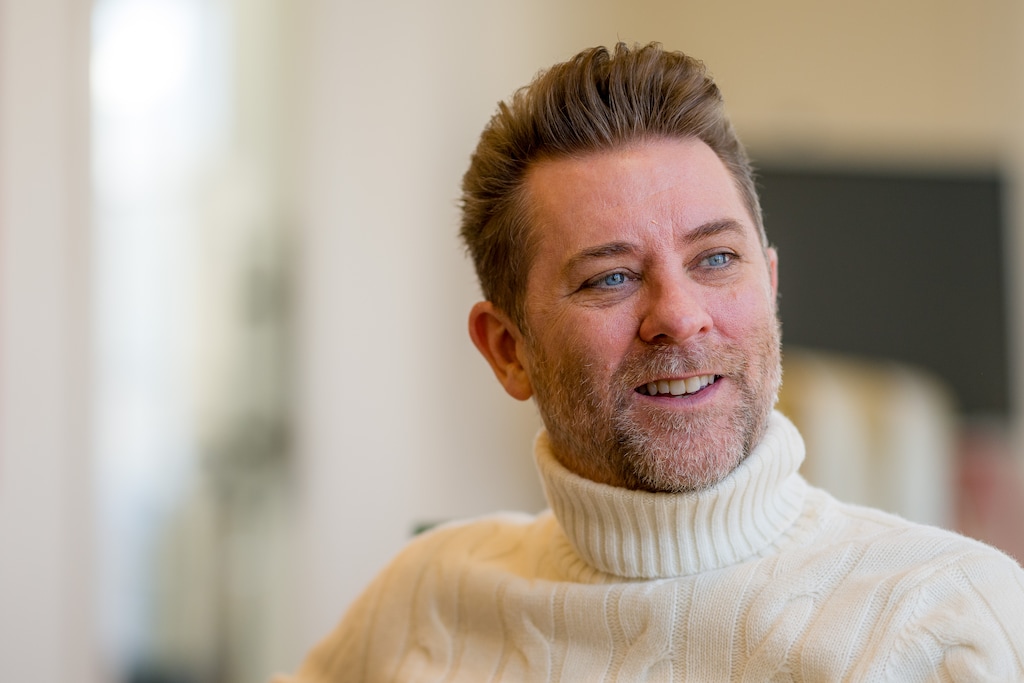
 Robert Gehrke
When Troy Williams was named executive director of Equality Utah, the state’s preeminent LGBTQ+ rights group in 2014, the murmurs around Utah’s Capitol were generally: What are they thinking?
Months earlier, Williams was one of 13 activists hauled from the building in handcuffs for protesting the Legislature’s refusal to hear a bill that would outlaw discrimination based on sexual orientation. How would this in-your-face crusader function in the Republican-dominated Legislature?
Now, after 11 1/2 years in the position, Williams is stepping down.
He relishes looking back on what Equality Utah has accomplished during his tenure — the “Utah Compromise” protecting LGBTQ+ Utahns from discrimination, banning conversion therapy and passing a hate crimes law.
“When you are an activist with a bullhorn or a radio show, you can say whatever you want about how the world should be,” Williams said in an interview. But persuading conservative lawmakers who are overwhelmingly members of The Church of Jesus Christ of Latter-day Saints, he said, took a different approach.
(Francisco Kjolseth | The Salt Lake Tribune) Troy Williams, a prominent organizer for LGBTQ+ Utahns, lends his voice as the Utah Pride Center sponsors a protest at the Utah Capitol over HB77, a bill that bans pride flags from Utah schools and government property, on the last day of the Legislative session, Friday, March 7, 2025.
“It was a shift from theatrics to actual persuasion, to actually sitting down and finding common ground and seeing the shared humanity of the people with whom we were trying to engage,” Williams said. “It just required a different skill set. And I was successful, I think, at pivoting from the street activist to the political insider.”
Marina Lowe was in the committee room when Williams was arrested, and after he was hired at Equality Utah, they became an almost inseparable pair, first while Lowe was working for the American Civil Liberties Union and later as she joined Equality Utah as its policy director.
“He was just a rabble-rouser” at the beginning, Lowe recalls. “But pretty much, since the day he started, we’ve worked kind of hand in hand because we have a similar philosophy. … As opposed to a lot of other sort of left-leaning organizations, we both really believed in working across the aisle and finding common ground and pragmatic policy changes.”
Eaglet leaves the nest
Williams was born in Eugene, Oregon, to Latter-day Saint parents. Steeped in the faith, he served a mission for the church in Great Britain. But, internally, he fought against the growing realization he was gay.
“I thought that the best way for me to be straight would be to live in Utah, amongst my people,” Williams said, “and to join … Utah Eagle Forum as a volunteer."
(Trent Nelson | The Salt Lake Tribune) Troy Williams, Equality Utah, and Gayle Ruzicka, Eagle Forum, at a meeting of the Health and Human Services Interim Committee at the State Capitol in Salt Lake City on Wednesday, June 16, 2021. Transgender treatment for minors and participation by transgender youth in school sports were the topics of discussion.
As an Eaglet — the term for the conservative organization’s interns — he got his first glimpse of how the Legislature works at the wing of Gayle Ruzicka, the longtime fixture of the conservative group that works to preserve “faith, family and freedom.”
Ruzicka said he would shadow her all over the Capitol and attend meetings with her. “He had this kind of enthusiasm,” she said. Williams would come to Sunday dinners and got to know her whole family.
“She had tremendous influence, and I kind of watched how she navigated that world,” Williams said, “[but] being an Eaglet didn’t make me straight, remarkably.”
Ruzicka said she remembers when she heard that Williams, fresh off his arrest for disrupting the legislative hearing a few months earlier, had been hired to his new post.
“He was the one who told me he was going to be the director of Equality Utah,” she said. “I said, ‘No way. They’re not going to have you be the director. You’re way too militant for them.’”
He assured her it would be fine.
The Utah Compromise
Williams had been on the job for less than a year when partnerships with the church bore fruit. During the 2015 legislative session, apostle Dallin Oaks — now the president of the faith — voiced the church’s support for the “Utah Compromise,” which protected religious liberty and prohibited housing and workplace discrimination based on sexual orientation or gender identity.
Utah Gov. Gary Herbert signed the bill in front of the marble steps outside the House chamber, with representatives of the church, rows and rows of lawmakers and LGBTQ+ supporters.
(Trent Nelson | The Salt Lake Tribune) Troy Williams at Equality Utah in Salt Lake City on Wednesday, March 4, 2026.
“That was just such a moment, really,” Lowe said, “I’ve never experienced anything like that, standing on those steps with every single legislator and the governor and the LDS Church. It was really powerful.”
The next year, Equality Utah led the effort to name Salt Lake City’s 900 South Harvey Milk Boulevard after the slain LGBTQ+ rights icon. In 2017, the group settled a lawsuit against the state that challenged a ban on discussion of LGBTQ+ people or issues in public schools.
In 2019, it was among the groups backing a comprehensive hate crimes law. And the following year was the first in a multiyear process to ban conversion therapy — procedures aimed at changing an individual’s sexual orientation.
During his tenure, there have been setbacks, including a ban on pride flags from government buildings and another abolishing gender-affirming care for transgender youth, among them.
Compromise or trying to defang what Equality Utah sees as the worst parts of a bill, while also defeating others, has also been part of Williams’ role.
During Williams’ final legislative session, Rep. Trevor Lee, R-Layton, sponsored legislation that aimed to significantly undo the Utah Compromise by rescinding the protections for gender identity and another bill that looked to rename Harvey Milk Boulevard for slain conservative commentator Charlie Kirk.
Neither bill passed. Equality Utah helped rally the Milk community, and Lee’s proposal never saw a committee hearing.
Williams credits the defeat of the bills to the relationships built with Republicans who worked on the Utah Compromise and were invested in preserving it.
“This is where Troy’s lasting legacy comes in,” Lowe said, adding that she thinks the reason the Utah Compromise lasts today “truly is because Republicans bought in and were part of that solution.” Williams says the longest-lasting victories take the whole Legislature.
“Partisan victories are never enduring victories,” he said, “and bipartisan wins protect the future.”
A front-row seat with Troy Williams
(Trent Nelson | The Salt Lake Tribune) Troy Williams and Essie Gonzsen at Equality Utah in Salt Lake City on Wednesday, March 4, 2026.
Essie Gonzsen, who started her career teaching special education and for the past four years has been Equality Utah’s regional director in southern Utah, will be stepping into Williams’ stylish sneakers.
She has known Williams since his early protest days, she said in an interview.
Like Williams, Gonzsen grew up in an active Latter-day Saint family. It caused a rift with her parents, she said, when she came out at 22 years old. After earning her master’s degree from the University of Utah, she moved to California and taught there for a decade before moving back to Utah and working for Encircle, a program for LGBTQ+ youth in St. George.
“To finally have a front-row seat with Troy Williams and to hear that he had completely transformed his approach and to see that it worked and see what Equality Utah was able to do,” Gonzsen said. “I ate it up.”
Learning from Williams, Gonzsen said she put the listen-first approach to the test in the workplace, but the real breakthrough was with her parents.
“It gets me a little emotional, because we’re closer today than ever,” she said. Gonzsen said her family is now in a place where she goes to church to hear her parents speak, and they attend St. George’s Pride event and Equality Utah’s “Allies Gala.”
Next on the agenda for Williams is a move to California, where he plans to stay with friends and spend a few months doing nothing.
After that, there is a series of articles and a memoir he plans to write, he said, “kind of unpacking what I’ve experienced in the past 20 years as an advocate here in Utah.”
Then he will draw on some of the connections he has made through the years — he was a producer on a TV series and documentary about the Latter-day Saint faith, a consultant on the adaptation of the book “Under the Banner of Heaven” and co-creator of the late Charles Lynn Frost’s character Sister Dottie Dixon — and work on a series of “bigger, creative multimedia projects.”
After years on opposite sides of issues, Ruzicka said she is happy her friend and frequent foil is excited for his next chapter.
“I don’t pick my friends based on the lifestyle they choose or even if they agree with me, because if they had to agree with me, I wouldn’t have a lot of friends,” she said. “I’m very fond of Troy. He’s doing important things and making these choices and is happy with his choices.”
“I love him,” she added.
Note to readers • This story is available to Salt Lake Tribune subscribers only. Thank you for supporting local journalism.
Robert has spent more than 20 years primarily covering government and politics in Utah and the West, including seven years in Washington, D.C.