 Julie Jag
 Brooke Larsen
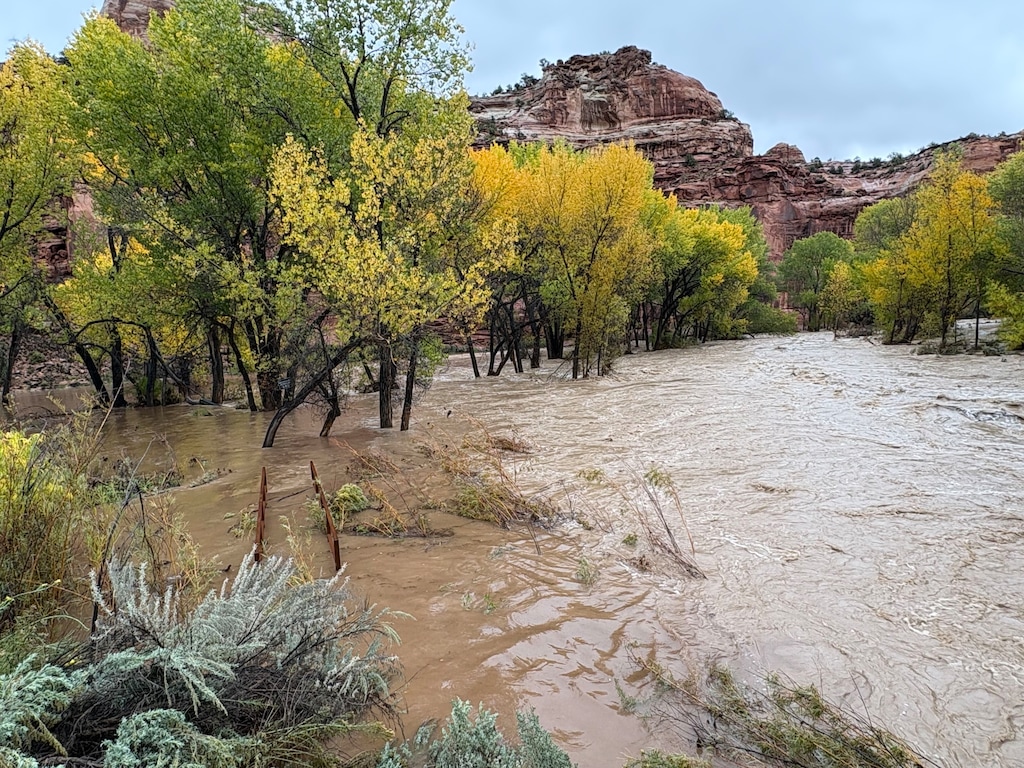
On Google Maps, the Escalante River is just a black smudge far below Scenic Byway 12 as the road bends toward the Escalante River Trailhead. For anyone standing on the bridge Thursday, though, it was a frenetic brown avalanche of water that could barely squeeze under the girder.
In just over 24 hours, the Escalante River ballooned roughly 434,000%. On Wednesday morning, the river was flowing at .39 cubic feet per second. By Thursday morning, it had jumped to 1,660 cfs and swelled to nearly 8.5 feet deep, according to USGS data.
A weather system parked over southern Utah on Wednesday and Thursday, dropping enough rain to trigger flash floods across the region.
“Two days — that’s a long time for one of these events,” said Joe Worster, a meteorologist in the National Weather Service’s Salt Lake City office.
In Zion National Park, 130 miles southwest, spontaneous waterfalls broke out in the canyon on the way to Scout Lookout.
One to two inches of rain fell in an hour in Hurricane in Washington County, according to NWS hydrologist Glen Merrill. Worster said the Pine Valley Mountains in that area received 2-3 inches.
Meanwhile, Bryce Canyon City got almost 5 inches between Wednesday and Thursday, according to Weather Underground.
Worster said this is the tail end of the flash flood season but cautioned it may not be over. Zion National Park warned visitors in an Instagram post to know the signs of an incoming flood. According to the post, those signs include: changes in water clarity, floating debris, rising water levels, increasing roar of water up-canyon, or signs of storms moving in.
“If you observe any of these,” the post said, “seek high ground immediately.”