Water safety, restoration plans and homelessness mitigation strategies are among the topics Jordan River-goers want to know more about, according to a survey by the Great Salt Lake Collaborative.
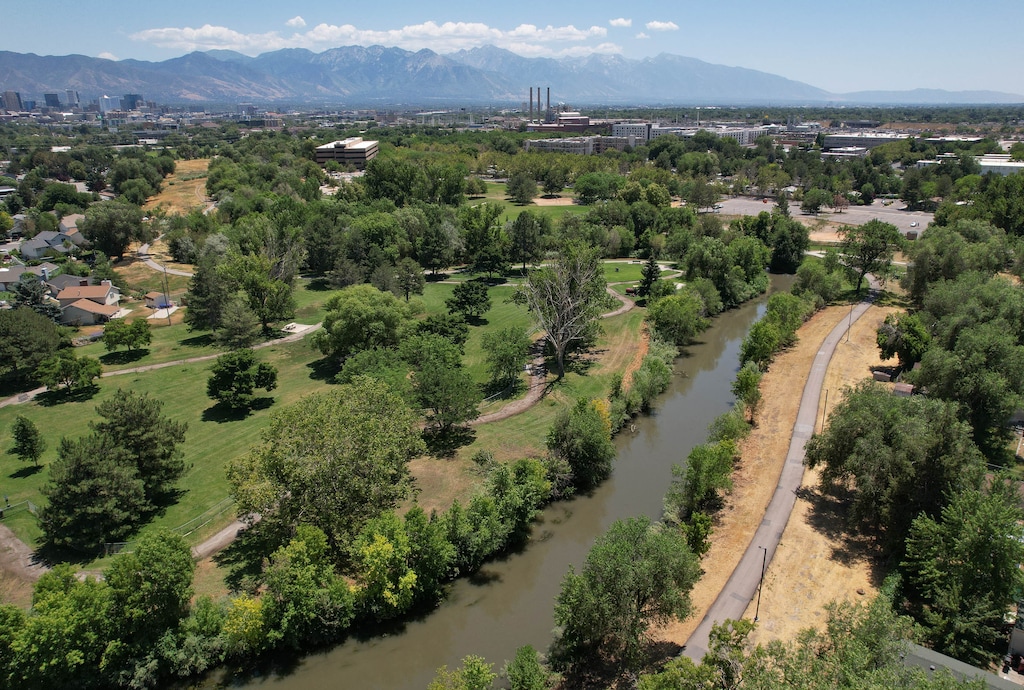
The waterway flows through the heart of the Salt Lake Valley — a place more than one million Utahns call home — and faces mixed public opinion and an impaired waterway designation along its 51 mile journey from Utah Lake to the Great Salt Lake.
With some restoration projects complete, others underway and a master plan that outlines the river’s future, survey respondents had varying questions for us.
Here’s what they asked, and what we know.
Is it safe to swim?
(Trent Nelson | The Salt Lake Tribune) A debris boom on the Jordan River in North Salt Lake on Monday, Sept. 22, 2025.
The Jordan River has a reputation for dirty, murky water. Health officials generally don’t recommend taking a swim — except for the southern end of the river near Utah Lake, when there are no algal blooms — but kayaking is fine as long as you’re careful.
Utah’s Department of Environmental Quality (DEQ) warns algae blooms and waterborne pathogens like E. coli can flare up along the waterway year round, potentially posing serious health risks. In the event of an algae bloom, they say “kayaking is ok, but avoid areas of algae.”
If you visit the Jordan River during a contamination, DEQ’s seasonal water quality monitoring website recommends keeping animals away, not swimming in or drinking the water, cleaning fish well and discarding guts, and knowing how to recognize a harmful algae bloom.
The water quality website, last updated October 2025, “will resume in June or July of 2026.”
What’s in the water?
Thirteen creeks, multiple large water reclamation facilities, and hundreds of stormwater discharges make up a watershed basin larger than 3,800 square miles, according to the Jordan River Commission (JRC). When it rains or snows, the largely urban basin washes industrial pollution from surrounding developments into the waterway, thereby polluting the river.
“Domestic, industrial, and agricultural discharges have polluted the water throughout the Jordan River watershed,” the JRC’s 2022 action plan says. “Mountain streams that feed the river were funneled into underground pipes that flow under subdivisions and strip malls. These changes, inspired by a human desire for utility, ultimately disrupted the biodiversity, ecosystem services, and resilience of the Jordan River Corridor.”
The JRC estimates “more than one-half of the pollution in our nation’s waterways comes from stormwater runoff,” and warns the best way to improve runoff quality is to keep it from getting polluted in the first place.
Who’s responsible for cleanup?
(Trent Nelson | The Salt Lake Tribune) Little Cottonwood Creek flows toward the Jordan River in Murray on Monday, April 13, 2026.
Short answer: a lot of different people, including you.
The river flows through fifteen different cities and three counties — Utah, Davis, and Salt Lake — on its way through the valley before dumping into Great Salt Lake. Each municipality has a role to play in shoreline and trail restoration, as well as Utah’s Department of Natural Resources (DNR), Forestry, Fire, and State Lands, who manages the banks and the bed of the river. DEQ manages its water quality.
“All government, volunteer, business, and non-profit organizations with an interest in the Jordan River Parkway have a part to play in achieving the vision,” the JRC’s action plan says. “No one entity can implement all the strategies independently.”
The JRC — which meets publicly every two months — operates as a watershed council to “encourage and facilitate discussion and collaboration [of] water-related issues and concerns among the stakeholders within the watershed,” according to the DNR’s website.
#LoveYourWatershed is a JRC initiative to raise awareness about how individuals can limit their pollution footprint during times of stormwater runoff. It recommends cleaning up around stormdrains, picking up pet waste, avoiding fertilizers, pesticides, herbicides, taking your car to an eco-friendly car wash, and minimizing salt and deicer use during the winter.
The DEQ and the JRC both have more information on how to limit pollutants from making their way into the river.
Is anything being done, and when will restoration begin?
(Trent Nelson | The Salt Lake Tribune) Dignitaries on a bridge over the Jordan River before a news conference about river restoration and improvements at the Power District and Fairpark in Salt Lake City on Thursday, Feb. 26, 2026.
Restoration is already underway, and has been for years.
In January, Salt Lake City resumed its Water Trail Vegetation Project that began in 2022. The project seeks to remove invasive, dead, and overgrown vegetation, having cleaned out “more than 200 truckloads of debris from the riverbanks” last fall, according to their website.
Last year’s operations took place from 1700 South River Park to 1300 South, with cleanup extending into three Creeks Confluence in Glendale as well as along two blocks in Rose Park’s Cornell Wetlands.
This year, the Salt Lake City Public Lands wants “to complete vegetation maintenance along the remaining stretches of the Jordan River within city limits.” It estimates the operation — which began at 2100 South and will continue to move north until they reach the city’s boundary — will take four to five months to complete.
The Public Lands Department is also planning additional trail restoration, including construction of benches and new trails, new recreation areas, and planting of new trees.
More projects are planned and billions of dollars in funding, both private and public sector investments, have been dedicated to the Jordan River. The JRC website lists 23 different restoration projects along the waterway that have been completed. Some are over a decade old.
And in February, Larry H. Miller Company dedicated $3.5 billion to developing the Power District near the Jordan River at North Temple. Their investment, which could host a Major League Baseball ballpark, includes riverfront restoration, trail maintenance, housing, office and retail space, hotels and a new Rocky Mountain Power corporate campus.
More notable restoration projects along the waterway include the Tracy Aviary Nature Center at Pia Okwai, Big Bend Habitat Restoration Project, and others found here.
How are local leaders handling homelessness along the river?
(Chris Samuels | The Salt Lake Tribune) A new amphitheater at Tracy Aviary’s Jordan River Nature Center in South Salt Lake, Wednesday, April 10, 2024.
Various municipalities have taken different approaches to tackling homelessness along the waterway. Most strategies include increased police patrols along the Jordan River Trail, enforced camping ordinances and policies that remove unsheltered people from the area.
“Since the conditions leading to homelessness are a statewide challenge, supporting efforts to prevent Utahns from falling into homelessness and to uplift those currently experiencing homelessness may reduce their need to camp along the Jordan River,” the JRC’s action plan says. Their strategy is to “advocate for and support regional and statewide efforts to make homelessness in Utah rare, brief, and non-recurring,”
Others have taken a different approach. Tim Brown, President and CEO of Tracy Aviary, said they intentionally placed the Nature Center at Pia Okwai next to the largest homeless resource center in the Salt Lake Valley — and they’ve noticed a difference.
“There’s fewer calls to dispatch to deal with issues in what used to be James Madison Park, since we took over this space,” Brown said, referencing conversations he has had with officials from Salt Lake County and South Salt Lake. “Based on that, there’s less negative activity happening, and we’ve had over 15,000 guests out here.”
Brown thinks Tracy Aviary’s approach could serve as a blueprint for dealing with negative activities along the Jordan River Trail.
“You bring more eyes and more attention to something, and the negative things just kind of fade away. They go somewhere else.” he said. “We felt that if we didn’t flood this area with positive activity, we risk losing it to negative activities that might be associated or come with that resource center.”
Brown emphasized the Nature Center is focused on building community around the river and changing negative public perception of the impaired waterway.
“We’re really open to everybody coming in, there’s no charge, but we’d like to manage how people come in here, and that allows us to do different things with the landscape,” he said. “We also aspire to have a good relationship with all the people, they’re part of our community too and we don’t want to turn our back on them.”
How can I help?
(Trent Nelson | The Salt Lake Tribune) Treated water from the Central Valley Water Reclamation Facility passes by a storm drain in Salt Lake City on Monday, Sept. 22, 2025.
The JRC’s action plan requires volunteers and land stewards from various organizations, non-profits, and initiatives across the valley to chip in.
Seasonal volunteer opportunities are posted on their website, which include trail and canoe cleanups, vegetation restoration planting, and invasive species removal. They also conduct year round volunteer operations, including the Hogle Zoo Conservation Action, #LoveYourWatershed, and various corporate and group opportunities
For more information on the survey results — including hopes, criticisms, and how people spend their time along the water — you can read more here.
Note to readers • This article is published through the Great Salt Lake Collaborative with support from the Jordan River Commission. Editorial decisions are made independently by the Collaborative and partner newsrooms.