 Courtney Tanner
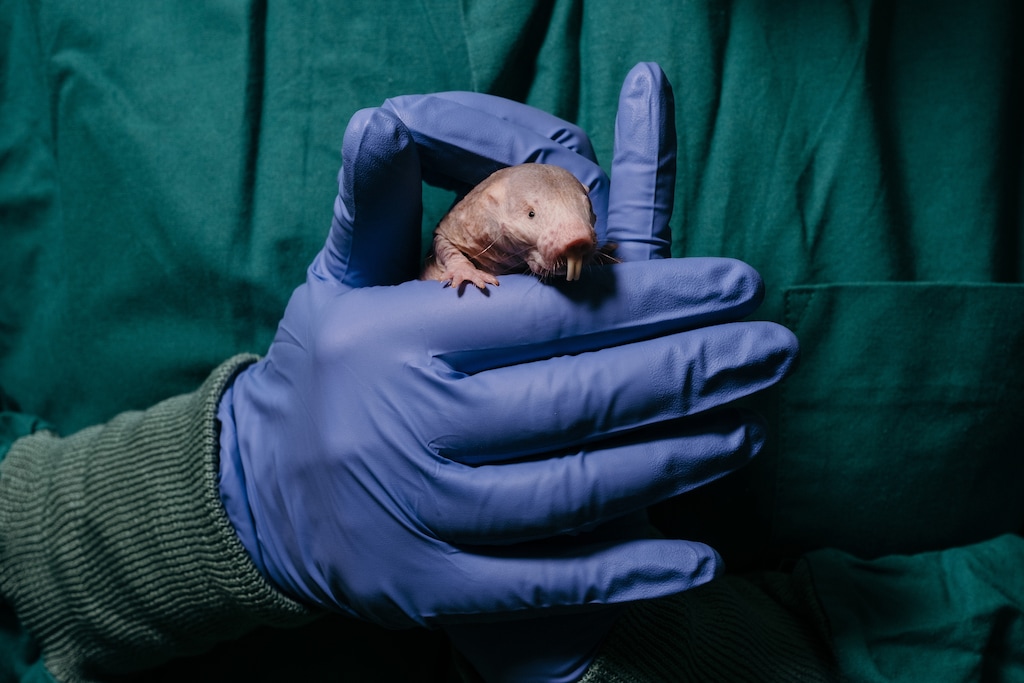
A research lab at Utah State University euthanized 82 naked mole rats using an unapproved method, according to a federal inspection report, which ultimately made the animals’ deaths take much longer than necessary.
That finding from the U.S. Department of Agriculture came in its latest routine review of the northern Utah agriculture-focused university and the animals it uses for research. The July report notes USU took internal corrective action ahead of the official inspection to address the violation.
“Utah State is strongly committed to the humane and ethical treatment of research animals in its care,” said school spokesperson Logan Wilber in a statement.
The naked mole rats’ deaths were first made public by People for the Ethical Treatment of Animals, commonly referred to as PETA, an animal welfare advocacy group. The organization posted the USDA report on its website and called on USU to stop using animals in its research.
PETA Vice President Alka Chandna said the violation is critical, showing the school fails to “properly put animals out of their suffering” and the animals died a “a slow, agonizing suffocation.”
Another animal welfare group, Stop Animal Exploitation NOW!, or SAEN, also filed a federal complaint, calling for more than $1 million in fines to be levied against USU.
The USDA report doesn’t specify what type of research the animals were being used for.
Last year, between Sept. 26 and Oct. 3, the research lab that had been working with the naked mole rats was authorized to euthanize them after its project.
It did so by exposing them to carbon dioxide — “a method not on the approved protocol,” the USDA report states.
That’s because carbon dioxide has less of an effect on naked mole rats, which are hypoxia tolerant (meaning they can withstand less oxygen than other animals), according to the USDA inspection.
That tolerance meant it took 40 minutes of “prolonged exposure” for them to die, the report says. The rats were instead supposed to be euthanized by injection.
The USDA report also notes another animal death violation at USU from December 2025. In that instance, a rabbit was in surgery and given too much anesthesia, causing it to die. The university also took corrective action in that case.
Wilber at USU said the school’s internal Institutional Animal Care and Use Committee reviewed both cases, reported them to federal authorities and instituted necessary fixes to prevent future mistakes. That committee continuously reviews labs on campus that use animals for research.
“As an institution, USU adheres to the highest standards, federal law, regulations and established standards for animal care and research,” he said.
USU is also inspected by the USDA at least once a year, in an unannounced visit, to check for compliance.
SAEN also criticized the school last year based on a separate USDA report about USU misconduct with research animals that occurred between 2022 and 2024.
That report found that a Utah State researcher exposed 22 guinea pigs and 53 hamsters to radiation outside of a project’s approved scope and withheld pain medication after performing surgeries on the animals.
Some of the rodents died, though the report did not specify how many. SAEN called for the project’s researchers to be terminated and the school to be fined.
At the time, the school said USU animal care staff alerted the attending veterinarian and federal authorities. After its own investigation, the university also suspended surgeries on the project and disconnected equipment. The project’s principal researcher was also temporarily limited to only noninvasive procedures.
During the most recent inspection, the USDA investigator looked at 680 research animals total at USU, including 122 sheep, 57 goats and 10 cattle.
In a statement, USU reiterated this month what it shared after the hamster and guinea pig investigation: “Animal research is vital to advancing biomedical research and nearly every major medical advancement in the last century can be traced back to findings from animal research.”
(Francisco Kjolseth | The Salt Lake Tribune) The Old Main building at Utah State University in Logan.
Correction • Aug. 24, 11:05 a.m.: This story has been updated to correctly state how the animals were killed.