 Brock Marchant
Providence • The fate of the Cache County Library rests on a few hundred votes.
The future of the small building, nestled on a quiet street in Providence, has been in question since last year, when Cache County Executive George Daines recommended the County Council defund the library to reduce a budget shortfall.
After his suggestion faced public pushback, the council first funded the library for only six months of 2026, then eventually voted to fund it through the end of the year.
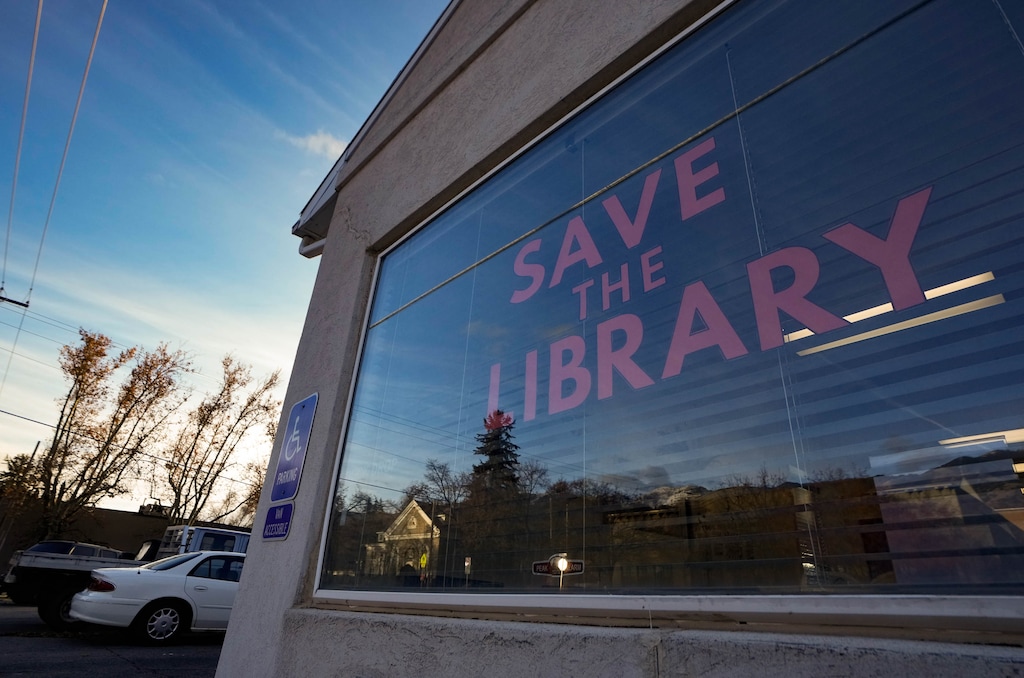
(Francisco Kjolseth | The Salt Lake Tribune) The Cache County Library in Providence, which is set to lose funding from the county. Providence officials are considering whether the city should pay to keep it open.
In response, city officials in Providence weighed whether they should take on the financial burden of the library. They decided to ask voters to weigh in, and put a nonbinding yes-or-no question on residents’ general election ballots:
“As the County Library is closing, should Providence City consider imposing a new property tax levy to fund a city public library and all related library services, which is estimated to cost the owner of a primary residence with a fair market value of $500,000 approximately $55.30 per year?”
Unofficial election results: 54.3% of voters responded “yes,” and 45.7% said “no.”
The difference comes down to 300 votes.
An earlier survey distributed by the city to its residents in February and March showed that about 80.1% of respondents thought it was either somewhat or very important to have a library in Providence.
The story unfolds
When he first petitioned for the county to defund it, Daines said he felt it was unfair that taxpayers in some Cache Valley communities were paying to keep the county library’s lights on while also funding libraries in their individual communities. If people in parts of the county without library access wanted to visit a library, he said they could pay the nonresident fees — a deal he said was fair since they wouldn’t be paying for library services through any property taxes.
(Samantha Moilanen | The Salt Lake Tribune) Cache County Executive George Daines explains his recommendation to defund the Cache County Library during a council meeting on Nov. 4, 2025.
In a February letter to the Cache County Library Board, Daines said the county would transfer the library to Providence, River Heights, Millville or some combination of the three cities if they wished to keep it operating.
The Providence City Council took an interest.
“I think the biggest thing — the easiest factor — was that the city owns the building that it’s in,” said Providence spokesperson Megan McCuistion.
River Heights and Millville have also discussed contributing to keep the library open, but McCuistion said there haven’t been any final decisions regarding how a possible partnership between the small towns could fund the library.
Blake Wright, the mayor of River Heights, confirmed that if Providence takes over the library, River Heights intends to continue supporting the facility, though he said officials have not determined specifics.
The plot thickens
Brynnan Sainsbury, the director of the Cache County Library, said it’s been a frustrating year.
“It feels like sometimes I know what’s going on, and then it changes suddenly,” she said. “It’s just been hard to then have people come in and ask me questions, and I don’t have answers.”
On one hand, if the Cache County Library goes to Providence, she said it would allow her and her staff to focus on the more immediate community.
She said they wouldn’t need to stretch their few resources as far, and would be able to take part in Providence-specific events like Sauerkraut Days.
“I would love to start like a library of things, and have more things that people can check out and take home that aren’t just books,” she said. “That’s more doable on a smaller scale.”
(Spencer Wilkinson | Utah Public Radio) Residents make signs at the Cache County Library after learning about a 2026 budget proposal that would cut the library's funding.
On the other hand, if the city takes over, she’s worried people in other parts of the county will need to pay to use it, especially if their own community doesn’t have access to a public library.
“It makes me really sad,” she said. “We serve this little niche of people that don’t have city libraries, and I believe that everyone deserves free library access.”
Brittney Morris, a patron of the library who lives in Paradise, said in an email to Utah Public Radio and The Salt Lake Tribune that losing access to free media isn’t the hardest-hitting impact that would come through losing the library.
Rather, “it’s the quiet implication that the people who will be most affected aren’t being seen by their city leaders,” she wrote.
McCuistion said the Providence City Council’s next meeting will be on Nov. 18. She expects council members to discuss the issue then.
In a message to Utah Public Radio and The Salt Lake Tribune, council member Scot Campbell said there will be a lot to talk about.
“I hope we can support the library,” he said. “As far as how this will work regarding fees, we have a lot to discuss.”
Note to readers • This reporting position is a partnership with Utah Public Radio, a division of Utah State University.
 I’m Brock Marchant, The Salt Lake Tribune’s Cache Valley reporter in partnership with Utah Public Radio. As a valley native, I’ve seen firsthand the issues that people face everywhere from Richmond to Avon — unaffordable housing, dwindling open space and a rapidly increasing population that has cities struggling to keep up. I want to explore local problems by reporting on the ground, not just quote elected officials and news releases. As residents work diligently to overcome challenges, I want to tell their stories and share their solutions. Smart, hard-working people have built the valley’s history, and I’m certain they will frame its future.
As a nonprofit newsroom we rely on donations from readers like you to make this work possible. Donate today to support this reporting.