 Tony Semerad
A simple and recently approved switch in zoning labels for the land beneath Salt Lake City’s emptied Smith’s Ballpark has now opened up a brighter future for residents in that neighborhood.
The City Council on Tuesday approved key changes to the permitted land uses for those nearly 15 acres at the iconic and city-owned Ballpark stadium site at the corner of 1300 East and West Temple in Utah’s capital.
While the council members officially switched the land’s designation from open space to a mixed-use one, they added last-minute caps on building height and mandated that at least five acres of public lands remain at the heart of any future development there.
The change also calls for keeping mature trees and natural landscaping in place for years at the long-time sports venue in response to public requests for maintaining open space and buffering heat island effects in that part of the city.
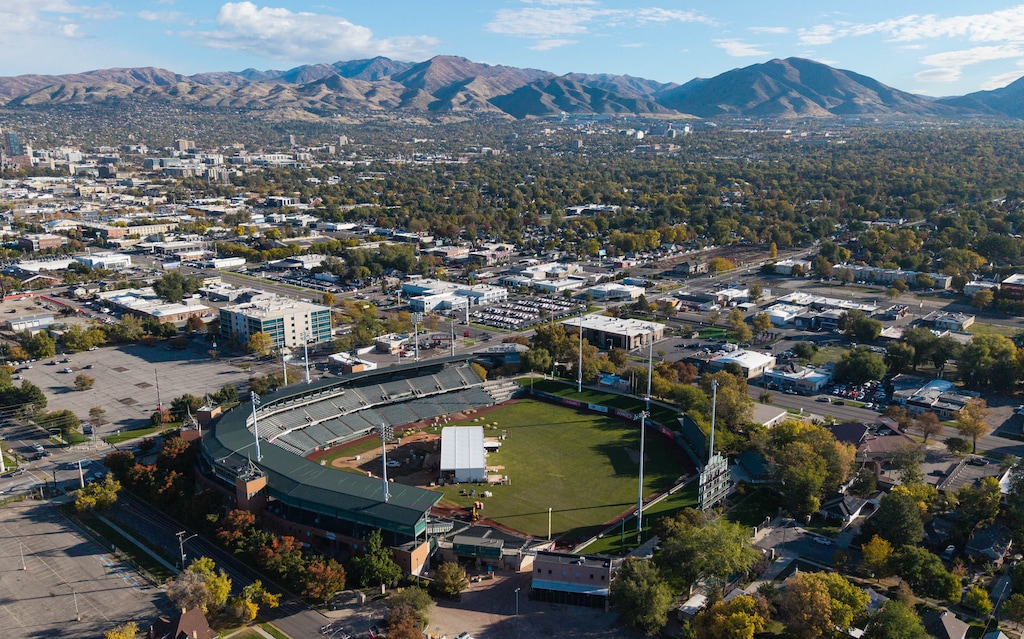
(Francisco Kjolseth | The Salt Lake Tribune) Smith's Ballpark and surrounding greenery are pictured in the Ballpark neighborhood of Salt Lake City on Wednesday, Oct. 21, 2026.
The ballpark’s future has been up in the air since 2024, when The Larry H. Miller Co.-owned Salt Lake Bees left for a new stadium built at the Daybreak development in South Jordan.
Tuesday’s unanimous vote is a critical piece of the city’s elaborate plans at the site, according to a spokesperson for the city’s Community Reinvestment Agency, which now manages the property,
“It’s a great moment for the CRA, for the city, and for the Ballpark neighborhood,” said the agency’s spokesperson Tauni Barker.
The zoning change “is a real turning point that allows us to move forward with development,” she said.
The overall intent, after several years of planning and debate, is to use pieces of the iconic baseball stadium to make a new entertainment venue. The city also wants to entice the construction of new housing on surrounding parcels where it’s badly needed and opening new retail spaces to help the neighborhood thrive.
“Any developer we work with now knows,” Barker said, “this land is available.”
Since the Bees bolted, the city has developed extensive plans for multiple apartments and a new library and fire station. City officials hope to turn a southwest piece of the historic stadium stands and the main baseball green into a new venue — as they try to keep economic activity pumping through the area.
Erika Carlsen, the council member for District 5 which spans Ballpark, Central Ninth and East Liberty, said the council had listened to a host of area residents about the neighborhood’s desperate need to keep more open space, not least for health reasons.
Carlsen thanked fellow council members on Tuesday for agreeing to switch from the city’s more intense MU-11 zoning for the Ballpark parcels to designations called MU-8 and MU-5, which require lower building heights more akin, she said, to what already stands around the stadium site.
(Francisco Kjolseth | The Salt Lake Tribune) Smith's Ballpark is pictured in the Ballpark neighborhood of Salt Lake City on Tuesday, Oct. 20, 2026.
“It allows for density,” Carlsen said Friday, “but if you look at the zoning map, it also more closely matches what’s there in the neighborhood.”
Carlsen also said it was important, from her perspective, that Salt Lake City retain ownership of at least a majority the stadium site, if only to see its plans through.
Barker said the CRA will seek proposals from prospective developers interested in the land in the coming months now that the zoning is in place.