 Addy Baird
An influx of resource requests and reports from fire crews paint a picture of the dangerous and rapidly escalating Widemouth 2 Fire in south-central Utah, where two helicopter pilots helping to fight the blaze were killed in a crash last week.
Fire officials say the blaze was caused by lightning and started July 27. It was initially a smaller fire but spread quickly and suddenly: As of Aug. 2, the fire had burned 36,000 acres. Two days later, it was raging across more than 84,000 acres and growing quickly.
As of Monday, it has ballooned to more than 118,000 acres, and it is now the largest wildfire in the state, with just 26% containment (meaning just 26% of the fire is behind a perimeter crews feel confident it will not cross).
The rapid spread of the blaze meant massive resource requests. Public documents released each evening detail how many responders are on each fire around the state and the necessary resources they need to fight them. Those documents show how quickly the Widemouth 2 situation escalated: On July 29, two days after the fire started, the crew fighting the fire listed their critical needs as “none.”
The next day, according to evening reports, they requested a helicopter base manager and air operations, and put in requests for helicopters on July 31 and Aug. 1. As of the first of the month, 336 people were working on the fire, and the fire was listed at just over 6,000 acres with 15% containment.
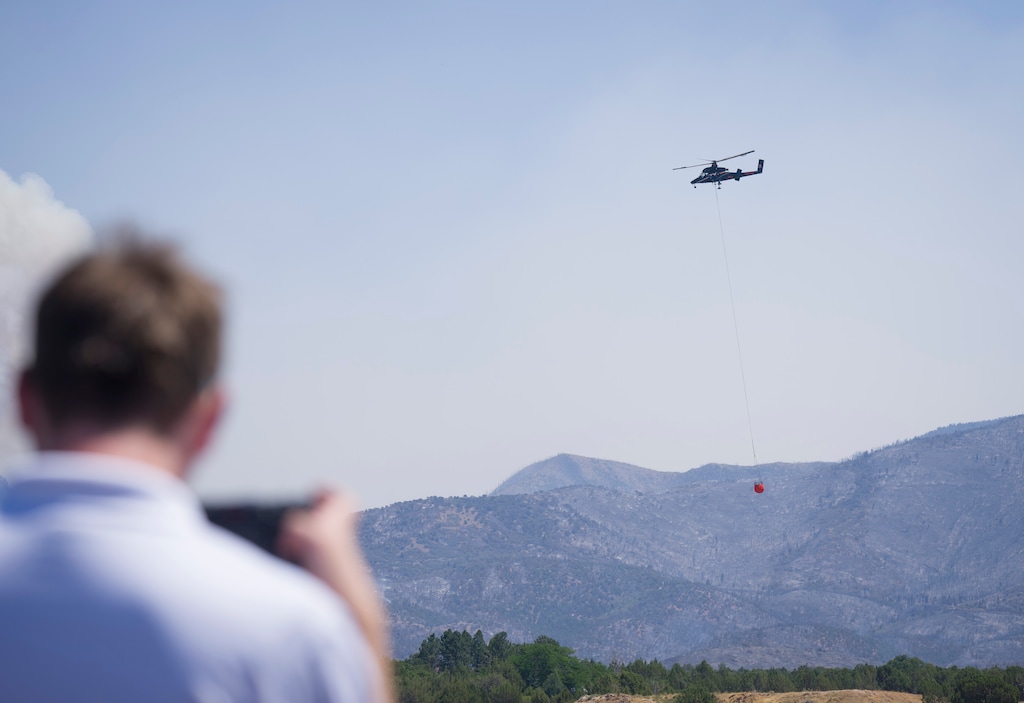
The helicopter that crashed was among the first assigned to the fire. According to flight records, it had been in the Fillmore area, where the Widemouth 2 Fire is burning, since Aug. 1.
(Bethany Baker | The Salt Lake Tribune) Officials look at a fire map at the fire camp for the Widemouth 2 Fire in Kanosh on Thursday, Aug. 6, 2026.
On Aug. 5, the evening report noted that 540 people, including seven helicopters, were working to fight the blaze, which was by then burning more than 87,000 acres. The helicopter that crashed made two dozen flights that day alone, flight records show.
In their evening report that night, crews requested additional helicopter support and noted a series of serious threats, including 2,500 “residential, commercial, federal and educational facilities” as the primary concern.
The fire was, by then, just 10% contained and spreading. Two days later, the helicopter crashed. Officials on-site Friday described seeing two columns of smoke, one from the fire and one from the crash. They were unable to reach the crash site Friday, they said, as a wall of fire forced crews to retreat from the area.
“Wildland firefighting is among the most dangerous jobs in the world. Today is a painful reminder of the extraordinary risks these brave men and women accept to protect us,” Gov. Spencer Cox wrote in a post on X Friday afternoon. “We ask all Utahns to keep them in your prayers.”
On Saturday, officials were able to reach the crash site and confirmed both pilots had been killed in the crash.
The pilots were identified Monday as Chris Andersen, 64, from Stateline, Nevada, and Miles Elliott, from Porterville, California. The helicopter was operating under contract with the U.S. Forest Service and the pilots worked for Helicopter Transport Services.
In the days since the crash, evening reports showed crews have made progress containing the fire, but have additional critical needs: According to Sunday’s evening report, crews at Widemouth 2 requested a number of additional ground firefighters and coordinators, and now have five helicopters working on the blaze.
(Bethany Baker | The Salt Lake Tribune) Smoke from the Widemouth 2 Fire is seen from Fillmore on Thursday, Aug. 6, 2026.
Many residential and commercial properties remain at risk, as residents of Fillmore, Cove Fort, Elsinore, Joseph and Richfield have been evacuated. In addition, the crews reported that “health care facilities; community power and water infrastructure; emergency management and public safety communication sites; grazing allotments,” as well as Fremont Indian State Park and Museum were at risk as the fire continued to burn in the area.
Widemouth 2 is one of a number of massive wildfires Utah has seen this summer. The Cottonwood Fire is still burning over more than 97,000 acres and is now 97% contained, as is the Babylon Fire, which is burning over 107,000 acres near Canyonlands National Park.
And after one of Utah’s driest winters on record, fire officials say the blazes are moving faster than they can fight them, as Utah finds itself in peak fire conditions, with steeper slopes allowing fires to move more rapidly, dry grasses and woodlands offering fuel and windy conditions helping the fire spread.