 Brock Marchant
Box Elder County officials are urging residents to skip raw milk as bird flu spreads through the area.
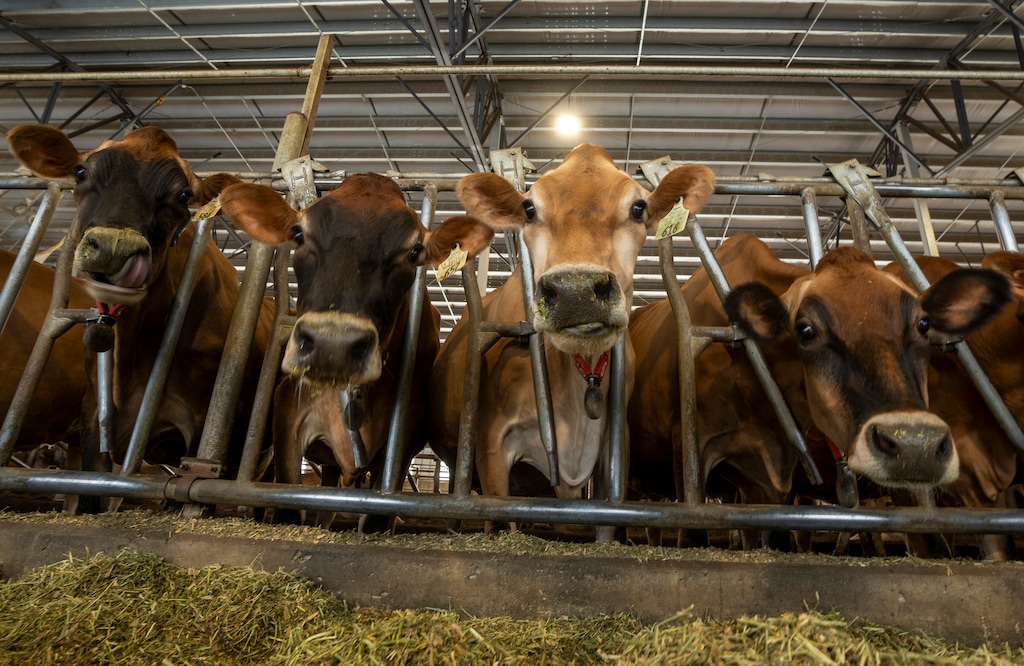
In a Thursday announcement, the county reported that at least 50% of its dairy cows have been “impacted” by the Highly Pathogenic Avian Influenza — commonly referred to as bird flu — and farmers are seeing severe losses to their milk production. The county did not immediately specify what “impacted” meant.
Through declaring a state of emergency, the county said it is able to coordinate with state and federal partners for help responding to the situation. Box Elder County first found bird flu in a local milk sample sometime around June 25, according to the news release.
Though the county said the public doesn’t face any threat from consuming pasteurized dairy products, it warned people to avoid raw milk “as it may contain HPAI for several weeks when stored in the refrigerator.”
According to the Centers for Disease Control and Prevention, people who consume raw milk infected with bird flu may risk becoming infected with the disease. The risk level, the agency’s website says, is unknown.
If someone does come down with bird flu, the CDC says their symptoms could range from things like eye irritation and headaches to more serious symptoms like seizures and difficulty breathing, depending on the severity of their case.
People infected with the disease can also face life-threatening complications such as pneumonia, sepsis and respiratory failure.
In dairy cows, symptoms of bird flu include decreased appetite, lower milk production and an “unhappy, lethargic” appearance, according to Box Elder County.
In cattle herds impacted by bird flu, the county says less than 10-20% of the cows typically get sick, and less than 2% would be expected to die. Still, officials warn that roughly 10% of cows sick with bird flu never fully bounce back to producing the level of milk that they did before they were infected.
Herds with bird flu must quarantine for up to 90 days, according to the county. Dairy owners looking to test their milk for bird flu can submit samples to Utah State University’s Utah Veterinary Diagnostic Laboratory.
According to Utah’s Department of Agriculture and Food, dairies in Weber and Cache Counties are also facing quarantines.
Note to readers • This reporting position is a partnership with Utah Public Radio, a division of Utah State University.
 I’m Brock Marchant, The Salt Lake Tribune’s Cache Valley reporter in partnership with Utah Public Radio. As a valley native, I’ve seen firsthand the issues that people face everywhere from Richmond to Avon — unaffordable housing, dwindling open space and a rapidly increasing population that has cities struggling to keep up. I want to explore local problems by reporting on the ground, not just quote elected officials and news releases. As residents work diligently to overcome challenges, I want to tell their stories and share their solutions. Smart, hard-working people have built the valley’s history, and I’m certain they will frame its future.
As a nonprofit newsroom we rely on donations from readers like you to make this work possible. Donate today to support this reporting.