 Brock Marchant
Note to readers • We are investigating the challenges of growth in Cache Valley and highlighting the people and solutions working to address them. Support this work today here.
If you’re in Payson and need to get to Brigham City, you can take the Utah Transit Authority’s train and bus routes to reach your destination.
If you’re in Hyrum and need to get to Preston, you can take bus routes with Cache Valley’s Connect Transit across state lines.
But if you’re in Brigham City and need to get to Hyrum, you will find a missing link in public transportation, separating Cache County’s public routes from the buses and train stations that dot the Wasatch Front.
Talks about that missing piece in the public travel puzzle have surrounded Connect Transit for years, according to CEO and manager Todd Beutler.
Now, as the transit district looks to grow after recently completing a new facility, conversations about establishing a route connecting Cache Valley with Brigham City have been reignited.
Among Connect Transit’s possible expansions is a new link that would stretch through Wellsville Canyon, colloquially known as Sardine Canyon.
“That’s been something we’ve had questions from the public and others for years, and we’ve looked into numerous times,” Beutler said.
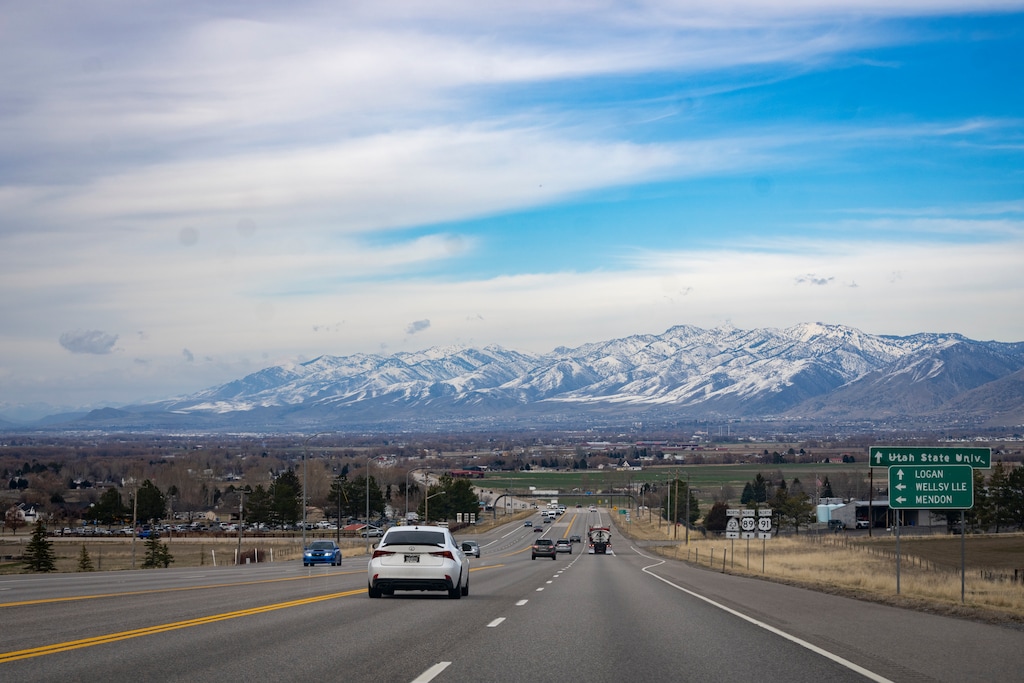
(Bethany Baker | The Salt Lake Tribune) There are no existing public transit options for people looking to travel through Sardine Canyon, which separates Cache Valley from Brigham City.
According to data from Utah’s Department of Transportation, the canyon saw an average of 22,000 trips daily in 2023 and 2024. It’s a popular route for Cache Valley residents who need to get to work in other counties or visit Utah’s bigger population centers.
What riders say they want
But providing a public route through the canyon doesn’t come without its drawbacks or competition with other potential priorities.
One thing Beutler said Connect Transit has to be mindful of is federal regulations that prevent publicly funded transit districts from competing with private enterprises. For now, the only bus service through the canyon is the Salt Lake Express, which will connect riders from Logan to Brigham City for about 20 bucks one way.
Another thing the transit district needs to consider is whether it is fulfilling the public’s needs.
“We hired a professional consulting firm that does that kind of work,” Beutler said. “... We’re hoping by the end of this year that we’ll at least have a draft idea of where that ranks in priority.”
(Christopher Cherrington | The Salt Lake Tribune) This story is part of The Trail Ahead, a series focused on solutions to Cache Valley's biggest challenges.
During a May 27 Connect Transit board meeting, Peter Soderberg — the project manager for the ongoing study as to where the transit district can expand and improve — reviewed preliminary results from a survey conducted over recent months, as well as feedback the district has heard from board members, municipal partners and advocacy groups.
“We’re really targeting a few different groups. Specifically, we want to hear from bus riders,” he said. “... As well as listening to non-riders.”
In an online survey administered by Connect Transit in April and May, Soderberg said respondents — 82% of whom were already riders — had shown the most interest in increasing service frequency on existing routes and adding more service during late evenings and on weekends.
Beyond those priorities, however, Soderberg acknowledged that some feedback from board members and riders indicated a desire for new routes to Wellsville and Brigham City.
“Though there are, of course, some challenges associated with both of those,” he said.
How did Summit County do it?
Brad Herkimer, the chief operations officer for High Valley Transit, said in an interview that his Summit County-based transit authority ran into multiple hurdles with connecting Salt Lake City to Park City.
(Rick Egan | The Salt Lake Tribune) High Valley Transit first connected Park City with the Wasatch Front by contracting with a private company.
In 2022, a year after High Valley Transit started service, Herkimer said UTA asked it to establish a connection between Park City and Salt Lake City. UTA had offered the route since 2011, according to Park City’s website.
“We didn’t feel like we had our rolling assets to the point where we could do that ourselves,” he said. “So we contracted Snow Country Limousine service.”
That company operated its own vehicles under High Valley Transit’s name to make the connection.
In 2023, he said, High Valley Transit had grown to the point that it began offering the route with its own drivers and vehicles.
Herkimer said contracting can help transit authorities fill the gaps in their bandwidth to better serve riders. High Valley Transit, for example, still partners with Via Transportation for its microtransit ridesharing program.
“To the rider, it all looks like High Valley Transit, but I would reach out to the Vias of the world,” he said. “... You might be surprised with what they come back with. It only costs you a little bit of time … to listen to some proposals.”
Asked about the possibility of contracting out to fulfill the need in Sardine Canyon, Beutler said Connect Transit wouldn’t be opposed to forming such partnerships.
Though he didn’t know how much it would cost to run a route through the canyon, he said a public-private partnership is especially enticing if it saves taxpayer money.
“We want to do what makes sense, what’s efficient,” he said. “... We’re always just trying to evaluate what’s going to make the most sense from what we call best value.”
 I’m Brock Marchant, The Salt Lake Tribune’s Cache Valley reporter in partnership with Utah Public Radio. As a valley native, I’ve seen firsthand the issues that people face everywhere from Richmond to Avon — unaffordable housing, dwindling open space and a rapidly increasing population that has cities struggling to keep up. I want to explore local problems by reporting on the ground, not just quote elected officials and news releases. As residents work diligently to overcome challenges, I want to tell their stories and share their solutions. Smart, hard-working people have built the valley’s history, and I’m certain they will frame its future.
As a nonprofit newsroom we rely on donations from readers like you to make this work possible. Donate today to support this reporting.