 Megan Banta
Utah’s housing czar says despite a “pretty bloody fight” five years ago in the Legislature, an effort to address the housing crisis by building more so-called mother-in-law apartments across the state is off to a slow start.
But barriers from permitting to financing the accessory dwelling units, or ADUS, have made it hard to scale those potential rental units as a housing solution, said Steve Waldrip, who served in the Utah Legislature at the time and is now the governor’s advisor for housing strategy and innovation.
Data from the Kem C. Gardner Policy Institute shows that, since 2021, cities across Utah have permitted about 1,100 ADUs – a fraction of the permits issued each year in other states.
That isn’t to say that they aren’t working as a solution in some places, Waldrip said.
“You see which cities are actively participating in trying to permit it,” he said. “But even with that, you have economic realities.”
Housing is “the slowest of slow burn things,” he said, and one win is that many builders are now including internal ADUs like a basement apartment or suite above the garage as a base option for new construction.
(Trent Nelson | The Salt Lake Tribune) A home at The Pines in Midvale on Wednesday, Dec. 1, 2021. The three homes that make up this Ivory Homes development in Midvale have secondary apartments, or accessory dwelling units (ADU).
‘One of the biggest things we can do’
Some cities were already clearing barriers for ADUs when Rep. Ray Ward, a Bountiful Republican, proposed a change to state law to allow internal units in owner-occupied homes statewide and remove barriers like size requirements and limitations or how units face the street.
Many single-family homes used to house a family of six or seven, Ward said in 2021 during hearings on HB82, but now only house two. And he doesn’t see “any hope for us to be able to build enough new units” and achieve affordability in housing if those two people can’t rent out their basement.
At the time, the state was facing a shortfall of 53,000 housing units, Ward said. And without major policy changes, that deficit is expected to grow to more than 200,000 homes short of demand by 2055.
Internal ADUs are a way to efficiently use existing housing stock to add units, Ward said, and they are generally less expensive and easier to build.
House Speaker Mike Schultz — a Hooper Republican who was the majority whip at the time — described the bill then as “probably one of the biggest things we can do to help housing costs in Utah.”
The first hearing on HB82 drew feedback from more than 20 people, including city officials who largely opposed the bill because it took away some local government control and ability to tailor zoning to their residents and neighborhoods.
The Utah League of Cities and Towns, a powerful advocate for the state’s municipal governments, ended up being neutral on the legislation after weeks of negotiations, and the bill ultimately passed the House 50-19 and the Senate 27-1.
Fewer in five years than other states in one
But unlike in other states, ADU construction in Utah hasn’t exploded.
Between HB82 becoming law in 2021 and May 6 of this year, cities across Utah have issued building permits for about 1,100 units total, based on data the Gardner Institute provided. Most of those are internal or above garages, according to Dejan Eskic, a senior research fellow whose focuses include housing.
The numbers are up from 40 in 2020 to 317 in 2024. And last year, another 368 permits were approved, based on that data.
But Utah still lags behind other western states – California and Washington approve thousands of new ADU permits each year.
Some cities have done more to allow ADUs, and it shows.
Salt Lake City, for example, has been “aggressive” in allowing alternative housing, and the data from Gardner shows the capital city having the most new building permits for ADUs, with around 180 since the state law changed.
And even some smaller cities have had people build or renovate. For example, Hurricane has issued 38 permits, and New Harmony has issued 11.
(Francisco Kjolseth | The Salt Lake Tribune) A 650 square foot Accessory Dwelling Unit (ADU) in Salt Lake City is incorporated with full-size stairs to access an upstairs bedroom and bathroom.
‘Really, really challenging’
Waldrip points to a few factors for the lack of a boom in ADU permitting and construction.
For one, he said, it serves as an example of the challenges that come with the state preempting local governments.
Cities have “a lot of tools at their disposal” for getting around the state telling them what to do, he said, and some have drawn a hard line on issues – especially related to density.
Waldrip joked that street parking has become “the worst thing ever” in some cities.
But even in places where local officials have embraced ADUs, he said, there are challenges.
He pointed to Farmington, where officials allowed people to create an external ADU as a legally separate lot, but the process could involve refinancing a mortgage someone may have received at an interest rate much lower than today’s rates.
“The practical aspect of creating these ADUs is really, really challenging from a financing standpoint,” he said.
Though ADUs are less expensive than a typical single-family home, they still can cost $100,000, he said, and that’s not easy to finance even though the potential revenue is significant.
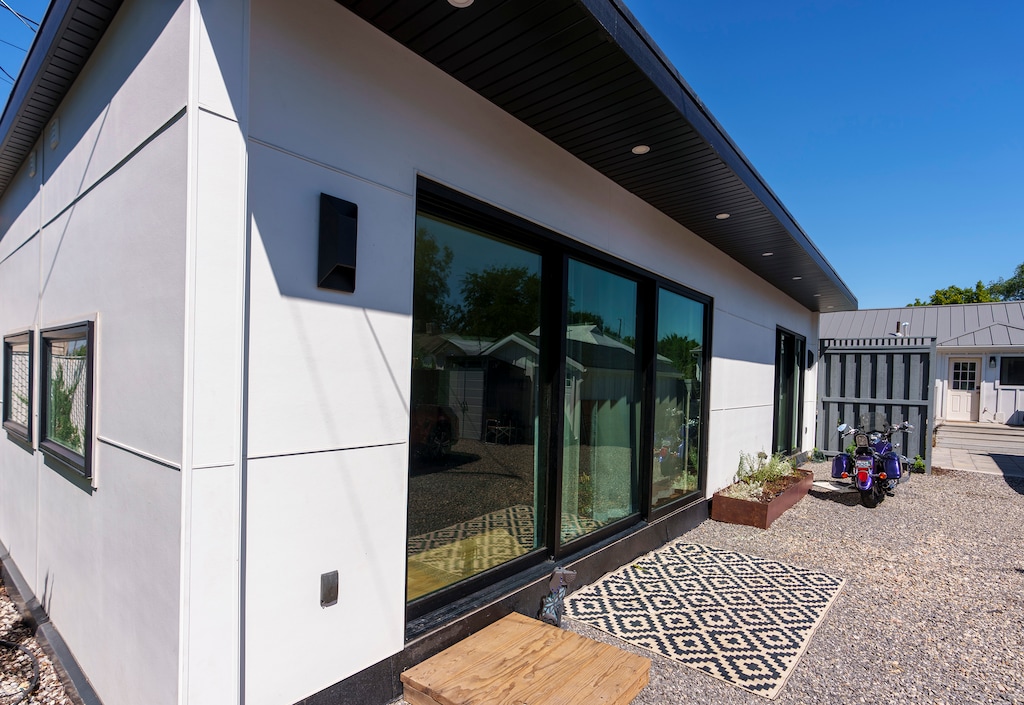
In resort areas in the West like Tahoe, Jackson and Sun Valley, there are lots of external ADUs because people pay cash for a modular unit delivered to the property, Waldrip said.
“We haven’t seen that phenomenon here in Utah,” he said, but he expects to see more of that in Park City and areas of the Wasatch Back, where there are high home prices but people have cash available.