 Tony Semerad
There’s the retired mother who needs help from her children to pay rent as she struggles to find a less expensive apartment.
Or the law school graduate and practicing lawyer who can’t afford to buy a house anywhere in Salt Lake City right now.
There’s the growing family unable to pay triple its current housing costs just to find a larger home. And the young married couple, both with college degrees, forced to move back in with parents because they can’t make a mortgage payment.
These folks and a sizable majority of all Salt Lake City residents overall, according to a new survey, say they share heightened concerns about housing affordability in Utah’s capital and believe the city is not doing enough to create new options.
The survey was commissioned by housing advocates at a Salt Lake City nonprofit called Wasatch Advocates for Livable Communities, with the intention of throwing a spotlight on and bolstering support for a new set of zoning reforms at City Hall.
Ninety-two percent of registered voters in the city polled in late March and early April voiced some level of anxiety over spiraling costs and a lack of available housing, with nearly three in four saying they were “extremely” or “very” concerned.
The sentiment cuts across all demographics, the survey finds, including homeowners and wealthier households, but is especially acute among younger residents and people who rent their homes.
“I have been unable to find a small apartment for one person that I can afford,” one participant told pollsters. “I rent a room in a basement of a house.”
The poll emerges as city planners and elected leaders are gathering public input as they tweak new strategies referred to as Expanding Housing Options, aimed at boosting infill construction of smaller homes across neighborhoods traditionally devoted to single-family housing.
The proposed new policies are currently being vetted through a series of community meetings and are expected to come before city officials for review and potential approval later this year.
The nonprofit group behind the poll is inviting interested members of the public to a virtual meeting Wednesday to rally support for the package. More information is available at wasatchalc.org/events.
“We view this proposal as really a watershed moment for Salt Lake City,” Turner Bitton, executive director of Wasatch Advocates for Livable Communities, said Monday. “We want to do everything we can to show both the City Council and the public broadly that there is widespread support for this.”
Similar steps in other cities such as Houston, Seattle and Durham, North Carolina, Bitton said, indicate these kinds of modest zoning reforms have lifted housing supply and widened opportunities for home ownership.
Conducted by Embold Research, a San Francisco-based polling firm, the group’s survey has drawn on interviews with 616 registered voters in Salt Lake City from March 30 to April 7 and has a margin of error of 4.1%.
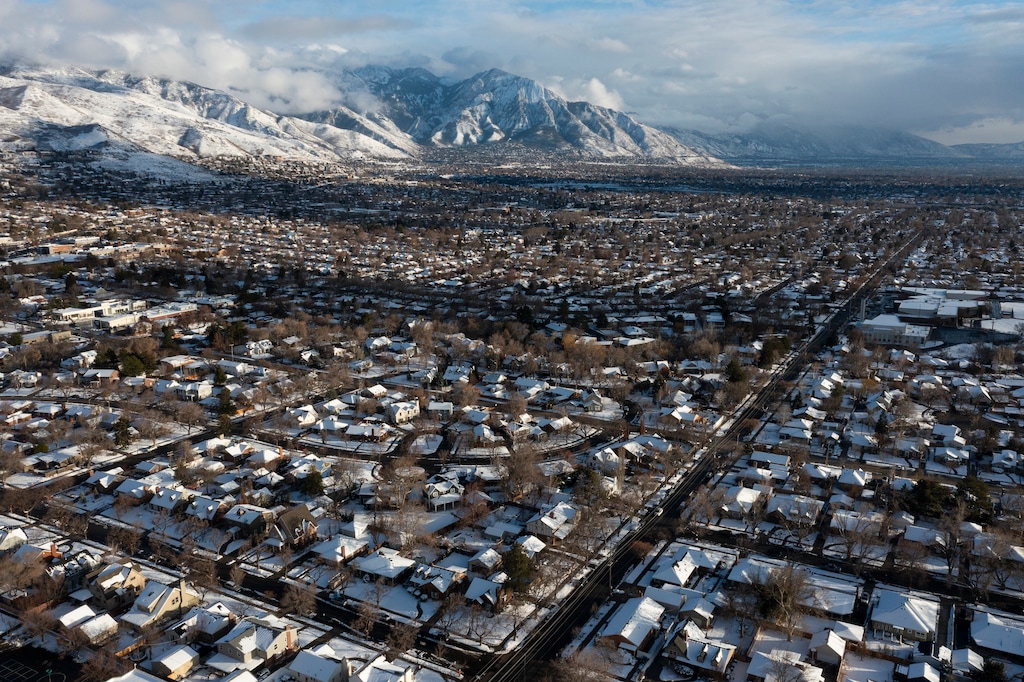
(Christopher Cherrington | The Salt Lake Tribune)
The numbers show residents do support many of the provisions of the city’s latest proposal to expand housing, which has met with some initial caution among members of the City Council.
Nearly three-quarters of those surveyed said they backed allowing homes to be built on smaller lots, while 63% support allowing duplexes, triplexes and four-plexes in all residential neighborhoods. Just over half of residents, meanwhile, were in favor of giving property owners more flexibility on parking requirements when adding homes on their lots.
In other poll findings:
• Roughly three-quarters — or 72% — said Salt Lake City’s government has not done enough to create more options people can afford, with only 10% saying it has and 8% saying it’s done too much.
• Nearly three in five residents say city officials should make creating more housing a higher priority than preserving the character of existing neighborhoods, compared to a quarter of residents who feel the opposite.
• Eight in 10 residents said either they or a friend or family member has been affected by the city’s lack of affordable homes. More than half of all those surveyed said conditions have “made it difficult to envision a future in Salt Lake City,” with that unease rising to 74% of young residents and 77% of renters.