 Samantha Moilanen
A video circulating online shows U.S. Immigration and Customs Enforcement agents detaining a man outside a gym in Bountiful on Friday, with one agent placing a knee on the man’s back as he lies handcuffed on the ground.
Three Bountiful police officers later appear in the video, standing next to the agents, seeming to chat.
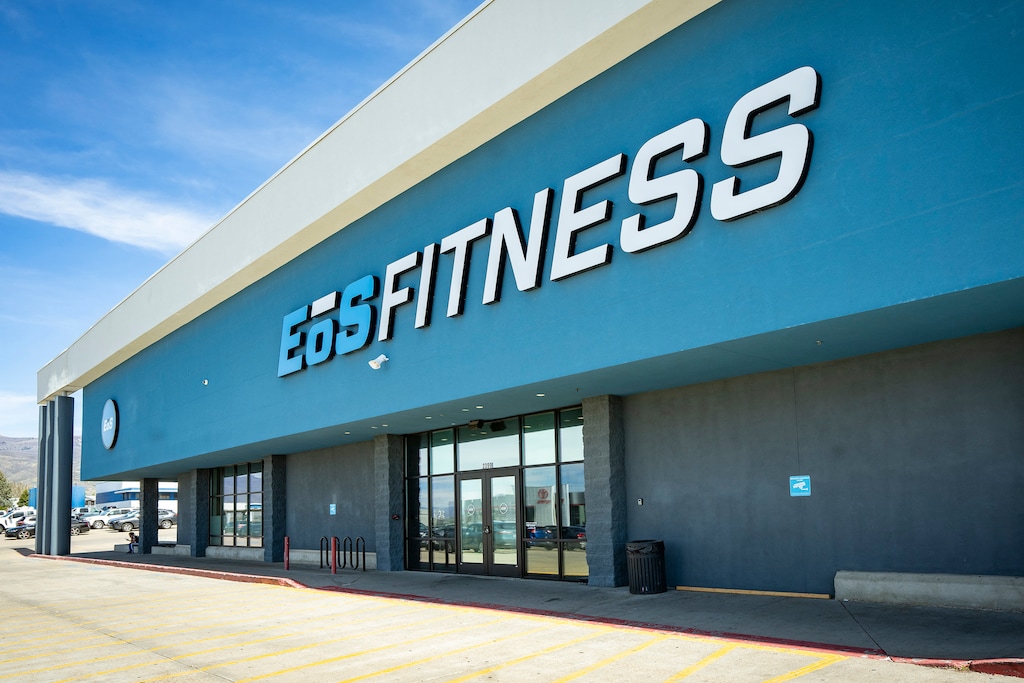
Bountiful Police Chief Ed Biehler on Tuesday confirmed ICE agents detained a man outside the outside EōS Fitness at 2399 S. Main St.
He identified the man taken into custody as Fahad Ali Khalil, from Iraq. Bountiful officers responded after ICE agents called 911 for assistance because Khalil was combative and resisting arrest, Biehler said.
By the time officers arrived, the chief noted, Khalil was already on the ground and in handcuffs.
In an X post, the ICE Salt Lake City field office on Monday said Khalil “fell” while resisting arrest and “ignoring lawful commands.”
In the video, one ICE agent can be seen rolling Khalil onto his stomach and pressing a knee into his back. Khalil can be heard shouting that the handcuffs are “tight as f---” and asking officers to “loosen [them] a little bit,” saying his hands “really hurt.”
While Khalil is face down, handcuffed and calling out, the ICE agent keeps a knee pressed into his back as the video ends.
Biehler said the arrest drew attention outside the busy gym, with multiple bystanders recording. Because of that, he said, authorities briefly took Khalil to the Bountiful police station before he was booked into the Davis County jail just before 3 p.m. Friday.
As of Wednesday afternoon, Khalil was still being held at the jail on behalf of ICE, a jail employee confirmed.
Immigration officials say he ‘refused lawful commands’
In Utah, Khalil has a criminal record that includes misdemeanor traffic and speeding offenses.
In 2014, he pleaded guilty to a third-degree felony count of possession with intent to distribute a controlled substance and two misdemeanor counts of possession or use of a controlled substance, 3rd District Court records indicate.
He was sentenced to 36 months probation with a suspended prison sentence.
Khalil was also among eight people indicted and later found guilty in federal court in 2015 for conspiring to distribute a synthetic cannabinoid known as spice.
In that case, he was sentenced to five years in prison and three years of supervised release, court records state. He was apparently released early from prison, however, because a federal court document indicates he started supervised release in August 2019.
On Wednesday, a Department of Homeland Security spokesperson in a statement said Khalil “entered the country in 2013 as a refugee under the Obama administration” and described him as a “criminal illegal alien.”
“An immigration judge ordered him removed in 2021,” the spokesperson said. “This career criminal will remain in ICE custody pending removal.”
The spokesperson added that during Khalil’s Friday arrest, he “refused lawful commands and attempted to barricade himself inside of his vehicle.”
“He assaulted a law enforcement officer and attempted to flee,” the statement read. “During his arrest, Khalil threatened ICE to ‘make the officer pay.’”
The statement concluded with an allegation that DHS enforcement officers are “facing an 8,000% increase in death threats and a more than 1,300% increase in assaults against them as they arrest the worst of the worst.”
“The violence must end. Under President Trump and Secretary Mullin, criminal illegal aliens are not welcome in the U.S.”
Bountiful Mayor Kate Bradshaw declined to comment on the arrest when reached by The Salt Lake Tribune, referring questions to the Department of Homeland Security.
But in an email to Bountiful business owner Tenille Jensen, which Jensen shared with The Tribune, Bradshaw said immigration enforcement actions are not always “clear-cut.”
“While I do believe that this federal administration’s immigration enforcement has at times been used in ways that raise legitimate concerns, I also believe in the fair application of the law and the important role of the courts when an individual has broken the law and/or is subject to a court order,” Bradshaw wrote. “Based on what is currently understood, this particular incident appears to be more aligned with the latter.”
A media contact listed for EōS Fitness, which has more than 175 locations across the U.S., did not return a request for comment.
An email sent to the Bountiful location also went unanswered, and an employee reached by phone said they would pass along a message to a manager, but The Tribune did not hear back as of Wednesday afternoon.
No Bountiful agreement with ICE
(Francisco Kjolseth | The Salt Lake Tribune) A Bountiful police patrol car.
In light of the arrest, Jensen said she wants clarity on why Bountiful police were involved and whether officers are expected to intervene if force used by ICE agents appears excessive.
“That’s what I’m concerned about with this incident,” Jensen said.
“If they’re going to be involved in these situations,” Jensen continued, “... have they (officers) been taught or trained on what they are supposed to do in these situations?”
Neither the Davis County Sheriff’s Office nor the Bountiful Police Department are among the at least 11 Utah law enforcement agencies that have signed deals with ICE.
The deals, called 287(g) agreements, expand the powers of some local police and jail officers, allowing them to investigate and arrest people they think are staying in Utah without proper documents.
Absent a 287(g) agreement, Biehler said Bountiful police also do not have specific policy guidance regarding what officers should do in situations involving ICE.
“We’ve been working with all federal, state and local partners in all forms and fashions of law enforcement for years,” he said, “and we would treat all of them the same.”
Was excessive force used?
Biehler said the video that began circulating online Friday does not capture the full context of the encounter.
Khalil was not cooperating with officers, Biehler said, and after he was placed in a patrol car, he began “banging his head,” kicking at the vehicle and making threats.
While the city does have a duty-to-intervene policy for cases of excessive force, Biehler said he does not believe it applies to this situation. From his perspective, the ICE agents did not use excessive force, he said, and instead held Khalil down in response to his resistance.
In an email shared by Jensen, the mayor wrote that Bountiful’s duty-to-intervene policy applies to “any interaction,” including those involving outside agencies such as other municipalities and state or federal authorities.
City policy also requires reviews whenever force is used, she wrote, and both policies are “functioning as intended.”
State law also requires officers to intervene in cases of police misconduct, including when fellow officers may use excessive force, but no such law addresses situations involving federal agencies such as ICE.
In Colorado, lawmakers recently rejected a bill that would have required local law enforcement to intervene if federal immigration agents used excessive force. Police chiefs largely opposed the bill, arguing it could complicate staffing and place officers in an “impossible position,” according to The Colorado Sun.
Still, Jensen said she wants to see clear city and police guidance outlining how to handle interactions with ICE.
Others raised similar questions at recent Bountiful City Council meetings, including one on Feb. 24, where two residents called for the officials to formally reject working with ICE and require a warrant before allowing city resources to be used for immigration enforcement.
“We have to keep asking questions,” Jensen said, “because if no one questions them, then they think it’s fine to just keep doing what they’re doing.”
Local organizers are calling on residents to gather at Bountiful’s next City Council meeting on Tuesday to “voice your concerns about ICE.”