 Jessica Schreifels
Mia Chard agonized over whether to go to the police, she says, to disclose what she eventually reported was happening inside her therapist’s office: He held her to the ground during sessions, at times covering her nose and mouth so she couldn’t breathe, and at other times dragged her on the floor.
She was struggling with trauma from childhood sexual abuse when she began seeing Maurice Harker in 2012, she said, at the urging of her bishop in The Church of Jesus Christ of Latter-day Saints.
Over nearly a decade of sessions, she said, Harker isolated her, insisting he was the only person she could trust. About three years into treatment, she alleges, he began holding her down and hurting her during near-daily appointments, telling her he was trying to rid her of a demon.
Chard said she wanted the painful physical restraints to stop, but she worried about losing the lifeline that her therapist had become. In January 2021, she said, she told Harker that she was going to go to authorities and tell them he had been hurting her.
“No one would believe you,” she remembered Harker telling her. “I would just tell them I’m restraining a self-harming client.”
The warning echoed something she said her childhood abuser had once told her — that she wouldn’t be believed. She had talked to Harker in therapy sessions, she said, about how harmful those words had been.
“He knew,” she said. “It was something that was like a pain point for me.”
Feeling like the relationship was fractured beyond repair, Chard began reporting Harker a few months later: to police, to state licensing officials and to The Church of Jesus Christ of Latter-day Saints.
Her goal, she said, was to protect others and for Harker to be held accountable for what she said he did to her.
Harker was well known in the Latter-day Saints community not only as a therapist, but also for the support groups he ran through Life Changing Services, which aimed to help young members who felt they were struggling with pornography use or masturbation.
He also authored Like Dragons Did They Fight, a faith-based self-help book that uses warrior imagery and spiritual-psychological principles to frame the struggle to overcome addiction and build “self-mastery.”
(YouTube) Maurice Harker teaches a Life Changing Services group meeting, video which was uploaded to YouTube on March 1, 2026.
In the years after Chard’s reports, church leaders distanced themselves, state regulators opened an investigation and prosecutors eventually filed charges. Harker recently pleaded no contest to two misdemeanors.
Harker no longer holds a therapy license, after he allowed it to expire while regulators investigated. But he still sees clients — as a life coach, a largely unregulated role in Utah.
“It isn’t justice, but it’s not nothing,” Chard said of the outcome. Still, she added, “it feels so scary to me” that he can continue seeing clients.
The case highlights the limited oversight of therapists-turned–life coaches in Utah — gaps that allow some practitioners to continue working even after losing their licenses — and the blurred lines between religious counseling and licensed mental health care.
Harker’s defense attorney, Greg Skordas, said his client has “consistently maintained that he did not harm Ms. Chard.” He said the allegations are “strongly disputed,” but that Harker could not speak openly about it because of confidentiality laws within a therapeutic relationship.
Skordas noted that Harker has worked with clients for more than two decades, and no other clients have made similar allegations.
“Over the years, Mr. Harker’s work has focused on helping individuals and families address serious personal and relational challenges,” Skordas said. “Throughout the legal process, he has continued focusing on constructive work that benefits individuals and families while respecting the court process and keeping the alleged victim’s therapeutic experience confidential.”
Church officials said in a statement sent to The Salt Lake Tribune on Tuesday that once Chard alerted leaders about her concerns, the church “immediately began investigating and supporting her efforts to contact and work with authorities.” It contacted both the prosecutor’s office and licensers, the statement reads, and hoped licensers would “promptly revoke Mr. Harker’s license.”
Mental health and spiritual guidance
Chard began seeing Harker when she was 29 years old. She had returned from serving a Latter-Day Saint mission and expected her life would follow what she saw as a typical path for women in the faith: marriage and children.
When that wasn’t happening, she said, it affected her mental health — as she also was trying to cope with the lingering trauma of childhood sexual abuse.
Harker was known for his work helping members concerned about their use of pornography, but Chard said her bishop told her the therapist had experience counseling abuse survivors. The bishop attended her first session with her, she said, and used church funds to pay for many of her sessions.
Under church policy, bishops can use donations known as “fast offerings” to help members in financial need. The funds — collected after monthly fast days, when members are encouraged to forgo meals and donate the money they would have spent on food — are typically used for essentials such as housing, food or clothing.
Church guidelines also allow bishops to use the money for services including counseling and medical care. The handbook, however, offers little guidance as to how a bishop should recommend therapists or ensure members are receiving quality treatment.
In the early years of her therapy with Harker, Chard said, the lines between spiritual guidance and mental health care often felt blurred.
“I do feel like there was a lot of grooming that took place in those first few years,” she said. “The desire to meld the spiritual with the mental health component … him discussing that negative self-talk is from Satan.”
If she expressed self-hatred, Chard said, Harker told her it was a demon speaking.
Chard said in an interview that Harker first put his hands on her in 2015. During a session centered around her childhood sexual abuse, she said, she leaned back on the loveseat in his office and began to dissociate — what she describes as going into the back of her own mind.
Harker responded by putting his hand over her mouth and nose and pushing her into the couch, Chard alleges. She broke free and began sobbing.
“Why did you do that?” she remembered asking him. “He was like, ‘I didn’t know what else to do. You felt so far gone.’”
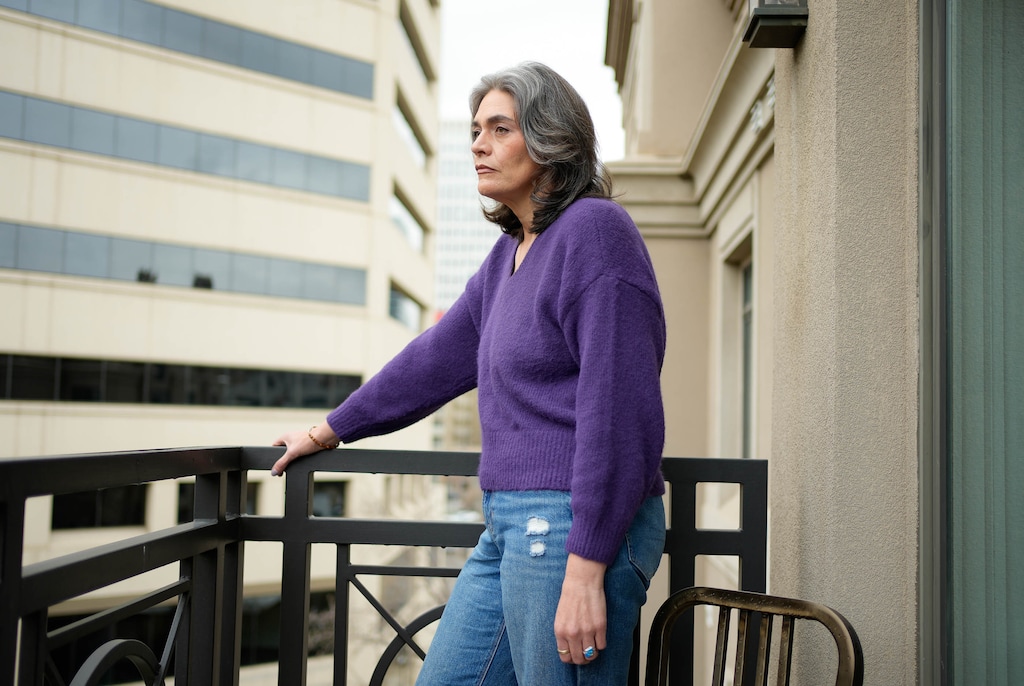
(Francisco Kjolseth | The Salt Lake Tribune) Mia Chard alleges that her former therapist, Maurice Harker, physically abused her during therapy sessions.
Chard alleged physical abuse escalated from there, and began to be rooted in Harker’s assertions that a demon inside of her needed to be cast out. Over time, she began to believe she needed that kind of intervention, she said — especially after her bishop gave her a blessing and encouraged her to keep listening to Harker.
“There’s this person who is in the position of [being] knowledgeable,” she said of Harker. “And then you’re hearing from your faith leaders saying, ‘Keep going.’ You’re getting blessings that are supposedly from God.”
‘I couldn’t breathe’
By early 2021, Chard said, she knew she wanted to report her therapist to authorities. But before she did, she recorded a phone call where she confronted Harker about what was happening in his therapist office — the last time she ever spoke to him, she said.
She shared a recording of the May 2021 phone call with The Tribune. In the call, Harker agreed with Chard that he held his hand over her mouth, and that he would lay on her to comfort her after hurting her.
“I didn’t know what to do,” he said, according to the recording. “The degree of disassociation was so beyond what I’d ever experienced.”
He then referred to “the awareness that system disruption could disrupt the disassociation.”
“But that’s all fancy words for — I couldn’t breathe,” Chard responded.
“I know,” Harker said. “I know.”
Towards the end of the phone call, Harker apologized after Chard said he hadn’t taken accountability and told him she could never come back to his office again.
“I am sorry — it’s just not a big enough word,” he said. “I wanted to make your life better, and I made it worse. My personal issues, my psychological limitations, my lack of skills, etcetera, etcetera. I’ve traumatized you worse. Have confused you more. Have caused you more problems.”
Chard reported Harker to Farmington police that same month. At first, Davis County prosecutors declined to file charges.
She also filed complaints with state licensers around that same time, and alerted church officials.
In September 2022, as Utah’s Division of Professional Licensing investigated, the church directed Utah leaders to stop referring members to Harker, according to letters Chard shared with The Tribune.
Bishops were told to stop using church funds to pay him for counseling sessions. If members chose to continue seeing him, the letter said, they would have to pay themselves. The direction, however, did not extend to Life Changing Services as a whole.
Church officials confirmed that they sent this letter to Utah leaders. Their statement said church attorneys also sent a cease-and-desist letter to Harker to inform him about the letter and demand that Life Change Services stop representing themselves as “approved” or “vetted” by the church, which leaders say was not true.
Before DOPL formally disciplined him, Harker allowed his clinical mental health counselor license to expire. Even so, the agency moved forward. In January 2023, it filed a Notice of Agency Action seeking to revoke his license, writing that Harker told investigators he lacked the training to treat the conditions Chard presented with and had never conducted a formal assessment, created a treatment plan or kept session notes.
Months later, prosecutors reversed course. In September 2023 — more than two years after Chard first went to police — they charged Harker with abuse of a vulnerable adult and kidnapping. DOPL responded by determining it would deny any future license application Harker submitted until the criminal case was resolved.
Harker, meanwhile, shifted his work to life coaching. In January 2024, the church reiterated its earlier directive in another letter, again telling leaders not to refer members to him or invite him to speak at devotional meetings.
The letter, which Chard shared with The Tribune, also cautioned bishops against referring members to life coaches or other unlicensed professionals, and using church funds to pay for those services.
A ‘legal compromise’
The criminal case stretched on for more than two years. To prove abuse of a vulnerable adult, prosecutors would have needed to argue at trial that Chard was fit the legal definition of vulnerable — meaning her mental health history would be examined before a jury.
She said she was prepared to have her life on display if it meant accountability.
But last month, days before trial was set to begin, Harker accepted a plea deal. During a Feb. 17 hearing, Harker pleaded no contest to misdemeanor charges of unlawful detention and reckless endangerment. The pleas were held in abeyance, meaning the charges will be dismissed in 18 months if he completes probation and pays $28,000 in restitution to Chard.
At the hearing, Davis County Attorney Troy Rawlings outlined the basis for the charges, saying that Harker engaged in therapeutic techniques that “unlawfully detained her for periods of time against her will and restrained her unnecessarily, and that put her in danger of risk of substantial injury.”
(Rick Egan | The Salt Lake Tribune) Troy Rawlings at the Davis County Republican nominating convention in March 2022.
Chard was in court that day, and read an emotional statement to the judge.
“As a therapist, he was supposed to help me heal,” she said. “Instead, he made me sicker so he could continue to have an outlet for the anger and rage at anything that was happening in his life.”
Chard felt relief that the plea meant her life and her mental health would not be scrutinized publicly, but said she didn’t feel like it was justice. “What chance does somebody have when it’s just their word?” she questioned.
Rawlings said in a statement that he opted to resolve the case in a plea deal after “extensive trial preparation,” consulting with Chard, and “taking all admissible factors into consideration.” He said it was key that Harker is paying significant restitution to Chard, and he noted that the man is no longer a licensed therapist.
“The plea directly reflects the assessed impact of proffered testimony of multiple significant witnesses subpoenaed by both the prosecution and defense teams,” he said.
Skordas, Harker’s defense attorney, emphasized that his client did not admit guilt, and that the charges could eventually be dismissed. He described it as a “legal compromise” that “avoids the uncertainty, expense, and emotional strain of a trial after years of litigation.”
(Leah Hogsten | The Salt Lake Tribune) Greg Skordas, pictured in 2021.
“The case has been pending for several years and involved serious allegations that were extensively investigated and litigated,” he said. “The resolution should not be interpreted as an admission of wrongdoing.”
The plea-in-abeyance brought the criminal case to a close nearly five years after Chard first went to police. But none of those actions that government officials or the church took during that time barred him from continuing to counsel clients as a life coach, and he still runs Life Changing Services.
And on the company’s website, near the bottom of the application for its pornography addiction programs, one payment option remains: “Bishop Pay.”