 Megan Banta
 Paighten Harkins
La versión en español de esta publicación está disponible aquí.
Utahns have been paying more for fuel over the past week as the Iran war has disrupted crude-oil supply lines in the Middle East. And if those gasoline and diesel costs stay high, analysts say, consumers will likely see prices increase for many other goods.
Gasoline prices in Utah have risen about 45 cents per gallon since last week, and diesel jumped more than 65 cents. Regular gas now averages $3.18 per gallon in the state, up 16% from a week ago, according to the AAA. Diesel, at $4.27 per gallon, is up more than 18%.
Those hikes are tied directly to crude-oil prices, which have spiked since the U.S. and Israel launched a joint attack against Iran on Feb. 28.
The Iranian government responded by firing drones and missiles at several Middle Eastern countries, including strikes at oil and natural-gas facilities in the United Arab Emirates, Qatar and Bahrain. Kuwait, Iraq, and other nations reduced oil production after Iran effectively blocked the Strait of Hormuz, the narrow passage through which about a fifth of the world’s oil typically travels.
The price of oil surged from around $67 a barrel before the war to nearly $120 Sunday night; it settled late Monday at around $88.
“Nothing impacts your gas as much as crude oil,” said John Treanor, spokesperson for AAA’s operations in Utah, Nevada and Northern California. Crude prices make up about 60% of what consumers pay at the pump, he said.
The last time there was a similar spike in gasoline was in 2022, when Russia invaded Ukraine. And, Treanor noted, the cost at the pump this week is “not even near those prices.” In the summer of 2022, regular gas cost around $5 per gallon, according to AAA.
It’s “important to know we aren’t there,” Treanor said, but there are still lessons to learn from that time.
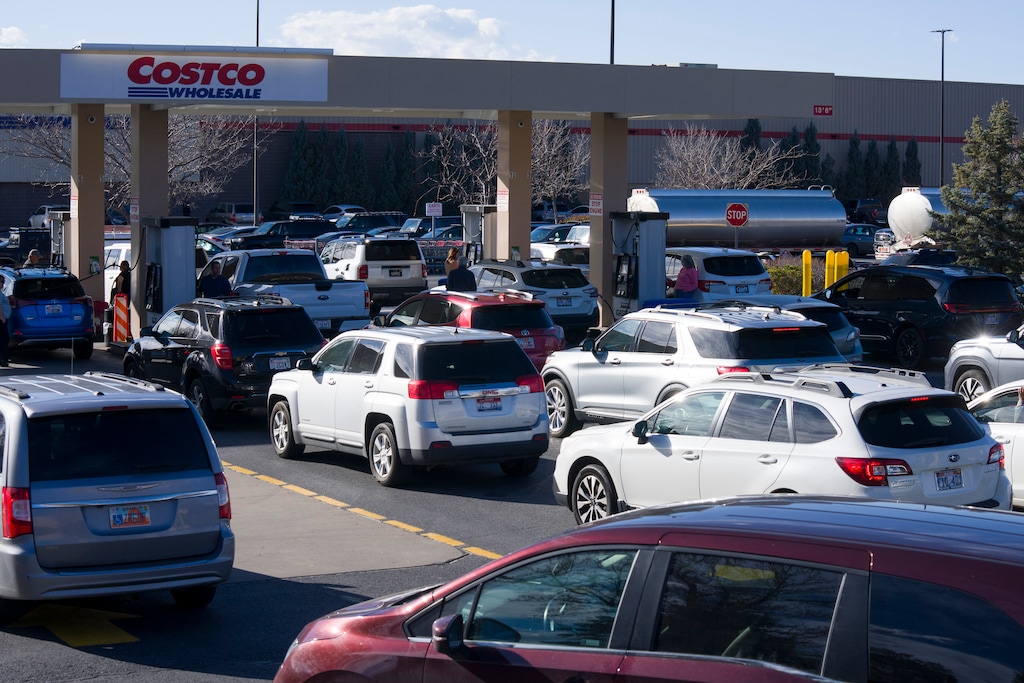
“We became very smart consumers,” he said. “A lot of people changed the way they drove” by carpooling or combining errands in one trip. Consumers can also avoid idling, speeding, or driving with poorly inflated tires. And, some drivers are saving money by buying gas at outlets like Costco or Sam’s Club.
Trucking industry was already struggling
The spike in diesel prices could spell harder times for the trucking industry, which has been grappling with what the American Transportation Research Institute calls “historic freight recessions.” Some members were having trouble just breaking even before the Iran war, said Jon Boyer, spokesperson for the Utah Trucking Association.
Boyer said the last time oil costs spiked, there was a pandemic-induced demand for goods, and truckers responded by charging higher rates.
If fuel prices stay high, that could translate to higher per-mile freight costs and then higher consumer prices in stores, Boyer said.
Truckers have been struggling to overcome inflationary pressures and stagnant freight and tonnage rates, while tariffs created “additional strain and uncertainty,” the Virginia-based transportation institute said. Analysts this year had seen a possible rebalancing on the horizon until the war caused oil prices to jump, according to FreightWaves, a trade publication focused on global supply chain, transportation and logistics news.
“What the industry needed – what it was positioned for if things had stayed calm – was a demand catalyst,” FreightWaves wrote.
A spike in demand now seems less likely, FreightWaves predicted, because rising gas costs often dampen consumer confidence. Those higher prices also mean people spend more discretionary income on gas — not goods that need to be shipped.
Tracking the price of crude
President Donald Trump said Monday that “the war is very complete, pretty much,” but it’s unclear when hostilities will cease. AAA doesn’t speculate on gas prices, Treanor said, but people can track crude oil as a sort of “canary in the coal mine.”
It’s a safe bet that prices will remain elevated as long as the war limits oil production and shipping in the Middle East, he said, since “we haven’t seen other people step up to fill that supply need.”
Even if the conflict continues into the summer, Utah consumers can expect to see some relief at the pump at that point because of a change in state law. Lawmakers passed a bill that would lower the state’s motor fuel tax from 37.9 to 31.9 cents per gallon to encourage more local manufacturing. That change is slated to go into effect on July 1 and expire at the end of December.
“We’re trying to incentivize more manufacturing of fuel supply in the state of Utah. That will help bring down, not only our prices, but [prices for] the whole region,” bill sponsor Rep. Calvin Roberts, R-Draper, said last month.
Megan is a data and policy nerd with a passion for holding officials accountable and finding solutions. She’s originally from the Midwest and comes to Salt Lake City from the Willamette Valley.
Paighten is an Enterprise reporter at The Salt Lake Tribune. She covers a variety of topics, including business, health, growth and the legal justice system — sometimes all at once. She is from southern Oklahoma, and lived and worked in the state, most recently at the Tulsa World, before starting at The Tribune in October 2017.