 Jose Davila IV
La versión en español de esta publicación está disponible aquí.
Kevin Barros still gets nightmares and anxiety. He still has trouble sleeping.
There’s a degree of confusion, he said, that comes with being in U.S. Immigration and Customs Enforcement custody for 11 days.
Barros, 21, recently returned to Utah after a judge ordered his release, and while life is getting better and calming down, he said his time in custody was frustrating.
“The days in detention, the whole process was terrible, very ugly,” Barros, who is originally from Colombia, said during an interview in Spanish. “From Day 1 to Day 11, [there were] many lies and very ugly feelings. I didn’t really understand what was going on.”
Barros had been approved for a special immigrant juvenile visa before he showed up — without a lawyer — to an immigration hearing in West Valley City in January, his now-attorney, John West, said.
The judge seemed poised to take Barros’ case off the docket indefinitely, West said, but the federal government’s lawyer protested and said officials planned to remove Barros from the country quickly. The judge granted the ICE attorney’s request, dismissing the case and allowing the agency to deport Barros.
At the end of the hearing, ICE agents took him into custody despite his eligibility for a visa and the fact that he’d been in the U.S. for longer than two years, which should have given him some protection from expedited removal.
Searches in state and federal court databases turned up no criminal cases for Barros.
While Barros’ case is uncommon, West fears the threat of arrest by ICE could scare people away from attending critical hearings in court. Those court appearances are essential for people trying to secure long-term legal status in the U.S. Failure to attend would result in an automatic removal order.
“He was mandated by the court to go to his hearing or be ordered removed,” West said. “... So, he attended and ended up walking out of the elevator and into ICE’s handcuffs which is so incredibly sad, inappropriate and chilling.”
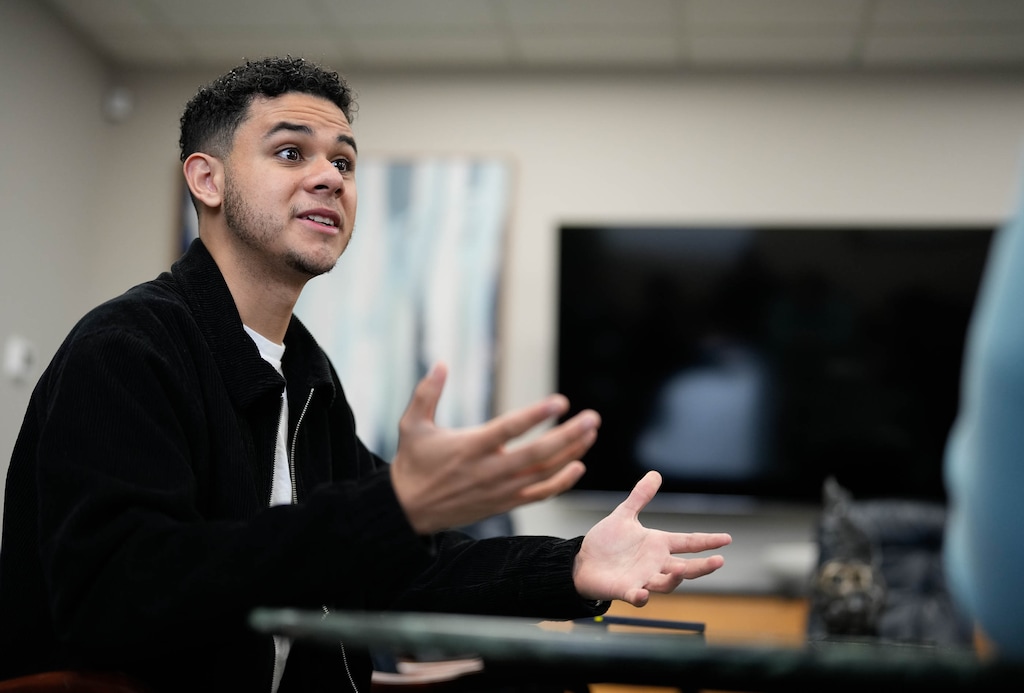
(Francisco Kjolseth | The Salt Lake Tribune) Kevin Barros, right, a 21-year-old from Colombia who was recently detained by ICE, is joined by his attorney, John West, in Millcreek on Monday, March 2, 2026.
ICE officials did not respond to emailed questions about Barros’ case.
Barros’ arrest is yet another example of changing enforcement tactics in the Beehive State. Since President Donald Trump returned to office, ICE agents have started conducting more traffic stops in Utah, U.S. Border Patrol has begun operating here and more local agencies have signed up to work with the administration on removing immigrants. The federal government under Trump arrested and deported significantly more people from Utah last year than in the final year of former President Joe Biden’s term.
Barros described his detention as confusing, stressful and frustrating. In the days he was locked up, ICE moved him to six separate states, including Wyoming, Arizona and California. He was held at Phoenix-Mesa Airport as ICE moved to deport him quickly.
He was in Arizona when a federal judge ruled in his wrongful detention lawsuit that officials had to release him. Because ICE couldn’t process his release there, the agency took him to San Diego and let him go, West said.
Barros criticized the conditions and treatment he received during his time in custody. He didn’t sleep for days because, in some cases, all he had was a spot on the floor. In transit, he said detainees were forced to wear chains, handcuffs and shackles and stay hunched over for hours at a time. He said he witnessed ICE agents strike others in their custody with metal restraints.
The ICE agents also sometimes refused to give Barros basic information, like the time or date, and once tried to get him to sign a document that they said was informing him that he was going to be deported to Mexico, he said.
Now back in Utah, Barros said he’s afraid to leave the house because he worries about being detained again. That hasn’t stopped him, however, from going back to work at an American restaurant and enjoying the sights around the Beehive State with his girlfriend.
For now, Barros is petitioning to get his immigration case back in front of a judge and is hoping to get his visa in hand. It’s a waiting game his lawyer said could take years. Down the line, he wants to go to school and study business.
“I don’t want to be told anymore, ‘You’re illegal.’ I just want to have a family, work and be able to help the state of Utah,” Barros said. “... And that’s it. I don’t want anything else. I want a quiet life; that’s what I’m looking for.”
(Francisco Kjolseth | The Salt Lake Tribune) Kevin Barros, a 21-year-old from Colombia who was recently detained by ICE, talks alongside his attorney, John West, in Millcreek on Monday, March 2, 2026.