As Frank Layden sat one morning across a breakfast table from me, plowing through a large blueberry muffin that bite by bite looked as though it was slowly attaching itself to his face, he happily strolled down memory lane, while simultaneously glancing ahead to whatever came next. He told his stories. He talked a little basketball, just a little, not a lot. He dispensed bits and pieces of wisdom. He delivered his jokes. But here’s the thing: He never cracked a smile. It was obvious he wanted to have fun, but he never laughed, not out loud. I did.
Two things most outsiders, fans and admirers of all kinds of the former Jazz coach and team president, failed to realize and understand about Utah’s funny man: 1) He was three-fourths serious for every one-fourth humorous, and 2) Basketball wasn’t all that important to him. Living was.
The adopted state icon who former Jazz owner Larry Miller once described thusly, “Frank can’t be a national or state park, but he should be designated as a state treasure,” died Wednesday at the age of 93. His was an elongated existence, one filled with exceptional experiences the kid from Brooklyn couldn’t have imagined and with zany relief, spread out among everyone around him.
“I’m not a clown,” he said, as muffin crumbles tumbled down his shirt, as he recounted the time Morganna, the famous, corpulently-unbalanced kissing bandit, emerged out of the crowd to run across the court and give him a smooch. When she did, he fell to the floor.
His antiquated comedy, some of it now a bit askew, some of it lifted from others, some of it all his, was on display. The comedic timing was near-flawless.
— “I was so ugly when I was born, the doctor slapped my mother.”
— “We don’t have nicknames in sports nowadays. Back in Brooklyn, we had nicknames — Rocky, Bugsy, Bubba, Scarface … and those were just the cheerleaders.”
— “The reason Barbara [Layden’s longtime wife] and I have stayed together all these years is, we go dancing. I go on Monday, Wednesday and Friday. She goes the other days.”
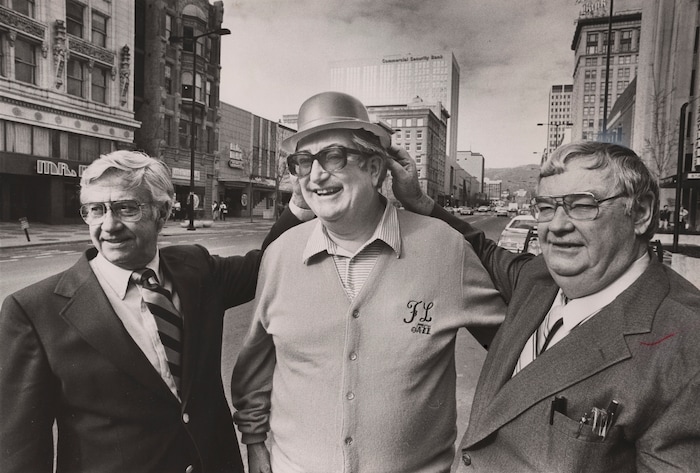
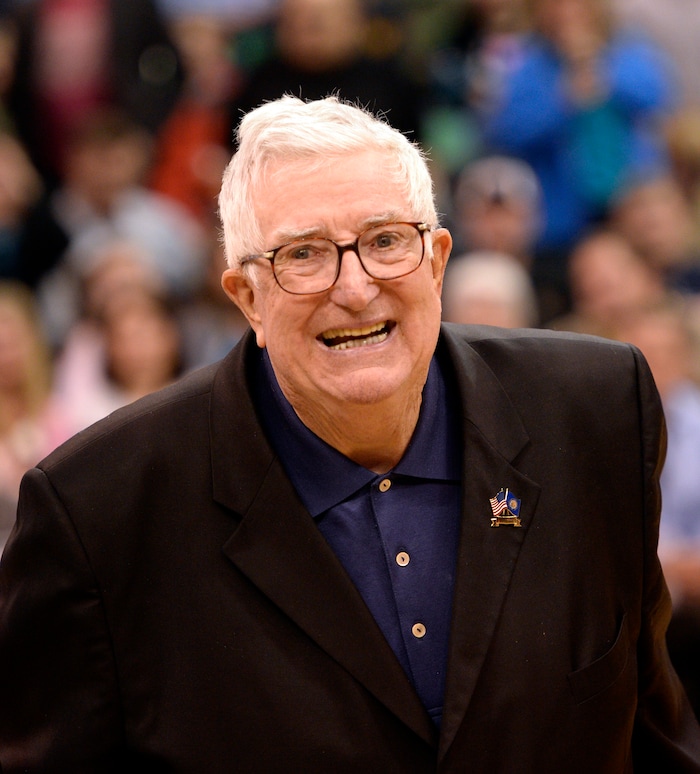
(The Salt Lake Tribune) Former St. Patrick's Day parade marshals Jack Green Jr., left, and John Mooney, right, pass on the derby hat to new marshal Frank Layden in 1981.
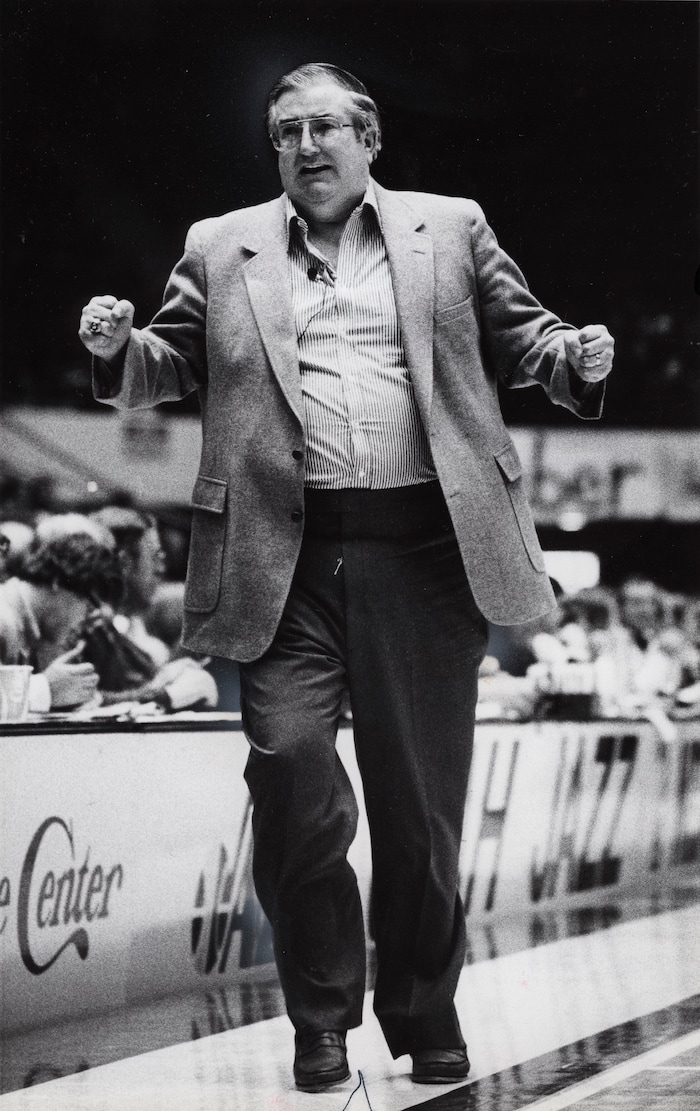
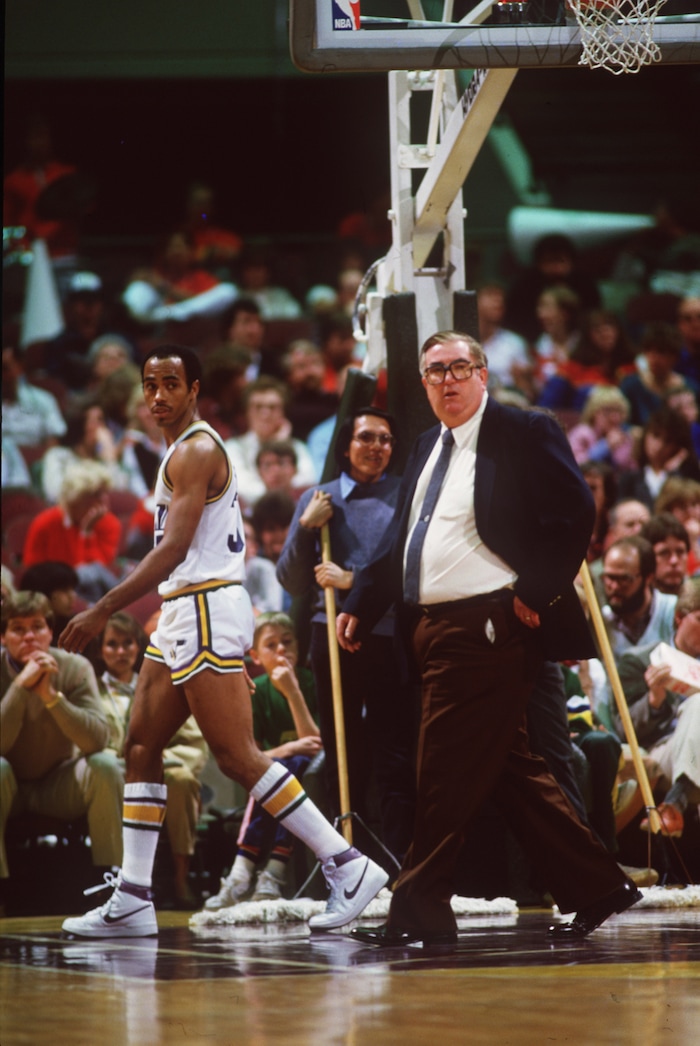
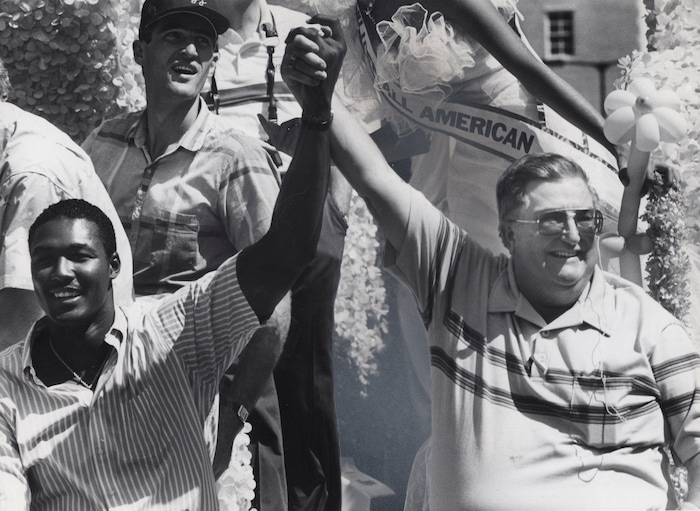
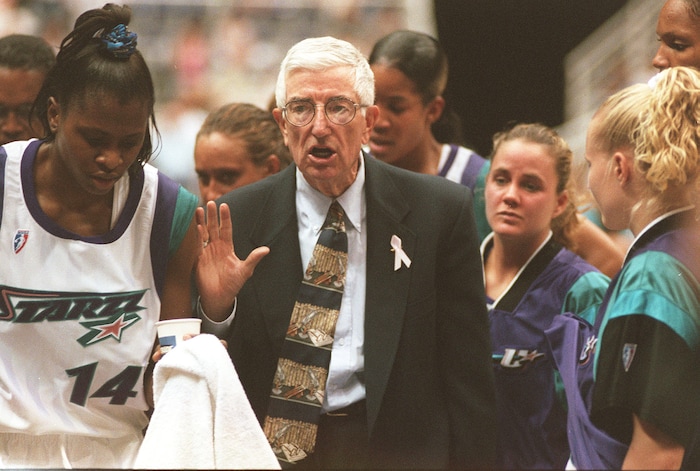
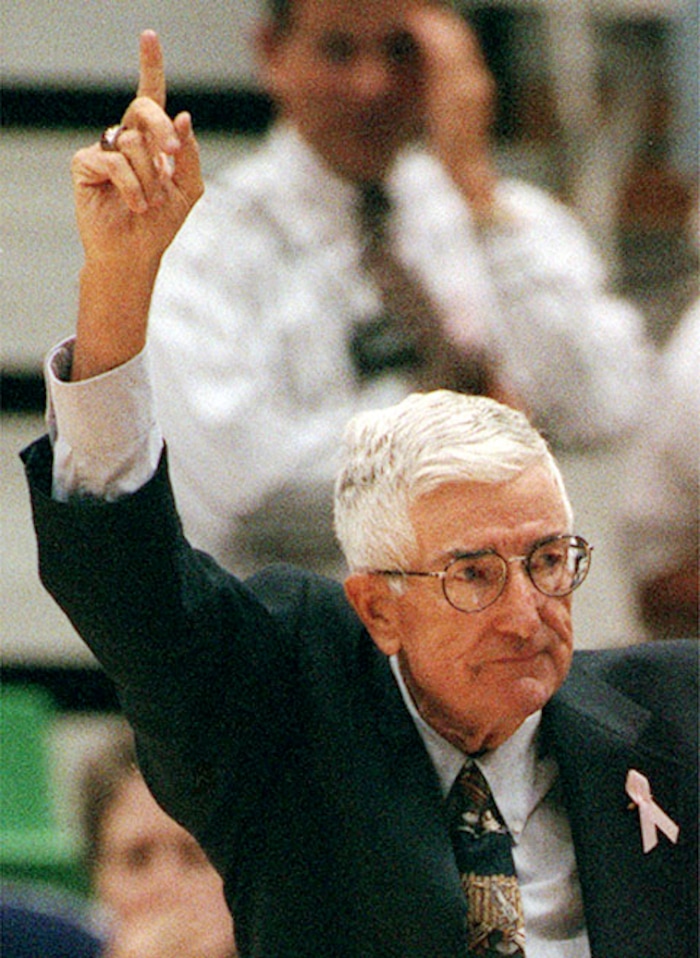

— “In the early years in Utah, we formed a Jazz booster club, but by the end of the season it had turned into a terrorist group.”
— “Once, I was asked to speak to students at Harvard Law School. Somebody asked me afterward how it went. I said, ‘It was horrible. I was the dumbest one in the room and everybody knew it.’”
— “I played Santa one time at a charity event. Some of the kids started being rowdy. They were, you know, yanking on my beard, pulling my hat off, farting in my face. After awhile, I could see them plotting against me. One girl said she wanted a truck. I told her we didn’t have any. By the end of the night, I was laid out on the ground. It was rough.”
— Approached and asked once by a fan named Matt how he was going to spend Christmas, Frank bounced the question back to the fan. Matt said he was going to his in-laws’ house. “Geez,” Layden said, “you’re spending Christmas with your mother-in-law? My mother-in-law, aauugh, I don’t usually visit her on Christmas. Actually, Halloween’s her big day.”
Humor from the 1950s.
“Sports needs a sense of humor,” he said. “It needs characters. It needs to learn to laugh again.”
Layden did his teaching, but somewhere down deep he knew, if he had to do it over again under less precarious circumstances, for a franchise that didn’t need to laugh as it struggled to win games and sell tickets, he’d play it straight, or at least straighter.
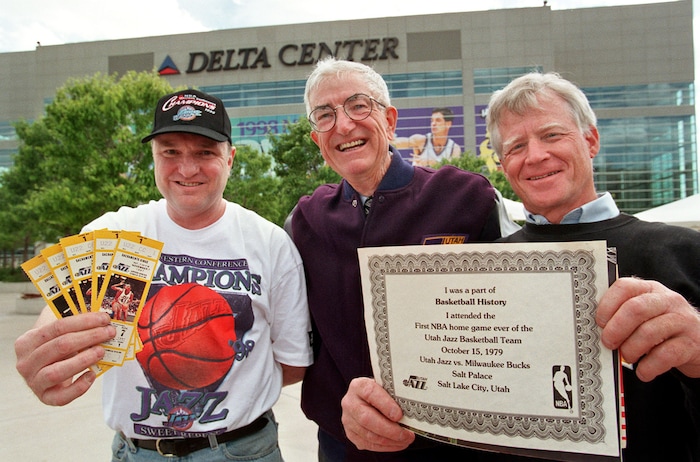
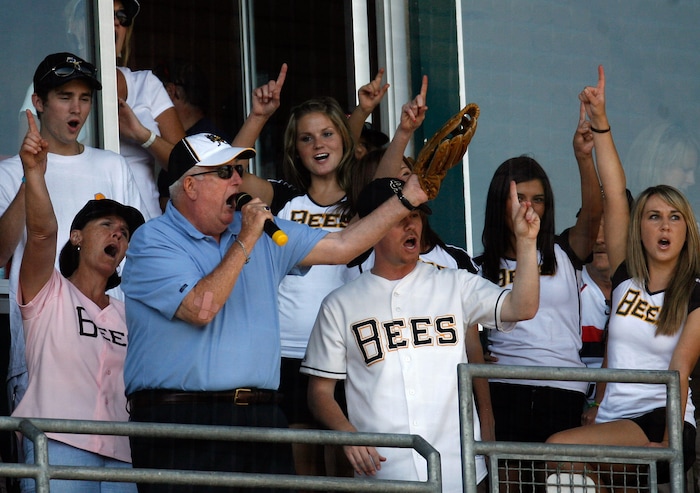
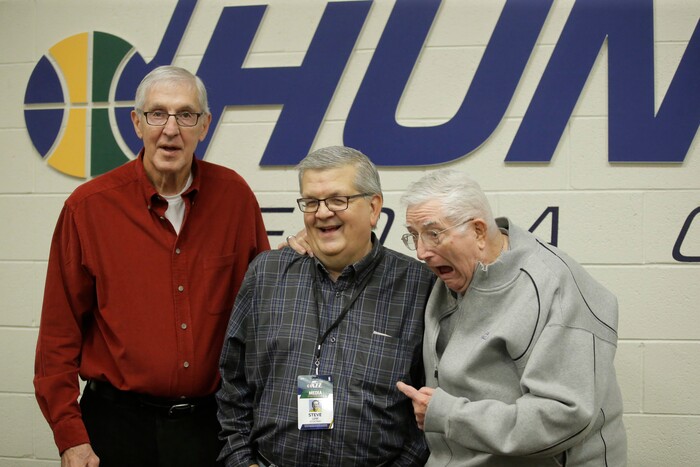
(The Salt Lake Tribune) Guy Thomas, an original ticket holder, left, Frank Layden, and Gordan Yates reminisce of past Jazz seasons at the Delta Center in 1998.
“Frank was so well-known for his jokes,” Miller told me, “and seen sometimes as a buffoon, that people had a tendency to overlook his acumen.”
Said Layden: “The team was funny. I decided to take a Casey Stengel approach. … I did what I thought was best at the time.”
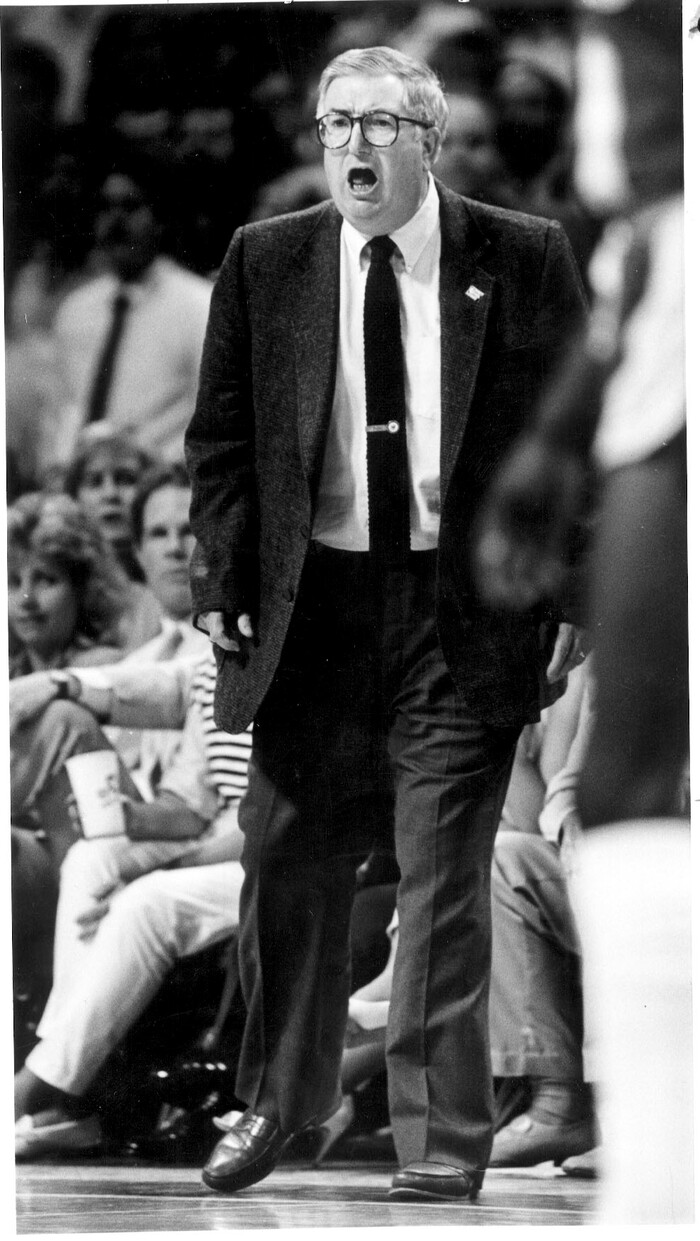
Here’s the truth about Frank Layden: He was a smart, pleasant man, but much more introspective, more pensive, more ruminative, more meditative, more contemplative than most anyone knew. He preferred to play golf alone. He prioritized, at least in his own mind, the important things of the past, the present and the future. As Paul McCartney once wrote of Eleanor Rigby, paraphrased, “He sometimes wore the face that he kept in a jar by the door.”
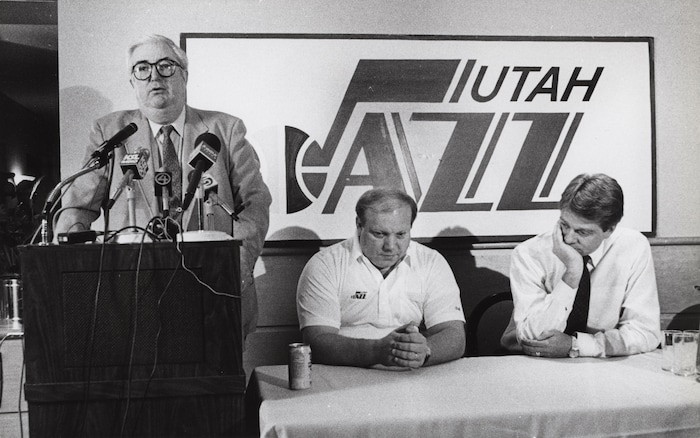
After coaching the Jazz through much of that early difficult stretch following the club’s relocation to Salt Lake City from New Orleans, helping build it as it was financially strapped into one of the NBA’s best teams, Layden abruptly quit in December, 1988, handing the reins to his assistant Jerry Sloan. In place of limelight, he looked for bliss, quietude and solace, time spent with Barbara. It mattered little to him that he could have piled up a thousand wins with Stockton and Malone. In fact, Layden’s teams through the years lost more than they won. The reason for that?
“I had bad players,” he said.
Later, when coaching salaries skyrocketed, Layden said had he known the cash that was en route, he might have reconsidered.
Either way, he’d yielded the better part of four decades to coaching at the high school, college and professional levels, and looked to spend his latter years pursuing theater and music and literature and the arts and history. He perused paintings by Rembrandt and saw plays by Shakespeare and read books about significant historical figures, such as Dwight Eisenhower and Winston Churchill. He still enjoyed sports, but not enough to allow it to go on commandeering his life. Layden advised the Jazz on whatever decisions arose, but he was thereafter free from the daily grind of drawing up game plans, dealing with personnel issues, urging a team to victory, looking up in the stands and seeing signs like, “Fire Fat Frank.”
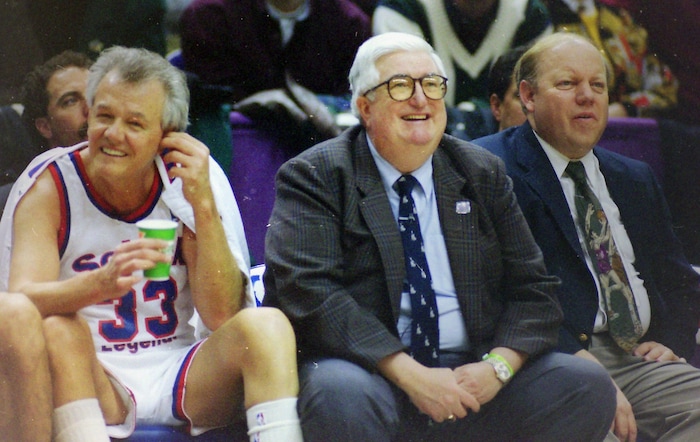
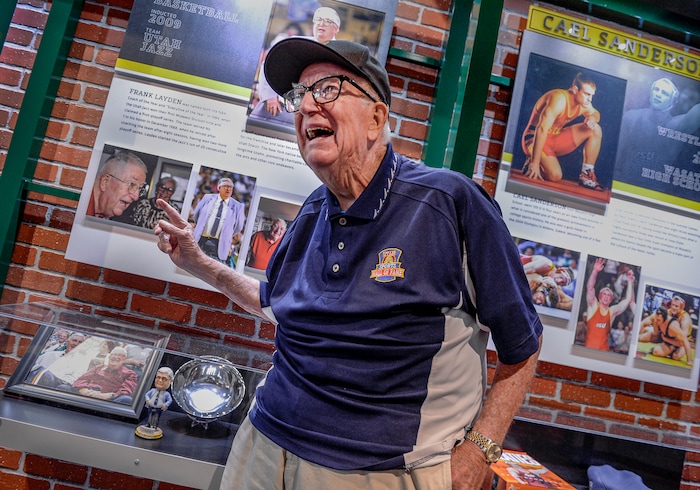
(Steve Griffin | The Salt Lake Tribune) Hot Rod Hundley, Frank Layden, and Larry Miller, during the Legends game during the 1993 All Star festivities, in the Delta Center in Salt Lake City, Saturday, Feb. 20, 1993.
“In the early years, Frank was the glue that held the franchise together,” Miller said so long ago. “How he did it, I don’t know. He sold the Jazz to the fans, the players, the owners and the NBA. He never gave up hope. He had a lot to do with molding the franchise into what it became.”
The night that sealed that deal Layden remembered with exactness. It happened in Denver, in a game against the Nuggets, after Karl Malone was ejected for arguing a ref’s call early in the game. Shortly thereafter, Layden yelled “illegal” at veteran official Jake Madden when the coach interpreted a defense Denver was throwing up as a zone, which was prohibited at that time. Madden yelled back at Layden, “I’m not going to take that crap from you,” and T’d him up. Layden shrugged and the ref gave him the hook.
“I met Karl in the locker room and the two of us went downtown to watch the game together in a hotel bar,” Frank said. “As I sat there, I thought, ‘What was that? I’m a professional, a former NBA coach of the year, at the top of my profession, and this guy just lowered me to the lowest level. He embarrassed me, stepped on me like I was dirt.”
When Layden publicly barked about the incident, the NBA fined him $10,000.
“That’s when I realized, this is not fun,” he said. “I was never the same after that.”
Less than a year later, Layden handed the wheel to Sloan, and he took the wheel, along with Barbara, to the rest of their lives.
Layden remained a popular figure here, speaking to groups, adding his presence to philanthropic causes, among other activities. He wandered a bit with his travels and interests, but ultimately returned to Utah, the place he considered home.
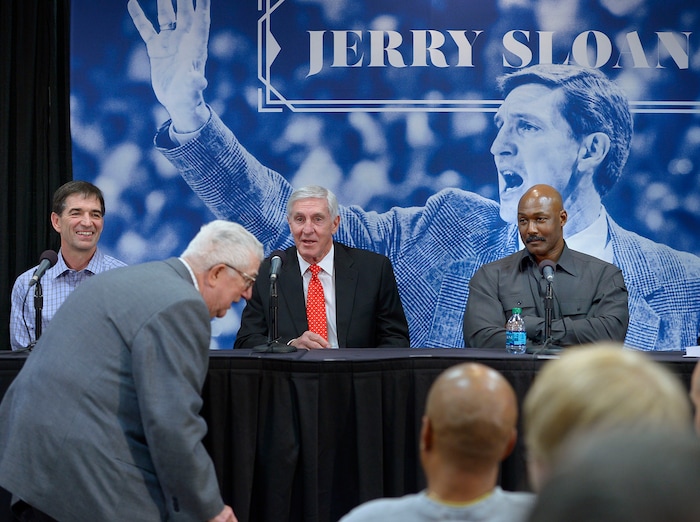
He was always a good quote, providing the best words ever uttered about Sloan. When I asked him to characterize the buzzard-tough coach, he said:
“Nobody fights with Jerry because you know the price would be too high. You might come out the winner, at his age, you might even lick him, but you’d lose an eye, an arm, your testicles in the process. Everything would be gone. He’s a throwback, a blue-collar guy, a dirt farmer. I know you’re going to think I’m kidding when I say this, but I saw Jerry Sloan fight at the Alamo, I saw him at Harpers Ferry, I saw him at Pearl Harbor. He’s loyal. He’s a hard worker. He’s a man.”
Anyone who can conjure that kind of description in that manner … well, it says a whole lot about the individual offering it.
Frank Layden offered so much to Utah, more than just what he did with the Jazz, more than enough, enough to make you laugh, to make you cry, to make you think. Rest in peace, Frank, and keep ‘em laughing, crying, thinking in the Great Beyond.