 David Noyce
This is a war story unlike any other.
It’s about a fighting force of nearly 500 men who were drafted, in a very real sense, not by the president of their nation but by the prophet of their faith.
Though they were prepared to die for a country they were fleeing, they labored to live for the families they were supporting. Though they were armed and marched through hundreds of miles of hostile territory, they never fired a single shot against their enemy. Though they never tasted death from combat, they endured casualties from foes just as dangerous and deadly: thirst, fatigue, hunger and sickness. Though they never recorded a military victory, they achieved a triumph perhaps far greater.
So why is the Mormon Battalion — a ragtag band of hundreds of reluctant riflemen, along with dozens of women and children, most of whom trekked nearly 2,000 miles from Iowa to Southern California — remembered not only in the history of The Church of Jesus Christ of Latter-day Saints but also in the annals of the American experiment?
Discussing those questions and more and is Brent Top, retired professor of church history and doctrine at church-owned Brigham Young University and now president of the Mormon Battalion Historic Site.
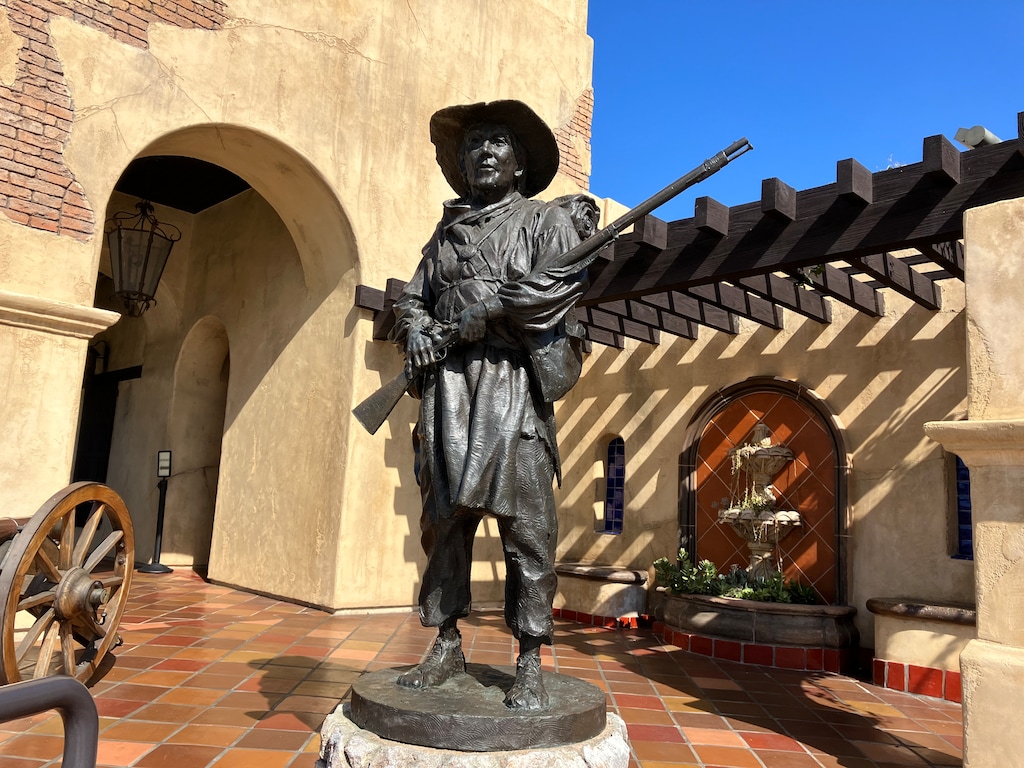
(David Noyce | The Salt Lake Tribune) The Mormon Battalion Historic Site in San Diego in October 2023.
He joins us in this special on-location edition of “Mormon Land” from the historic site in San Diego.
Listen here:
(The Church of Jesus Christ of Latter-day Saints) “The Mormon Battalion,” by George Ottinger.
David is a managing editor at The Tribune, where he has worked since 1984. He oversees coverage ranging from local government and west-side issues to growth, development and housing. In addition, he directs religion reporting, co-hosts the award-winning “Mormon Land” podcast and writes the Mormon Land newsletter.