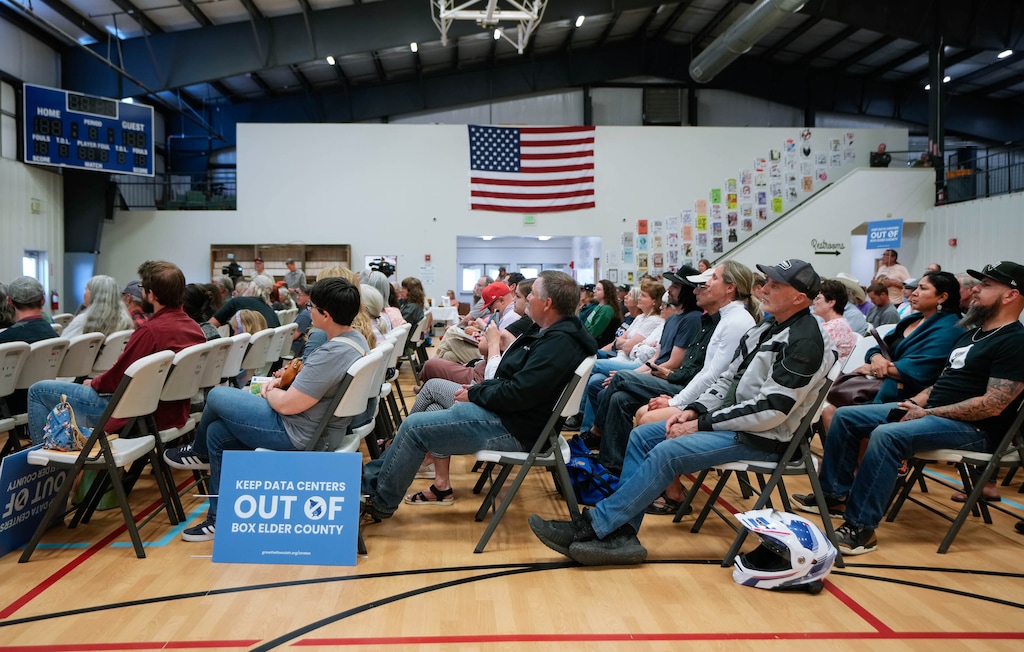
Utah’s fight over the proposed Stratos artificial intelligence data center in Box Elder County should make people across the state pause for a minute.
We keep hearing that Utah needs to move fast or risk being left behind in the artificial intelligence race. But almost nobody is asking a more basic question first: why are we building enormous new AI infrastructure before we’ve decided what rules should govern the technology it exists to support?
People hear “data center” and often picture a normal commercial development with some tech jobs attached. But projects tied to large-scale AI are different. They can demand extraordinary amounts of electricity and water, reshape long-term infrastructure planning, and create political and economic momentum that becomes very difficult to slow once construction begins.
That is part of why so many residents in Box Elder County are uneasy. The concerns are not just environmental, although those matter. It is also the sense that decisions this large are moving forward before independent review and public oversight have caught up.
And AI itself is still largely ungoverned territory.
We still do not have durable standards around transparency, liability, child protections, consumer safeguards, or acceptable deployment boundaries for many artificial intelligence systems. In some cases, lawmakers have even supported efforts that would actually prevent states from creating their own AI regulations at all.
Yet at the same time, we are accelerating the physical infrastructure designed to massively expand these systems.
Once billions are invested and local governments begin depending on the tax base, nobody wants to be the person who slows the project down. That is exactly why governance should come first, not afterward.
I work as a software engineer and use AI tools daily. Earlier in my career, I also spent many years inside U.S. national security institutions, where governance around powerful technologies was treated as a requirement, not a nuisance slowing innovation down.
I’m also raising two young children who are growing up in a world shaped by decisions being made right now.
Utah does not need to reject AI development. But we should be careful about locking ourselves into massive long-term expansion before meaningful public safeguards exist.
Technology moves fast. Democratic oversight moves slowly. That is precisely why the oversight has to come first.
Ted Pochmara, Sandy