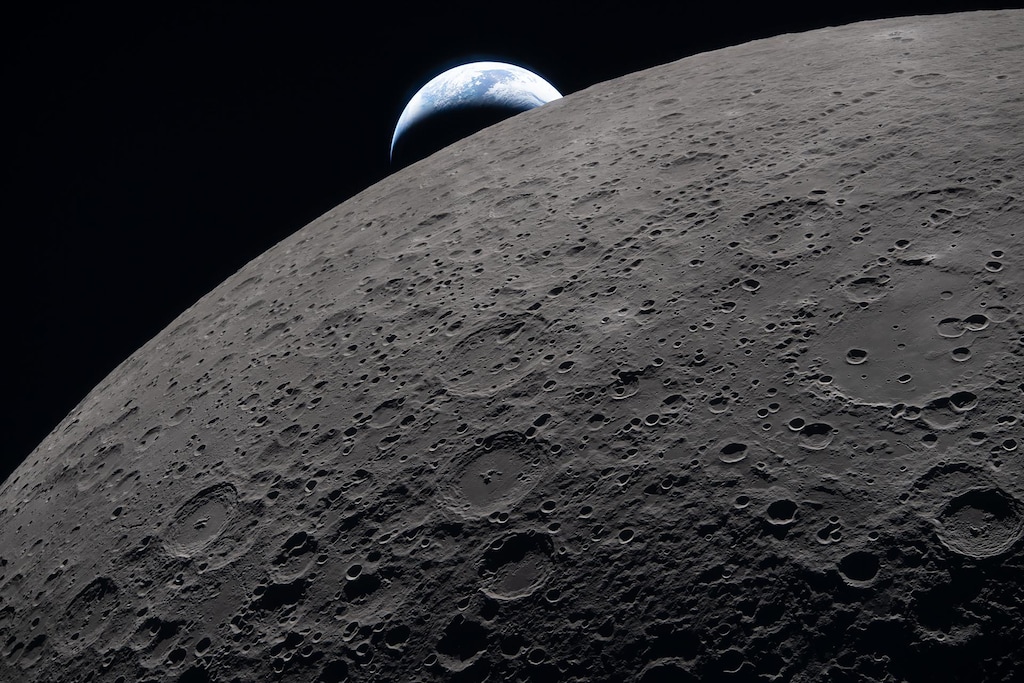
What does it take to truly see the planet we call home?
For Christina Koch, the answer came 250,000 miles away during the Artemis II mission. From space, Earth wasn’t just beautiful — it was singular, suspended in darkness. “It truly emphasized how alike we are,” she said. “How the same thing keeps every single person on Planet Earth alive.”
Each April, Earth Month asks us to find that clarity without leaving home. In Utah, it’s there at sunrise on the Wasatch, in a desert canyon, or even in a quiet backyard. The same realization surfaces: this place is remarkable — and finite.
Earth Month isn’t just symbolic. It’s a gut check. Are we protecting the systems that protect us? Fossil fuel dependence continues to warm the atmosphere, reshaping the climate patterns that govern our water, agriculture and economy.
Here, the changes are no longer subtle. Snowpack thins. Fire seasons stretch. Air quality worsens. The Great Salt Lake recedes. These aren’t distant warnings — they’re lived realities affecting health and livelihoods.
Across North America, bird populations have declined — three billion have vanished since 1970. Fewer songs greet the morning. Globally, emperor penguin chicks are drowning as Antarctic sea ice disappears.
It starts at home. Improve energy efficiency, conserve water and landscape with native, pollinator-friendly plants. Skip pesticides and compost what you can.
Energy choices matter beyond the driveway. Global tensions — including those involving Iran — underscore how fossil fuel dependence exposes the U.S. to volatility.
Collectively, we have the political power to move our members of Congress to lead the next era of energy innovation — just as we’ve led in space exploration.
Back on Earth, Koch reflected: “We are inescapably, beautifully, dutifully linked,” she said of her crew. Then she extended that insight beyond the spacecraft: “Planet Earth — you are a crew.”
Let’s take care of the only vessel we’ve got!
Karen Jackson, Salt Lake City