facebook-pixel

Letter: Abortion laws disproportionately affect poor women

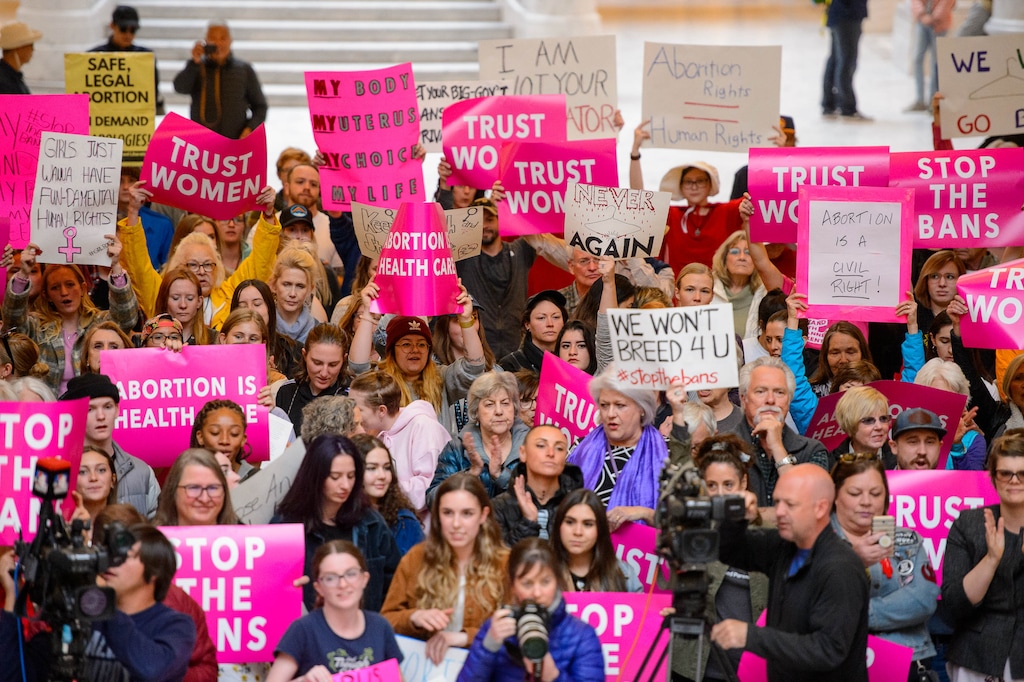
(Trent Nelson | Tribune file photo)  A rally in the Capitol Rotunda in Salt Lake City on Tuesday, May 21, 2019, was part of a nationwide series of protests to bring attention as a number of conservative states pass laws aimed at getting abortion before the U.S. Supreme Court.

(Trent Nelson | Tribune file photo) A rally in the Capitol Rotunda in Salt Lake City on Tuesday, May 21, 2019, was part of a nationwide series of protests to bring attention as a number of conservative states pass laws aimed at getting abortion before the U.S. Supreme Court.

”As a Christian and a feminist, the most important message I can carry and fight for is the sacredness of each human life, and reproductive rights for all women are a crucial part of that. It is a moral necessity that we not be forced to bring children into the world for whom we cannot be responsible and adoring and present. We must not inflict life on children who will be resented; we must not inflict unwanted children on society.” — Anne Lamott

Abortion laws only affect the middle class and, especially, the poor. Wealthy people can travel to Canada or Europe for an abortion.

It isn’t logical to minimize sex education, make contraception difficult to obtain, make abortions illegal and deny health care to the resulting children.

Global warming, pollution and depletion of resources is not our greatest problem. The root problem is human overpopulation.

There is an easy, although painful and probably immoral solution to the abortion debate. Poor women could band together to have many unwanted children and make them wards of the state. It wouldn’t take long for abortion laws to be rescinded.

Ed Brocco, Ephraim

Submit a letter to the editor

Support free news for Utah

sltrib.com is now free to access — no subscription required. We made this decision because we believe access to trustworthy, independent news shouldn’t depend on what you can afford — especially as misinformation and AI-generated content continue to rise.

Free to read doesn’t mean free to produce. Our reporters show up every day to ask hard questions and hold powerful institutions to account. That work takes resources. As a nonprofit newsroom, we rely on support from people who believe it matters. Make a donation today to fund local news that serves Utah communities.

You can help us bring more local news to more communities today.