facebook-pixel

Letter: So, how will the building boom quench its thirst?

Al Hartmann  |  The Salt Lake Tribune 
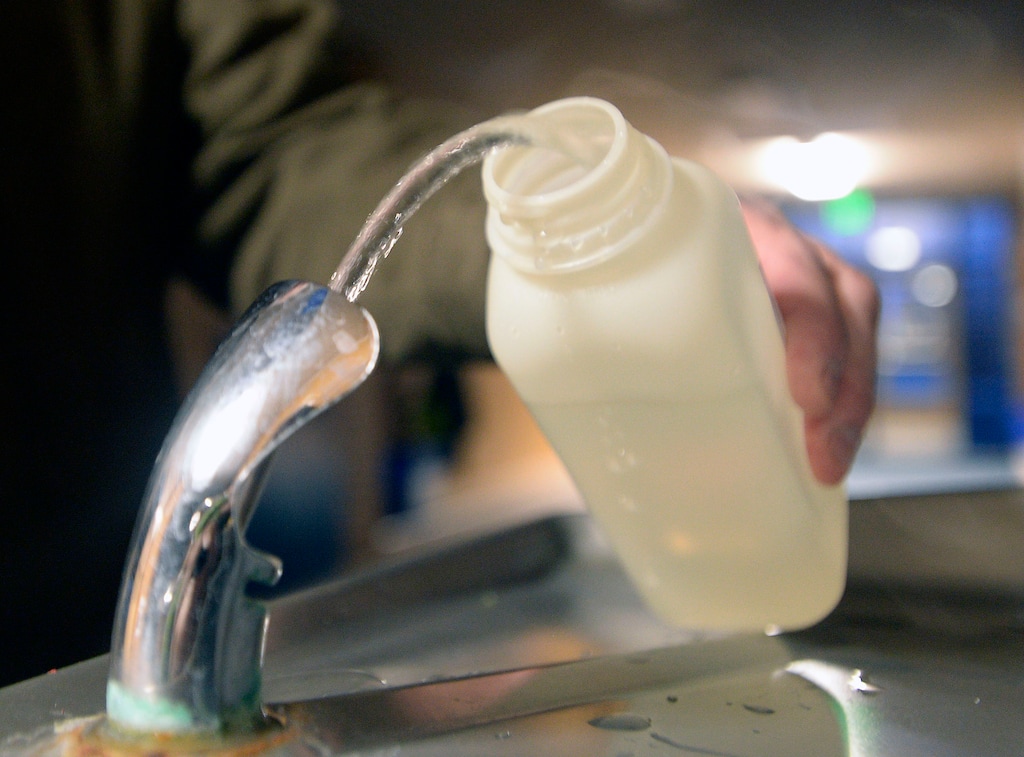
Kevin Ray, risk management coordinator for Canyon School District takes early morning water sample from one of hallway drinking fountains at Edgemont Elementary School early in the morning Wed. March 30 before students arrive.  For an unknown reason at the time there was a cloud or steam as the water first came out of the fountain.
The most common cause of lead poisoning is old corroded pipes that are basically rusting metals into the water. Lead pipes are now banned in the US, but at least 58 percent of Utah's schools were built before that law went into effect. In 1988, congress passed a law charging schools with identifying and rectifying lead contamination and pipe corrosion, but according to the EPA this law is essential impossible to enforce and is not widely implemented.

Al Hartmann | The Salt Lake Tribune Kevin Ray, risk management coordinator for Canyon School District takes early morning water sample from one of hallway drinking fountains at Edgemont Elementary School early in the morning Wed. March 30 before students arrive. For an unknown reason at the time there was a cloud or steam as the water first came out of the fountain. The most common cause of lead poisoning is old corroded pipes that are basically rusting metals into the water. Lead pipes are now banned in the US, but at least 58 percent of Utah's schools were built before that law went into effect. In 1988, congress passed a law charging schools with identifying and rectifying lead contamination and pipe corrosion, but according to the EPA this law is essential impossible to enforce and is not widely implemented.

I’m just curious: With all the new buildings, apartments and subdivisions being built everywhere you look in our valley … where the hell is the water supposed to come from? Oh, stupid me, from the tap, of course!

Scott Schannon, Cottonwood Heights
Support free news for Utah

sltrib.com is now free to access — no subscription required. We made this decision because we believe access to trustworthy, independent news shouldn’t depend on what you can afford — especially as misinformation and AI-generated content continue to rise.

Free to read doesn’t mean free to produce. Our reporters show up every day to ask hard questions and hold powerful institutions to account. That work takes resources. As a nonprofit newsroom, we rely on support from people who believe it matters. Make a donation today to fund local news that serves Utah communities.

You can help us bring more local news to more communities today.