This summer, the State Department convened a gathering of senior officials from over 60 countries to discuss what it labeled the “resurgent threat of transnational far-left terrorism.” It was an effort to build on last November’s designation of four far-left groups in Europe as foreign terrorist organizations, including one in Italy, one in Germany and two in Greece.
Far-left terrorism was also named a major priority area in the Trump administration’s counterterrorism strategy released in May. It listed “violent left-wing extremists, including anarchists and anti-fascists,” as one of the three major types of terror threatening America. The name Hezbollah, Iran’s most dangerous proxy whose members have been arrested on U.S. soil for surveilling potential targets, is mentioned just twice, the same number of times the document uses the word “transgender.”
The administration’s increasing focus on far-left terrorist groups has left many counterterrorism experts slightly confounded: It remains unclear, for instance, if any of the recently designated far-left terrorist organizations in Europe have any U.S. links. The White House has yet to convene a global summit to discuss Sunni jihadists, far-right extremists or Shiite militants — all groups that pose far more active threats to Americans. Instead, with the exception of limited drone strikes in a few select countries, it has largely ignored some of the most serious challenges to our safety.
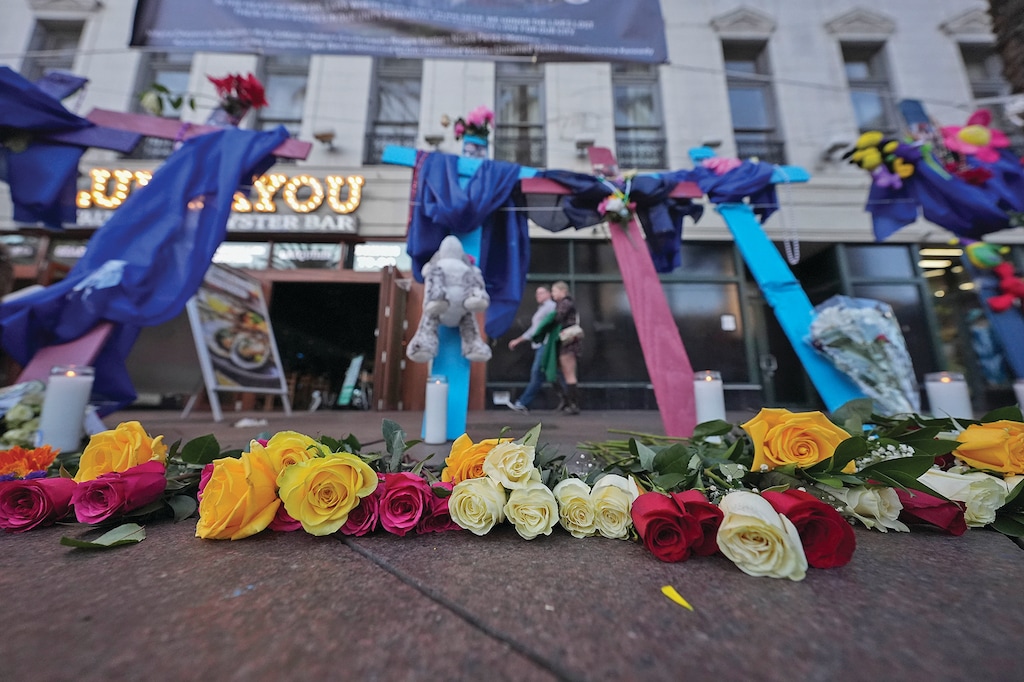
The terrorist threat landscape is more diverse and complex than at any point in the past two and a half decades. Sunni jihadist groups like Al Qaeda and the Islamic State, as well as their global networks of affiliates, still seek to attack the U.S. homeland and inspire homegrown violent extremists in the West. Last year, three Islamist terrorist attacks took place in the United States, according to the former director of national intelligence Tulsi Gabbard, including on New Year’s Day, when a former U.S. Army soldier radicalized by the Islamic State killed 14 people in a car ramming attack in New Orleans. Another 15 U.S.-based Islamist terrorist plots were disrupted.
Far-right extremists, too, have wreaked havoc, conducting ethnically and racially motivated attacks against Jews in Pittsburgh, Latinos in El Paso and African Americans in Buffalo. For more than a decade, organizations such as the Base, Atomwaffen Division and other white supremacist and neo-Nazi groups have grown their transnational links. Terrorgram, a transnational white supremacist network that operates on encrypted messaging apps like Telegram, promotes far-right ideas like accelerationism, disseminates neo-Nazi ideology and regularly celebrates far-right terrorists.
Then, of course, there is Iran, the world’s leading state sponsor of terrorism and a country that the United States is at war with. The Iranian leadership has vowed revenge against the United States for killing Qassim Suleimani, the Quds Force commander of the Islamic Revolutionary Guards Corps, in January 2020 and for America’s role in the killing of the supreme leader Ayatollah Ali Khamenei in late February. Just last week, CNN reported that according to U.S. intelligence sources, there are growing concerns that Iran could target Trump administration officials by detonating a so-called dirty bomb, a radiological explosive, in Washington.
The misguided emphasis on far-left terrorist threats exacerbates a problem dating to the beginning of the first Trump administration, when federal resources dedicated to counterterrorism began dwindling. (DOGE cuts sped up the process.) As money and personnel have been put toward new priorities, including the rise of China and the emergence of artificial intelligence, many current and former intelligence officials have expressed growing concern that the United States is increasingly vulnerable.
On Nov. 19, the F.B.I., the Department of Homeland Security and the Transportation Security Administration issued a joint report to members of the aviation industry warning that supporters of Al Qaeda and its affiliates are using propaganda to encourage jihadist followers to hijack airplanes, buoyed by the near success of the FlyDubai incident in September. This came hot on the heels of a tumultuous week of cyberincidents across aviation, banking and other critical civilian infrastructure. Whether that spate of events was the result of adversarial hacking or not, Americans are concerned, and this administration has done little to assuage those fears.
None of this is to say that far-left terrorism is not a real threat — increasingly, it is. The conservative influencer Charlie Kirk was assassinated last September in what some terrorism experts consider a far-left attack. In December 2025, the F.B.I. disrupted a plot to use improvised explosive devices by the Turtle Island Liberation Front to attack multiple targets in California. Former Attorney General Pam Bondi described the group as a “far-left, pro-Palestine, antigovernment and anticapitalist group.” There have also been numerous plots and attacks directed against Immigration and Customs Enforcement agents, police officers and other law enforcement figures throughout the United States that Trump administration officials have characterized as motivated by far-left ideology.
But it’s important to look at the bigger picture. While the United States has indeed seen an increase in the number of far-left terrorism attacks and plots, as a detailed study by the Center for Strategic and International Studies concluded, those numbers have risen from very low levels and, the study’s authors noted, remain “much lower than historical levels of violence carried out by right-wing and jihadist attackers.”
Far-right terrorism, on the other hand, is completely omitted from the Trump administration’s counterterrorism strategy, despite the fact that, at the very least, neo-Nazism warranted inclusion in the strategy published by the first Trump administration in 2018. According to data collected and analyzed at the Center for Strategic and International Studies, there were 35 far-left attacks resulting in 13 fatalities in the United States between 2016 and July 2025. During the same time frame, there were 152 far-right attacks leading to the deaths of 112 people In last week’s “Worldwide Threats to the Homeland” hearing before the Committee on Homeland Security in the House of Representatives, the subject of far-right terrorism was barely touched upon.
Convening a gathering of senior officials from across the world to discuss the threat of far-left terrorism alone is a curious choice, but it fits a broader pattern. The same day as the killing of Mr. Kirk, Mr. Trump released a video from the Oval Office in which he referred to several acts of political violence, including an assassination attempt on the president himself in Butler, Pa., in July 2024; the killing of the UnitedHealthcare chief executive Brian Thompson by Luigi Mangione in December 2024; and the shooting of the House majority whip Steve Scalise at a congressional baseball practice in June 2017. He failed to mention a single act of political violence perpetrated against Democrats.
The United States government — Republicans, Democrats and independents — should remain committed to protecting all Americans from all forms of terrorism, not just those who agree with one political party’s views over another. The U.S. government should not be cherry-picking which threats to respond to and which to downplay or ignore.
In a world of finite and constrained resources, the only reasonable approach to counterterrorism is bipartisan action, supported by rigorous data analysis and intelligence community assessments about which threats are the most severe. Anything less is myopic — and makes the country less safe.
Colin P. Clarke is the director of research at the Soufan Center, an intelligence and security consulting firm based in New York City. This article originally appeared in The New York Times.