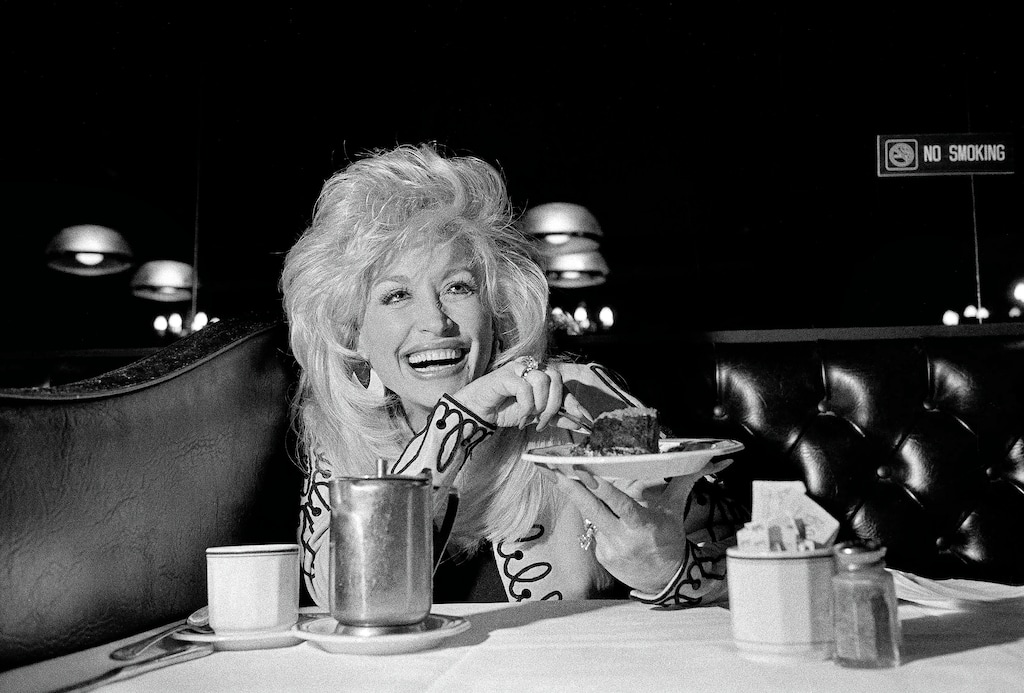
Loving Dolly Rebecca Parton was easy. She was beautiful, funny and kind. Rumor has it that she was a prankster who could tell a good dirty joke. She was a country music original, a glittering pop star, a scene-stealing actor, a cultural icon and an unparalleled humanitarian. By the final decade of her 60-plus-year career, loving her had become something of a public sacrament. But Dolly didn’t see herself as a saint; she identified as something we needed even more: a writer.
Despite the way we all loved Dolly, I don’t think that many of us ever really understood that about her. We hung on to the stories she told us about how she grew up with a lot of love and not much money. We knew that she revered her father and honored her mother. We knew she told Elvis Presley he could not own the rights to one of her songs and that, amazingly, the King didn’t seem to hold it against her. We knew that she wanted kids to read and queer people to be celebrated and country people to feel seen.
She told these stories so often and with so much authenticity that most of us don’t realize these are the only stories that she really told us about herself. It was the repetition over 60 years, albeit in different registers, with different deliveries, that made her endlessly beloved yet dazzlingly impenetrable. It’s a good writer’s sleight of hand.
To understand Dolly, you have to read her as a writer. Writing her own story was the most radical, precise way to define herself in a world that kept trying to fit her into a box. She was not simply Southern, not simply country. She was from Appalachia — a place that is just as mythologized, mocked and misunderstood as Dolly was. It’s a place where people are rarely allowed to speak for themselves. Instead, they are interpolated through coastal biases about white trash and red states. If they are lucky, Appalachians are stereotyped as hillbillies new to the modern world. Too racist to be redeemed. Too dumb to be a problem if they aren’t.
The story Dolly wrote about herself across thousands of songs and performances and books was a counternarrative about Appalachia. She narrated it as a place filled with soaring mountains and narrow hollers, geological wonders and distinctive cultures, abundant love and generational poverty.
Appalachian people are used to city folk making fun of them. It’s easy to forget that Dolly was not exempt from this sort of mockery. For most of her career, men made cracks about her figure. Women made digs about her lowbrow fashion. Critics often downplayed her artistry. No matter how famous she got, how many new audiences fell in love with her, how undeniable her talent, how ridiculous her work ethic, Dolly had to waste time with stupid jokes from small minds.
When people underestimated Dolly for looking like “the town tramp,” as she put it, she embraced it. In 2009 she told Morley Safer, “By the time they think that I don’t know what’s going on, I’ve done got the money and gone.” We call that particular trick country dumb where I am from. Dolly was a master at it.
Make fun of her cleavage? You better tell a funnier gag than one she already told about herself. Want to look down on her about being parochial? You will have to square that with her outstanding business acumen. At a time when women and poor people signed away their intellectual property for a shot at stardom, Dolly started a series of successful publishing companies to retain her rights.
That’s not to say that Dolly’s pride, especially in her craft, didn’t shine through. Her indefatigable sense of herself as a creative person, with the right to make her art as she saw fit, came from her sense of place. She crafted stories in the rhyme, meter, poetry and politics of Appalachia. Her interpretations of bluegrass may be among my favorites, especially when she met her creative match in Linda Ronstadt and Emmylou Harris. The song “Down From Dover,” from 1970, is an exemplar of Southern gothic storytelling — a story of young pregnant women hiding in plain sight that is as haunting in post-Roe America as it was when she wrote it. The vulnerability of “Jolene” made it impossible for any cover to transcend the original.
But it wasn’t until I was in my 30s that one of Dolly’s stories perfectly matched my own. I had a devastating pregnancy loss, which was, I knew, my last chance to have a baby. One day, I turned on college radio to drown out the silence. Dolly’s 1968 song “The Bridge” was playing. It wasn’t the first time I heard it. It was the first time I understood the young girl in it, pregnant, abandoned, contemplating suicide to end the pain. The juxtaposition of that pain and Dolly’s high, lonesome voice broke me wide open. I cried for the first time for everything I would not have. When I was done crying, I was the person I would be after loss.
For all her sparkle, Dolly was a simple girl. She wrote simple lyrics, simple melodies, told simple stories about simple human experiences. Her lyrics were simple because the living in Appalachia can be so hard. They were often radical for the same reason. Lines like “They just use your mind, and they never give you credit. / It’s enough to drive you crazy if you let it,” from her smash hit “9 to 5” are true to the working-class politics of folk music but tell a story through women instead of men. Critics have always struggled to appreciate that kind of poetry. They make exceptions for Bob Dylan or Bruce Springsteen. Brevity is wit when men do it. When women do it, we’re supposed to think of it as luck. But for Dolly, it wasn’t luck; it was simply the truest expression of the homeland she never, not once, not even after she became a millionaire, spurned.
She knew what I know: Appalachia’s food, its literature and its music are universal. That’s why anywhere in the world where people have been pushed from their homeland or trapped in its cycle of exploitation, you will find a Dolly Parton fan.
I think I knew that the first time I stood too close to the television, at 9 years old, transfixed by the big-haired blonde singing “Two Doors Down.” The song wasn’t about me, wasn’t about my life, about my people. But good writing doesn’t have to imagine everyone. It only has to imagine the truest thing about all of us, that exists in each of us.
That is what made the girl from the holler make sense to me even though the world (and my mother) thought she shouldn’t. Before Dolly was a saint, when she was still just a popular twangy pop star in a wig, I saw something in the way she took up space that called to me, an ambitious girl the world did not expect much from but who knew — just knew — that she was a writer.
Dolly owned her right to write our American story. That was bigger than the hair and the boobs, shinier than the sequins, more feminist than a thousand burning bras, more honest than almost anyone gets to be in public life without selling a pound of flesh.
Dolly’s songs will live on. They document American history through the eyes of Americans who don’t often get to tell their own story. She also left a legacy for little ambitious girls. All races. All walks of life. The way she lived and worked, the way she sparkled and demurred, the way she took up space and took the hits for being larger than life is proof that a good story can change the way we see the world.
Dolly Parton was a writer. In the end, Dolly Parton is the greatest story that Dolly ever wrote.
This article originally appeared in The New York Times.